Introduction
ERP implementations fail at an alarming rate. According to Gartner, over 70% of recently implemented ERP initiatives will fall short of their original business case goals by 2027, with up to 25% expected to fail outright. These aren't minor setbacks — they're costly, disruptive failures driven by poor data migration, inadequate change management, and scope creep.
Choosing the right implementation consulting partner is what separates a failed rollout from one that delivers real business value.
Modern ERP projects have grown far more complex. Organizations now navigate cloud migrations, connect with networks of third-party systems, and meet multi-country compliance mandates — from India's GST e-invoicing and Saudi Arabia's ZATCA clearance model to Europe's PEPPOL framework. Selecting a partner with proven methodology, industry-specific expertise, and deep regulatory knowledge is a business-critical decision.
This guide covers what to look for in an ERP implementation consultant, how top providers compare, and the key questions to ask before signing any engagement.
Key Takeaways
- ERP implementation consulting guides organizations through software selection, configuration, data migration, go-live, and ongoing optimization
- Top providers pair platform certifications and industry knowledge with structured delivery methodologies
- GST, VAT, e-invoicing, and digital tax reporting compliance is a baseline requirement for any global implementation
- Key evaluation criteria: platform certifications, integration track record, regulatory expertise, and post-go-live support
- This list covers five leading providers evaluated on reliability, delivery capability, and business outcome focus
What Is ERP Implementation Consulting?
ERP implementation consulting is the professional service of planning, configuring, deploying, and optimizing ERP software to unify an organization's core business functions—finance, supply chain, HR, and compliance—into a single integrated system. It's distinct from simply purchasing ERP software; consulting partners act as both technical architects and business process advisors throughout the transformation.
Typical engagement phases include:
- Evaluate requirements, define scope, and select the right platform
- Map current-state workflows and design future-state processes
- Configure and customize the ERP environment to match business requirements
- Cleanse, map, and migrate historical data from legacy systems
- Train teams to adopt new workflows and system interfaces
- Manage go-live cutover, hypercare, and stabilization
- Monitor performance and drive continuous post-implementation improvement

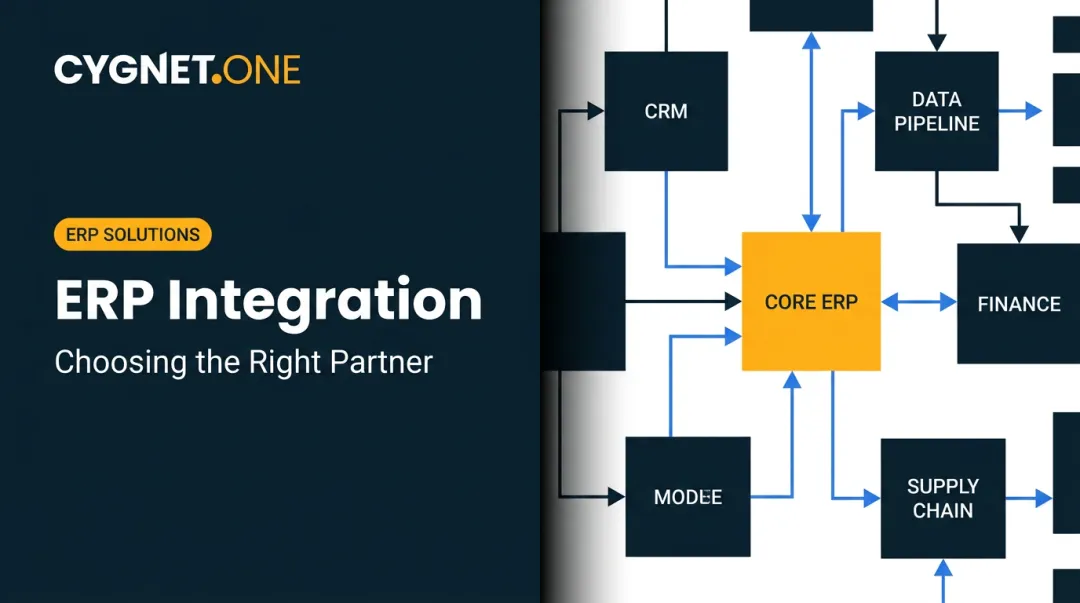
Each of these phases carries its own risks. Cloud deployments introduce continuous vendor updates that demand ongoing change management, while integrating with third-party platforms—CRM, WMS, HRIS—adds technical exposure. In fact, 38% of enterprises cite unanticipated integration issues as a leading cause of project delays.
Regulatory complexity raises the stakes further. Mandates like India's GSTN e-invoicing requirements and Saudi Arabia's ZATCA framework impose strict compliance obligations at the system level—which is why experienced consulting partners, not just software vendors, are critical to a successful rollout.
Best ERP Implementation Consulting Services in 2026
These providers were evaluated on ERP platform breadth, delivery methodology, industry experience, integration capabilities, compliance awareness, and post-go-live support—not just brand recognition.
Cygnet.One (Cygnet Infotech)
Cygnet.One is a 19-year enterprise technology firm headquartered in CYGNET INFOTECH LLC 125 Village Blvd, 3rd Floor, Suite 315, Princeton Forrestal Village, Princeton, New Jersey- 08540, serving clients across 35 countries with 250+ successful ERP integrations. The company specializes at the intersection of ERP deployment and tax/finance compliance transformation — a practical advantage for organizations operating across multiple regulatory jurisdictions.
What sets Cygnet.One apart is its dual capability: end-to-end ERP integration combined with built-in regulatory compliance expertise. The firm holds GSTN-approved IRP and GSP status, PEPPOL certification, and recognized VAT platform credentials in the UAE (FTA), UK (HMRC), Saudi Arabia (ZATCA), and Belgium (BOSA). This means compliance isn't bolted on after go-live — it's architected into the ERP configuration from day one, reducing legal and financial risk.
Cygnet.One's integration approach emphasizes workflow automation: compliance outcomes trigger automated actions directly within ERP systems, posting approved invoices, placing rejections on hold, and updating GRN/3-way matching processes in real time. For enterprises operating across multiple countries, this removes manual compliance workarounds and ensures audit-ready documentation from day one.
| Dimension | Details |
|---|---|
| ERP Integration Track Record | 250+ successful ERP integrations; 55MN+ transactions processed monthly; 99% infrastructure uptime |
| Compliance & Regulatory Expertise | GSTN-approved IRP & GSP; PEPPOL certified; recognized in UAE, UK, Saudi Arabia, Malaysia, Belgium; SOC 2 Type II compliant |
| Key Industries & Geographies | BFSI, FMCG, IT Services, Manufacturing, MSMEs; India, UAE, UK, Middle East, Europe |
Accenture
Accenture is a global professional services firm with dedicated ERP practices spanning SAP, Oracle, Microsoft Dynamics, and Workday. The firm serves enterprises across manufacturing, financial services, healthcare, retail, and public sector globally, with approximately 779,000 professionals.
Accenture aligns ERP deployment with broader digital transformation roadmaps rather than treating implementation as a standalone project. The firm's proprietary accelerators — myConcerto for SAP S/4HANA, myNav for cloud assessment, and myWizard for AI-driven automation — compress timelines and reduce implementation risk. With over 15,000 engagements using myWizard alone, Accenture has the scale to manage complex, multi-country rollouts with dedicated change management and industry-specific solution templates.
Forrester named Accenture a "stand-out leader" in SAP Services in Q1 2025, and Gartner positioned the firm as a Leader in Digital Technology and Business Consulting Services in January 2026.
| Dimension | Details |
|---|---|
| ERP Platforms Supported | SAP S/4HANA, Oracle Cloud ERP, Microsoft Dynamics 365, Workday |
| Key Differentiator | Strategic transformation framing; change management practice; global delivery network |
| Best Suited For | Large enterprises with multi-country, multi-ERP complexity |
Infosys
Infosys is a global IT and consulting firm with a strong ERP delivery practice, helping enterprises in financial services, retail, manufacturing, healthcare, and energy modernize core systems through structured, methodology-driven implementations. The company employs 292,063 professionals globally and holds top-tier partner statuses, including RISE with SAP Validated Partner.
Infosys brings enterprise-grade delivery discipline through proprietary platforms like Infosys Cobalt for cloud acceleration, Infosys Topaz for AI-first solutions, and Infosys Catalyst for RISE with SAP projects. The firm's certified consultant pool (over 1,000 Azure-certified consultants alone) reduces implementation risk and keeps large-scale rollouts on schedule.
Infosys was positioned as a Leader in the 2024 Gartner Magic Quadrant for Cloud ERP Services and named a Leader in the IDC MarketScape for Worldwide SAP Implementation Services 2025.
| Dimension | Details |
|---|---|
| ERP Platforms Supported | SAP, Oracle, Microsoft Dynamics, and industry-specific ERPs |
| Key Differentiator | Proprietary delivery accelerators; strong India delivery model; large certified team |
| Best Suited For | Large enterprises requiring on-time, on-budget, large-scale ERP delivery |
Itransition
Itransition is a global IT services company providing end-to-end ERP consulting and implementation services across finance, healthcare, retail, logistics, insurance, and construction. The firm has completed over 50 ERP projects and holds official partner status with Odoo (Silver Partner) and NetSuite (Solution Provider since late 2023).
Itransition's differentiator is its platform-agnostic approach, covering both commercial ERP implementations (Microsoft Dynamics, Odoo, NetSuite) and custom-built ERP systems. The firm's legacy ERP modernization and third-party integration capabilities make it well-suited to organizations with complex existing IT landscapes. Client satisfaction is high, with a 4.9/5 star rating from 39 verified reviews on Clutch.co.
| Dimension | Details |
|---|---|
| ERP Platforms Supported | Microsoft Dynamics, Odoo, NetSuite, custom ERP |
| Key Differentiator | Platform-agnostic; custom ERP development; legacy modernization and migration |
| Best Suited For | Mid-to-large organizations with mixed or legacy ERP environments |
Panorama Consulting Group
Panorama Consulting is an independent ERP consulting firm providing vendor-agnostic services including software selection, implementation, project auditing, recovery, contract negotiation, and digital strategy. The firm serves organizations across manufacturing, distribution, professional services, and public sector.
With no vendor partnerships, Panorama can assess ERP options without a commercial stake in the outcome — which matters most when organizations are selecting software before committing to implementation. Mismatched platform choices are a leading driver of ERP project failures, and independent advisory directly reduces that risk.
The firm's methodology has been refined through hundreds of ERP initiatives. Its widely cited annual ERP Report provides empirical data on implementation costs, durations, and challenges, making Panorama a recognized primary research source in the industry.
| Dimension | Details |
|---|---|
| ERP Services Offered | Software selection, implementation, contract negotiation, project recovery, ERP training |
| Key Differentiator | Vendor-agnostic; independent advisory; expert witness services; pre-implementation risk assessment |
| Best Suited For | Organizations uncertain about ERP platform choice or recovering from a troubled implementation |
What Makes a Great ERP Implementation Consulting Partner?
Beyond ERP platform certifications, the best consulting partners demonstrate a structured implementation methodology with defined phases for discovery, configuration, data migration, and go-live. This reduces common failure points like scope creep, poor data quality, and inadequate user adoption.
Key hallmarks include:
Structured methodology and governance — Formal frameworks like SAP Activate or Oracle's OUM, paired with stage-gates, a dedicated PMO, and RACI charts, reduce the scope creep and technical drift that Panorama identifies as primary drivers of project delays.
Disciplined organizational change management (OCM) — Prosci's research shows that projects with excellent OCM are significantly more likely to meet ROI expectations, yet fewer than 25% of organizations invest in it seriously. A strong partner secures executive sponsorship early and tracks user adoption KPIs through go-live.
Rigorous data governance and migration — Poor data quality is a major cause of project failure. Top partners establish a formal data governance charter, use detailed migration runbooks, and perform multiple mock cutovers with full data reconciliation before go-live.
Comprehensive testing and quality assurance — Multi-layered test strategies covering unit, end-to-end integration, performance, and UAT are critical. Test automation is especially important for managing the frequent release cycles of modern cloud ERPs.

For multi-country deployments, compliance readiness belongs on the evaluation checklist alongside technical capability. ERP systems that go live without it create immediate legal and financial exposure. Confirm your consultant has hands-on experience with:
- GST filing and e-invoicing mandates in India
- VAT compliance in the UAE (FTA) and UK (HMRC)
- ZATCA Phase 2 e-invoicing requirements in Saudi Arabia
- PEPPOL network compliance across European markets
Post-go-live support, ongoing optimization, and managed services capability separate implementation-only vendors from true long-term partners. Enterprises should evaluate whether the consultant offers SLA-backed support, performance monitoring, and system health reviews after the project closes.
How We Chose This List
Each provider on this list was evaluated across six criteria:
- ERP platform breadth and certifications — coverage across SAP, Oracle, Microsoft Dynamics, and others
- Implementation history — number of completed projects and geographies served
- Industry specialization — depth of experience in relevant verticals
- Third-party integration capability — ability to connect ERP with surrounding systems
- Compliance and regulatory expertise — readiness for the client's operating regions
- Post-implementation support — structured ongoing service beyond go-live
Common mistakes organisations make when choosing ERP consultants include:
- Prioritizing brand name over relevant industry experience
- Overlooking the consultant's compliance readiness for the company's operating geographies
- Failing to assess post-go-live support depth before signing
- Accepting generic claims without demanding evidence of structured methodology, OCM plans, and data migration runbooks
This list weights all six criteria equally, favouring consultants who can demonstrate specific outcomes — not just cite project counts or client logos.
Conclusion
The right ERP implementation consulting partner goes beyond technical deployment—they reduce project risk, accelerate time-to-value, and ensure the ERP system is built for the regulatory and operational realities of the business from day one.
When evaluating partners, prioritize:
- Proven integration track record within your specific industry
- Compliance expertise in your operating markets (GST, VAT, ZATCA, HMRC, etc.)
- Structured post-go-live support — not just deployment handoffs
Gartner research suggests over 70% of ERP projects fail to meet their original goals. Rigorous due diligence isn't optional.
Organizations that need a consulting partner with 250+ ERP integrations and verified compliance capabilities across India, UAE, UK, Saudi Arabia, and global markets can explore what Cygnet.One brings to their next implementation.
Frequently Asked Questions
What does an ERP implementation consultant do?
An ERP implementation consultant guides organizations through the full lifecycle of deploying ERP software—from software selection and configuration to data migration, training, and post-go-live support. They act as both technical architects and business process advisors, ensuring the system aligns with operational realities and regulatory requirements.
How long does ERP implementation typically take?
Timelines vary by scope and organization size, ranging from a few months for smaller deployments to 12–24 months for complex enterprise-wide rollouts. Panorama's 2023 ERP Report found a median timeline of 15.5 months.
How much do ERP implementation consulting services cost?
Costs depend on the ERP platform, level of customization, number of users, and scope of consulting services. Panorama's 2023 report found a median project cost of approximately ₹52,00,000. Compare pricing models (fixed-fee vs. time-and-materials) and factor in both consulting fees and software licensing costs.
What is the difference between ERP selection consulting and ERP implementation consulting?
ERP selection consulting helps organizations evaluate and choose the right software platform before deployment begins—covering needs discovery, vendor evaluation, and contract negotiation. ERP implementation consulting covers the technical and process work of configuring and deploying the chosen system.
How do I know if an ERP consulting firm is right for my industry?
Look for consultants with case studies and certifications specific to your sector, experience with industry-specific regulatory requirements (e.g., GST compliance for Indian enterprises, VAT for Middle East operations), and references from organizations of comparable size and complexity. Ask for evidence of structured methodology and measurable outcomes.
What are the biggest risks in ERP implementation projects?
The most common risks include poor data migration planning, inadequate change management, scope creep, compliance gaps, and weak post-go-live support. Experienced partners address these through formal governance frameworks, OCM programs, and SLA-backed support models.