Introduction
Moving to AWS forces a decision that carries real financial consequences: migrate fast with what you have, or rebuild the right way for the cloud? Both lift-and-shift (rehosting) and cloud-native (refactoring) are legitimate, widely adopted strategies—but picking the wrong one for your situation can stall transformation for years.
The stakes are concrete. According to McKinsey, 38% of companies experience migration delays of over one quarter, and the average organization spends 14% more than planned annually on cloud migration. With data center lease deadlines, rising on-premises costs, and competitive pressure converging simultaneously, enterprises need a clear framework—not just a technology preference.
Those risks are avoidable with the right approach. This guide breaks down both strategies, when each applies, how to evaluate your workloads against key cost and complexity signals, and why a phased combination of the two is often the most practical path for large enterprise portfolios.
Key Takeaways
- Lift-and-shift moves applications to AWS as-is—fastest path, lowest upfront risk, ideal for deadline-driven migrations and legacy portfolios
- Cloud-native re-architects applications using AWS services for elastic scalability and long-term cost efficiency, Cloud-native re-architects applications using AWS services for elastic scalability and long-term cost efficiency, though it requires significantly more time and specialized skill
- Neither approach wins universally; the right choice depends on your timeline, application complexity, team capability, and budget horizon
- A phased strategy (rehost first, then progressively modernize high-value workloads) is the most practical path for most enterprises
Lift and Shift vs Cloud-Native: Quick Comparison
| Attribute | Lift and Shift (Rehost) | Cloud-Native (Refactor) |
|---|---|---|
| Migration Speed | Fast — weeks to months | Slow — months to years |
| Upfront Complexity | Low — minimal application changes | High — full re-architecture required |
| Short-Term Cost Savings | Strong — eliminates on-premises overhead quickly | Limited — high upfront investment |
| Long-Term Cost Efficiency | Moderate — some cloud waste without optimization | High — pay-per-use, right-sized architecture |
| Risk Level | Lower — proven apps, minimal change | Higher — redesign introduces new failure points |
| Cloud Optimization Level | Minimal — runs on AWS, not built for it | Maximum — fully leverages AWS-native services |
| Ideal Use Case | Data center exits, legacy portfolios, hard deadlines | Scalable products, monolith modernization, greenfield builds |

What is Lift and Shift on AWS?
Lift-and-shift, also called rehosting, moves applications from on-premises or another environment to AWS without modifying the architecture, code, or core functionality. The application runs on EC2 instances instead of physical servers—same logic, new infrastructure.
For enterprises with large legacy portfolios or hard migration deadlines, this approach is often the only realistic starting point.
Core Benefits
The Hackett Group/AWS migration study of organizations with applications hosted on AWS for at least 12 months found compelling operational results:
- 69% decrease in unplanned downtime
- 66% increase in administrator productivity
- 43% faster time to market for new application features
- 29% increase in developer time devoted to new features
Beyond reliability gains, lift-and-shift eliminates on-premises infrastructure overhead immediately. AWS Migration Evaluator models projected rehosting costs based on actual usage patterns and indicates that customized assessments can identify cost reductions of up to 50% — making the business case concrete before a single workload moves.

AWS Tools That Enable Lift-and-Shift
| Tool | Role |
|---|---|
| AWS Application Migration Service (MGN) | Automated rehosting for physical, virtual, or cloud servers; minimises cutover windows |
| VM Import/Export | Imports VM images from existing virtualisation environments directly to Amazon EC2 |
| AWS Migration Evaluator | Builds a data-driven TCO business case based on actual utilisation patterns |
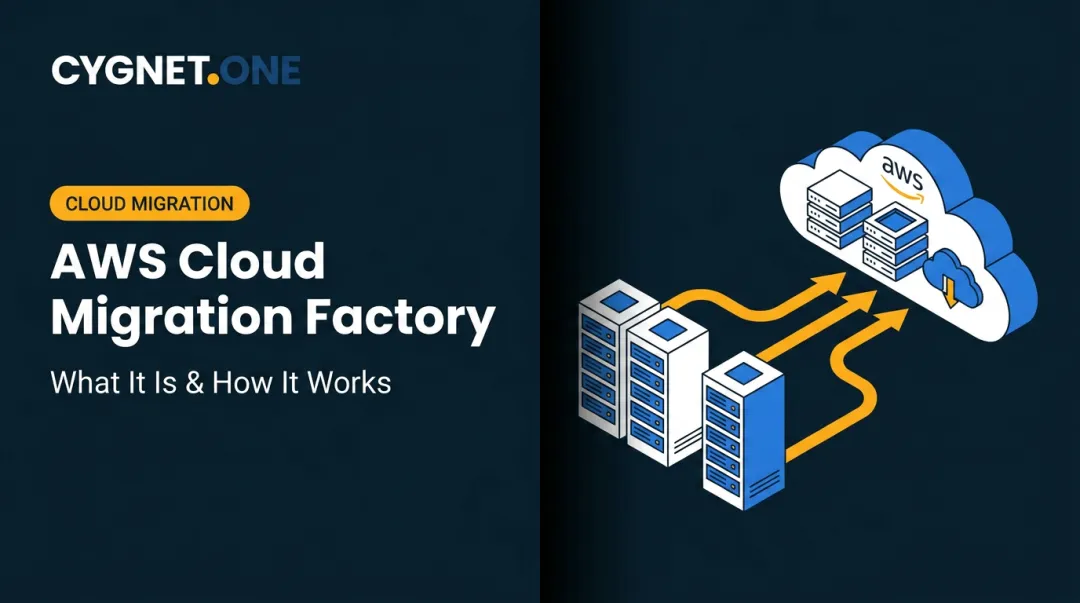
| Cloud Migration Factory on AWS | Automates manual processes and integrates tools for large-scale, repeatable migration waves |
Use Cases of Lift and Shift
Lift-and-shift fits best when:
- Data center lease deadlines require a fast exit with no time for application redesign
- Hardware refresh cycles are approaching and on-premises renewal costs are prohibitive
- Large legacy application portfolios (100+ apps) make full re-architecting impractical
- Steady-state applications are unlikely to change significantly after migration
- Internal stakeholders need rapid, visible cost savings to justify continued cloud investment
Industries where rehosting dominates include large manufacturing enterprises, BFSI organisations managing hundreds of back-office applications, and BPO firms with strict operational continuity requirements. Once applications are running in AWS, the path to deeper optimization opens up. The toolchain is richer, team cloud skills develop through real usage, and the data is already where it needs to be — positioned for the next phase of modernization.
What is Cloud-Native Migration on AWS?
Cloud-native migration—also called refactoring or re-architecting—means redesigning applications from the ground up to run on AWS-native services: microservices, serverless computing (AWS Lambda), containers (ECS/EKS), managed databases (Amazon RDS, DynamoDB), and event-driven architectures.
Of the AWS 7 Rs migration strategies, refactoring delivers the deepest long-term value—and carries the highest execution complexity.
Core Benefits and Trade-offs
What cloud-native delivers:
- Elastic scalability that provisions capacity in minutes, not weeks
- Faster deployment cycles through CI/CD pipelines and DevOps practices
- Long-term cost efficiency through pay-per-use pricing vs. over-provisioned fixed infrastructure
- Superior fault tolerance through distributed, self-healing architectures
According to AWS modernization data citing IDC analysis, customers modernizing workloads on AWS achieved a 56% reduction in cost of operations over five years and a 442% ROI increase over the same period. These are long-horizon outcomes—not migration-week results.
What cloud-native demands:
- Significantly more time — large portfolios can take years
- Cloud-skilled engineering teams capable of redesigning application architecture
- Higher upfront investment before ROI materialises
- Careful scope management to prevent scope creep and compounding complexity
AWS Prescriptive Guidance states that refactor is not recommended as the default strategy for large migrations — it involves modernizing the application during migration, making it the most complex approach available.
Use Cases of Cloud-Native
Cloud-native is the right choice when:
- The application needs to scale globally or handle unpredictable traffic spikes
- Faster feature delivery is a direct competitive differentiator
- A monolithic architecture is actively blocking development velocity
- The team has existing cloud-native skills in-house
- The project is greenfield development (new builds with no legacy constraints)
This approach thrives in SaaS companies, digital-first financial services platforms, global media and streaming services, and e-commerce platforms where the application is the business.
Netflix is the clearest example. After a catastrophic database failure in August 2008 that halted DVD shipments for three days, Netflix rebuilt its entire stack on AWS — moving from a monolith to hundreds of microservices over seven years. By January 2016, it supported 8x more streaming members and had expanded to 130+ countries.
Elastic, global scalability drove that decision — not cost reduction. For enterprises where application availability directly determines revenue and market reach, that same logic applies.
Lift and Shift vs Cloud-Native: Which One Should You Choose?
Decision Checklist
Before committing to a strategy, evaluate these five factors:
- Migration timeline : Hard deadline due to data center exit or lease expiry? Lift-and-shift.
- Application complexity : Monolithic with tightly coupled dependencies? Rehost first, modernize later. Modular with clear service boundaries? Cloud-native is viable.
- Business criticality : How much downtime risk is acceptable during migration? Lower risk tolerance favors rehosting.
- Team capability : Cloud-native requires in-house architects and DevOps engineers. Rehosting does not.
- Budget horizon : Need savings within 12 months? Lift-and-shift. Investing now for 3–5 year returns? Cloud-native.

Situational Recommendations
Choose lift-and-shift if:
- You have a firm data center exit deadline
- Your portfolio contains 50+ legacy applications with stable, low-change workloads
- Cloud-native skills are limited or must be built over time
- Executive stakeholders need visible cost savings within the current fiscal year
Choose cloud-native if:
- Your application needs to scale globally or handle unpredictable load
- Your team already has container, serverless, and DevOps expertise
- Speed of feature delivery is directly tied to competitive position
- You're building new — no legacy architecture constraints exist
The Phased Approach: Most Practical for Enterprise Portfolios
For most enterprises, the honest answer is neither strategy in isolation. A phased migration path — rehost first, then progressively modernize — delivers the best risk-adjusted outcome:
- Rehost the bulk of the portfolio to exit data centers, capture immediate savings, and get applications running in AWS
- Re-platform targeted workloads with quick wins — move to Amazon RDS from a self-managed database, adopt open-source runtimes — without full re-architecture
- Refactor high-value applications selectively, once the team has cloud experience and data is already in AWS
Re-platforming (lift-tinker-and-shift) is often overlooked, but it delivers real cost and operational gains without the complexity of full cloud-native refactoring. Managed services cut administration overhead; right-sizing eliminates waste. For workloads that don't warrant a full rebuild but underperform as rehosted VMs, it's the right middle ground.
Once workloads are running in AWS, optimization becomes significantly more tractable. Teams build hands-on cloud experience, toolchain integration tightens, and the hardest part — data migration — is already behind you.
Real-World Examples and Case Studies
GE Oil & Gas: Rehosting at Portfolio Scale
GE Oil & Gas faced a significant digital overhaul with hundreds of legacy applications needing to move. Full re-architecture would have taken years the business didn't have. Instead, GE chose rehosting — and reported a 52% reduction in TCO as a direct result of the migration. The trigger was scale and urgency: the portfolio was too large and the timeline too tight for cloud-native refactoring to be viable.
Takeaway: For large legacy portfolios with finite migration windows, lift-and-shift delivers fast, measurable ROI that full re-architecture simply cannot match.
Netflix: Cloud-Native as a Business Survival Strategy
Netflix's cloud journey began after a database corruption incident in August 2008 halted DVD shipments for three days. The company concluded that horizontally scalable distributed systems — not faster hardware — were the solution. Over seven years, Netflix rebuilt virtually all of its technology on AWS, moving to hundreds of microservices, NoSQL databases, and continuous delivery operations. The outcome: global expansion to 130+ countries and 8x more streaming members, with availability approaching four nines.
Takeaway: Cloud-native is worth years of investment when the application is the business and scalability is not optional.
Cygnet.One: Banking Sector Migration with Measurable Outcomes
Cygnet.One, an AWS Advanced Tier Partner with 700+ AWS-certified professionals, has delivered over 100 enterprise migrations across Windows, VMware, Oracle, and hybrid environments. In a documented engagement with HDFC Bank, their migration produced concrete results:
- 50% reduction in storage costs
- 75% faster recovery times
- Zero downtime throughout the migration

These outcomes were driven by Cygnet.One's proprietary ORBIT framework, which structures migrations from initial assessment through post-migration optimization — covering phased execution and FinOps discipline at each stage.
For enterprises in BFSI, FMCG, and IT services evaluating their migration path, talk to a cloud migration specialist to start with a workload assessment and TCO analysis.
Conclusion
Lift-and-shift and cloud-native are not competing philosophies. They are complementary phases of a mature cloud journey, and most enterprises will use both.
The right starting point depends on your constraints: timeline, portfolio size, team capability, and budget. The right endpoint for most organizations is a progressively modernized, cloud-optimized architecture built in stages — each phase informed by what the previous one taught you.
Enterprises that begin with rehosting gain speed, immediate cost savings, and in-cloud operational experience that makes future modernization faster and less risky. Those that invest in cloud-native gain the elastic scalability and development agility to compete where software delivery speed is a differentiator.
The most successful migrations combine both approaches, with a clear plan that accounts for where you are today and where the business needs to be in three to five years.
Frequently Asked Questions
What is lift and shift in AWS?
Lift-and-shift (rehosting) means moving applications from on-premises or another environment to AWS without changing their architecture or code. AWS Application Migration Service (MGN) automates much of this process, minimizing cutover windows and reducing manual effort.
What is the difference between lift-and-shift and cloud-native migration?
Lift-and-shift moves applications as-is to AWS for speed and quick infrastructure savings. Cloud-native migration redesigns the application using AWS-native services (Lambda, ECS, RDS, DynamoDB) to maximize scalability, deployment agility, and long-term cost efficiency.
When should a company choose cloud-native migration over lift-and-shift?
Cloud-native fits best when an application needs to scale globally, a monolithic architecture is blocking development velocity, or when faster feature delivery drives competitive advantage. It's also the right call when the engineering team already has cloud-native skills to execute the transition.
What are the biggest challenges with lift-and-shift migration to AWS?
Key challenges include database cutover with minimal downtime, compatibility issues with older frameworks or encryption protocols, managing organizational approval processes for production changes, and the risk of carrying existing technical debt and inefficiencies directly into the cloud.
Can lift-and-shift and cloud-native be used together?
Yes. A phased approach is both common and recommended. Rehost the majority of applications first to capture immediate cloud benefits and exit data centers, then selectively re-platform or re-architect high-priority workloads based on business value.
What AWS tools support lift-and-shift migration?
The primary tools are AWS Application Migration Service (MGN) for automated rehosting, VM Import/Export for VM image portability, AWS Migration Evaluator for TCO business case modeling, and Cloud Migration Factory on AWS for automating large-scale, repeatable migration waves.