Introduction
Choosing the wrong cloud migration partner is expensive. Businesses routinely face budget overruns, weeks of unplanned downtime, and compliance gaps that invite regulatory penalties — all traced back to provider selection made without the right criteria. The decision affects far more than your IT timeline: it shapes operating costs, data security posture, and your team's capacity to deliver on business goals.
The global cloud migration services market is expanding rapidly, projected to grow from $16.9 billion in 2024 to over $70 billion by 2030, representing a CAGR of nearly 28%. This growth is driven by enterprise pressure to reduce on-premises infrastructure costs, rising demand for hybrid and multi-cloud architectures, and tightening data residency regulations across major markets.
This article evaluates seven cloud migration service providers based on technical expertise, compliance capabilities, industry experience, and post-migration support—helping enterprises identify the right partner for their specific workload needs and compliance obligations.
Key Takeaways
- Cloud migration services move data, applications, and infrastructure to cloud environments, managed by specialized third-party providers
- Choosing the wrong provider risks cost overruns, compliance failures, and unplanned downtime during cutover
- Not all providers are equal — specializations range from large-scale enterprise lift-and-shift to regulated-industry migrations and multi-cloud architecture
- Selection criteria include certifications, security posture, industry experience, pricing transparency, and post-migration support
- Cygnet.One is built for finance and regulated-sector enterprises, combining cloud migration with GST, VAT, and e-invoicing compliance across 35 countries
What Are Cloud Migration Services?
Cloud migration services cover the end-to-end process of moving business data, applications, and workloads from on-premises or legacy infrastructure to cloud environments—public, private, hybrid, or multi-cloud—managed either partially or fully by a third-party provider.
The Four Cloud Deployment Models
Understanding deployment models is critical before migration begins:
- Public Cloud: Shared infrastructure owned and operated by cloud providers like AWS, Azure, or Google Cloud, provisioned for open use
- Private Cloud: Dedicated infrastructure for exclusive use by a single organization, offering greater control and customization
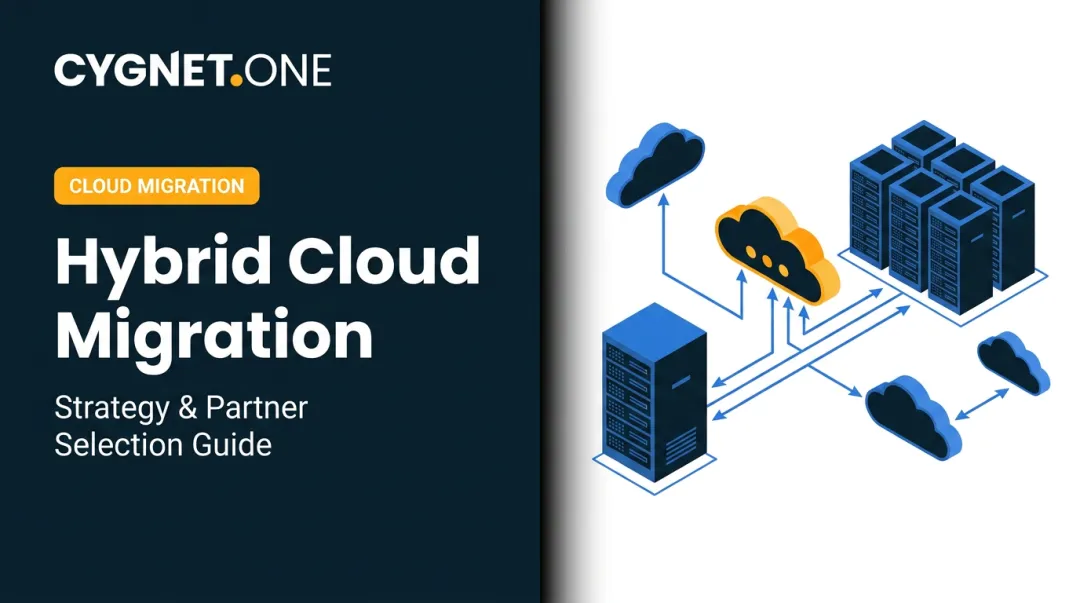
- Hybrid Cloud: A composition of public and private clouds bound together by technology enabling data and application portability
- Multi-Cloud: Use of services from two or more distinct public cloud providers to avoid vendor lock-in and leverage best-of-breed services

Hybrid and multi-cloud strategies are increasingly preferred. According to the 2024 HashiCorp State of Cloud Strategy report, 79% of enterprises have or are planning multi-cloud deployments to enhance resilience and avoid vendor lock-in.
That complexity — spanning compliance, cost governance, and long-term optimization — is exactly why choosing the right migration partner matters. The providers below cover the full spectrum, from hyperscaler-native specialists to full-service transformation firms.
7 Best Cloud Migration Service Providers for Businesses
These providers were chosen based on service portfolio breadth, multi-cloud expertise, industry certifications, geographic reach, security standards, and demonstrated client outcomes across enterprise use cases.
Accenture
A global professional services and technology firm with deep cloud practices across AWS, Azure, and Google Cloud. Accenture offers end-to-end migration services including assessment, execution, modernization, and managed operations at scale.
Proprietary automation frameworks and AI-driven tooling enable Accenture to handle highly complex, multi-geography enterprise migrations at a scale few providers can match. Accenture maintains over 40,000 trained individuals holding more than 30,000 AWS certifications and was named Global Consulting Winner for Migration Partner of the Year in 2025.
Provider Profile:
| Attribute | Details |
|---|---|
| Best For | Large global enterprises with complex, multi-geography migration needs |
| Key Services | Cloud strategy, migration factory, application modernization, managed cloud operations |
| Notable Strengths | Breadth of AWS/Azure/GCP certifications; strong FinOps and security integration |
IBM Services
IBM Services leads in hybrid cloud integration and legacy system modernization. The company pairs cloud migration with its Red Hat OpenShift platform and watsonx AI tools to bridge on-premises and cloud workloads.
Enterprises with deeply embedded legacy infrastructure benefit most from IBM's approach — phased migration through a hybrid model avoids the risk and disruption of full system overhauls. IBM holds over 25,000 AWS certifications and maintains premier-level partnerships with all major cloud providers.
Provider Profile:
| Attribute | Details |
|---|---|
| Best For | Enterprises with legacy + hybrid workload complexity |
| Key Services | Hybrid cloud integration, legacy modernization, AI-augmented migration |
| Notable Strengths | Red Hat OpenShift expertise; strong track record in banking and insurance sectors |
Deloitte
A globally recognized consulting and technology services firm that brings heavy strategic and change management expertise to cloud migrations. Deloitte offers cloud advisory, implementation, and application modernization for AWS, Azure, and Google Cloud.
Where Deloitte stands apart is its focus on organizational readiness alongside technical execution. When business transformation and cloud migration must happen in parallel, that dual capability matters. Deloitte maintains over 50,000 cloud professionals globally and holds 21 AWS Competencies.
A notable case study: Deloitte migrated Utah Office of Recovery Services' 25-year-old mainframe system to AWS within 15 months, reducing operational costs to just 37% of previous mainframe costs.
Provider Profile:
| Attribute | Details |
|---|---|
| Best For | Enterprises undergoing simultaneous technology and cultural transformation |
| Key Services | Cloud migration strategy, automated migration, application modernization |
| Notable Strengths | Deep industry specialization; strong compliance advisory for regulated sectors |
Infosys (Cloud Cobalt)
Infosys offers migration services through its Cloud Cobalt platform, designed to automate and secure large-scale enterprise migrations to AWS and Azure. The platform focuses heavily on safeguarding enterprise assets and reducing manual intervention.
Large enterprises with extensive application portfolios — particularly those prioritizing speed and reliability — benefit from Cloud Cobalt's built-in automated remediation capabilities. The company holds AWS Migration Competency and Azure Expert MSP status.
Published outcomes include a Kmart Australia migration achieving 40% less development effort and 20-30% faster time-to-market.
Provider Profile:
| Attribute | Details |
|---|---|
| Best For | Large portfolios requiring automation-led, high-volume migration |
| Key Services | Cloud migration automation, application security, cloud managed services |
| Notable Strengths | Automated remediation; global delivery model with consistent SLA-backed performance |
Capgemini
A European-headquartered global IT services provider with strong cloud practices for AWS, Azure, and Google Cloud. Capgemini offers cloud migration factory, cloud architecture design, and managed cloud operations.
Deep GDPR compliance expertise and a proven cloud migration factory model make Capgemini a natural fit for European enterprises and any organization navigating strict data sovereignty requirements. Capgemini has delivered over 5,000 cloud projects on AWS and maintains Azure Expert MSP status.
Provider Profile:
| Attribute | Details |
|---|---|
| Best For | Regulated European enterprises and organizations with GDPR obligations |
| Key Services | Cloud migration factory, cloud architecture design, managed cloud operations |
| Notable Strengths | GDPR and data sovereignty compliance; strong European market presence |
RapidScale
A managed cloud partner that helps businesses leverage AWS, Azure, and Google Cloud environments with a portfolio tailored to client needs and backed by certified cloud experts. RapidScale focuses particularly on helping mid-market organizations build future-ready cloud environments.
RapidScale's ability to tap cloud provider incentive programs helps clients reduce costs and hit value targets faster — practical advantages for businesses where budget and timeline pressure are real. RapidScale holds Azure Expert MSP status and is one of only three such partners in the US capable of providing direct fiber connectivity into the Azure backbone network.
Provider Profile:
| Attribute | Details |
|---|---|
| Best For | Mid-market and cost-conscious businesses seeking fast time-to-value |
| Key Services | AWS/Azure/GCP migration, compliance enablement, cloud cost optimization |
| Notable Strengths | Cloud provider incentive leverage; certified expert team; flexibility for diverse industries |
Cygnet.One
Cygnet.One is an enterprise technology and digital transformation company with 19+ years of experience serving clients across 35 countries. The company specializes in cloud-enabled tax, finance, and compliance transformation — with 250+ successful ERP integrations and SOC 2 Type II compliance.
Enterprises in regulated industries — BFSI, FMCG, IT Services — benefit from Cygnet.One's ability to pair cloud migration with embedded compliance capabilities. Government-recognized credentials span multiple jurisdictions:
- GSTN-approved IRP/GSP (India)
- HMRC-recognized VAT platform (UK)
- ZATCA-recognized e-invoicing platform (Saudi Arabia)
- FTA-recognized status (UAE)
The company maintains AWS Advanced Tier Partner status and fields over 700 AWS-certified professionals across cloud architecture, DevOps, security, and migration domains.
Notable outcomes include cloud modernization for HDFC Bank that reduced storage costs and recovery time, and a UK-based organization's CRM infrastructure modernization achieving faster scaling capabilities.

Provider Profile:
| Attribute | Details |
|---|---|
| Best For | Enterprises in BFSI, FMCG, and regulated industries needing cloud migration with embedded tax and finance compliance |
| Key Services | Enterprise digital transformation, ERP integration, cloud-based tax and finance automation, GST/VAT compliance |
| Notable Strengths | SOC 2 Type II and SOC 2 Type 2 certified; government-recognized compliance platform across India, UAE, UK, and Saudi Arabia; processes 55MN+ transactions monthly |
How We Chose the Best Cloud Migration Service Providers
Providers were assessed across eight dimensions:
- Service portfolio breadth
- Technical certifications (AWS, Azure, GCP)
- Industry-specific experience
- Geographic reach
- Pricing transparency
- Post-migration support
- Security and compliance posture
- Adoption of automation and AI-led tooling

Selection Criteria That Matter
A common mistake businesses make is selecting a provider based on brand recognition alone without evaluating whether their capabilities match the organization's specific industry, workload type, and compliance requirements.
Business outcomes—not just technical checklists—should drive provider selection. Factors like FinOps integration, uptime SLAs, and the provider's track record in your specific sector (finance, healthcare, manufacturing) are better indicators of long-term value than generic cloud credentials.
The Overlooked Factor: Post-Migration Support
Post-migration support is often the most overlooked factor. According to the Flexera 2026 State of the Cloud report, 29% of cloud spend is wasted, reflecting widespread failures in cost governance and optimization following migration.
Separate industry research finds that 94% of IT leaders report slower or similar system performance after platform migration — pointing to a clear gap in ongoing optimization. Providers with structured post-migration programs for monitoring, cost governance, and performance tuning make far better long-term partners than those focused solely on the initial cutover.
Conclusion
The right cloud migration service provider must align with your organization's workload complexity, compliance obligations, and long-term scalability goals—not just offer the lowest cost or fastest timeline.
Post-migration capabilities matter as much as the migration itself. Evaluate providers on ongoing monitoring, cost governance, and security management — cloud value compounds over time, not just at cutover. With a $70 billion projected market size by 2030 and growing complexity in hybrid and multi-cloud environments, industry expertise and regulatory fit are non-negotiable selection criteria.
For enterprises in finance, BFSI, or other regulated sectors, Cygnet.One brings cloud modernization capabilities alongside deep compliance infrastructure — including SOC 2 Type II certification, 250+ ERP integrations, and government-recognized platforms in India, UK, UAE, and Saudi Arabia. Connect with Cygnet.One to see how their cloud and compliance expertise maps to your migration requirements.
Frequently Asked Questions
What are cloud migration and management services?
Cloud migration services cover the end-to-end process of moving data, applications, and infrastructure to the cloud. Management services include ongoing monitoring, optimization, cost governance, and security—often delivered by a third-party managed services provider to ensure consistent performance and reliability.
What are the 7 types of cloud migration?
The seven migration strategies are:
- Rehost — lift and shift to cloud as-is
- Replatform — minor optimizations during migration
- Refactor/Re-architect — modernize application code or architecture
- Repurchase — replace with a SaaS solution
- Relocate — hypervisor-level lift and shift
- Retire — decommission unused workloads
- Retain — keep specific workloads on-premises
Most enterprises combine several strategies based on workload type and business goals.
What are the 5 R's of cloud migration?
The 5 R's are: Rehost, Replatform, Refactor, Repurchase, and Retire. These form the foundational decision framework for determining how each application or workload should be handled during migration.
What is enterprise cloud migration?
Enterprise cloud migration involves moving large-scale IT environments—legacy systems, multi-application portfolios, and regulated workloads—to cloud infrastructure. It requires phased planning, specialized expertise, and strong compliance controls to minimize downtime and maintain business continuity.
What is a managed migration?
A managed migration is when a third-party provider takes responsibility for planning, executing, and overseeing the migration process—reducing the burden on internal IT teams and minimizing risks related to downtime, data loss, and cost overruns.
What are the 4 types of cloud services?
The four cloud deployment models relevant to migration are: public cloud (shared, provider-hosted infrastructure), private cloud (dedicated infrastructure for a single organization), hybrid cloud (combination of public and private), and multi-cloud (services from multiple providers). Hybrid and multi-cloud are increasingly preferred for greater flexibility and reduced vendor dependency.