









MoF-Approved UAE e-Invoicing Service Provider for FTA and PEPPOL Compliance
Unified service provider for AP, SMP, and SML infrastructure for UAE e-Invoicing, delivering PEPPOL compliance, automation, and secure interoperability

e-Invoicing compliance Timeline

UAE e-Invoicing: The Complete Guide to Compliance and Future Readiness

Types of Vendor Verification and When to Use Them

Safeguard Your Business with Vendor Validation before Onboarding

Modernizing Dealer/Distributor & Customer Onboarding with BridgeFlow

Accelerate Vendor Onboarding with BridgeFlow

GST Filing 360°: GST, E-Invoicing, E-Way Bills & Annual Returns Made Simple

Why Manual Tax Determination Fails for High-Volume, Multi-Country Transactions
GST Filing 360°: GST, E-Invoicing, E-Way Bills & Annual Returns Made Simple

Key Features of an Invoice Management System Every Business Should Know

Automating the Shipping Bill & Bill of Entry Invoice Operations for a Leading Construction Company

From Manual to Massive: How Enterprises Are Automating Invoice Signing at Scale

AI-Powered Voice Assistant for Smarter Search Experiences

Cygnet.One’s GenAI Ideation Workshop

Our Journey to CMMI Level 5 Appraisal for Development and Service Model

Extend your team with vetted talent for cloud, data, and product work

Enterprise Application Testing Services: What to Expect

Future-Proof Your Enterprise with AI-First Quality Engineering

Cloud Modernization Enabled HDFC to Cut Storage Costs & Recovery Time

Cloud-Native Scalability & Release Agility for a Leading AMC

AWS workload optimization & cost management for sustainable growth

Cloud Cost Optimization Strategies for 2026: Best Practices to Follow
Cygnet.One’s GenAI Ideation Workshop

Practical Approaches to Migration with AWS: A Cygnet.One Guide
Tax Governance Frameworks for Enterprises
Cygnet Launches TaxAssurance: A Step Towards Certainty in Tax Management

10 Generative AI Use Cases Driving Enterprise Value

Navigating the Generative AI Landscape

Truly Rise with SAP: The Business Integrators Guide

Mastering SAP S/4HANA Migration: Essential Pre-Migration Strategies and Preparation
Unified service provider for AP, SMP, and SML infrastructure for UAE e-Invoicing, delivering PEPPOL compliance, automation, and secure interoperability


| Who/Turnover/ Applicability |
Timeline / When | Model | Transaction Type | Additional section |
|---|---|---|---|---|
| Large Taxpayers (Turnover ≥ AED 50M |
Jan 1, 2027 (Pilot: 1st July 2026) | Decentralized Peppol (5-Corner) |
B2BB2G
|
Provider must be appointed by October 30, 2026. |
| SMEs (Turnover < AED 50M) | July 1, 2027 | Decentralized Peppol (5-Corner) |
B2BB2G
|
Provider must be appointed by March 31, 2027. |
| Government Entities | Oct 1, 2027 | Decentralized Peppol (5-Corner) |
B2G
|
Alignment with UAE Strategy 2031 goals. |

Know how businesses in UAE can fully leverage the benefits e-invoicing. Read to understand about integration strategy, selecting the right ASP, addressing potential hurdles and more.

AI in e-invoicing addresses complex situations & offers predictive capabilities & benefits that enhance e-invoicing. Know more on the benefits of AI in e-invoicing.

Explore the details of the UAE E-Invoicing mandate with our complete guide. Ensure compliance and enhance operational efficiency.
Cygnet.One is a globally trusted tax technology provider operating in 35+ countries. We are a certified Peppol Access Point (AP) and Service Metadata Publisher (SMP), offering end-to-end e-Invoicing solutions built for the UAE’s five-corner model. With local presence, domain expertise, and pre-built ERP connectors, Cygnet ensures smooth onboarding, regulatory compliance, and future readiness.
Yes. Cygnet’s platform offers seamless integration with leading ERPs such as SAP, Oracle, Microsoft Dynamics, Tally, and more. Whether through APIs, SFTP, or plug and play connectors, we enable real-time invoice validation and submission without requiring a complete system overhaul.
To comply with UAE e-Invoicing requirements, businesses must:
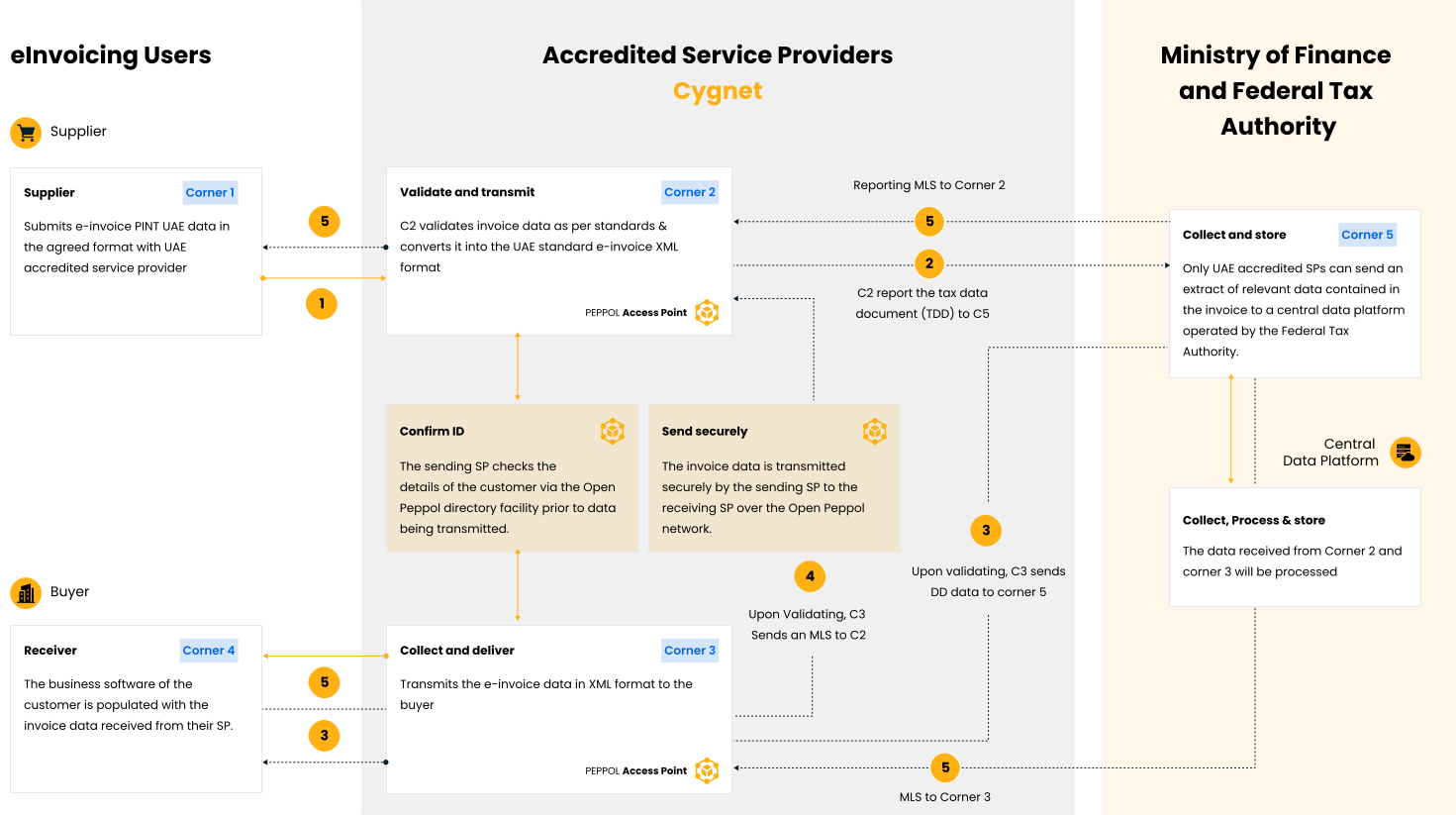
The 5-Corner model includes:
Invoices flow from the seller to FTA via AP, are validated, and then delivered to the buyer via the SMP, ensuring secure, verified, and real-time tax data exchange. The five-corner setup is a key part of how e-invoicing UAE enables trusted, real-time validation and acknowledgment across tax systems.
Most businesses can onboard within 8 to 10 weeks, depending on their ERP readiness and data complexity. Our phased approach includes data mapping, PINT-AE compliance checks, sandbox testing, and live invoice exchange, all supported by dedicated UAE-based experts.
Cygnet provides full-lifecycle support including onboarding assistance, PINT-AE validation, audit-ready archival, and post-go-live monitoring. Our local UAE team ensures regulatory alignment, while our global infrastructure delivers scalable and secure operations. You also gain access to detailed dashboards, error logs, and proactive alerts to keep your compliance on track.
Yes, payment due date should be mentioned even if the payment is on the spot. The due date will be the same as the invoice date.
It will be the Tax identification number (TIN) which is the first 10 digits of the Tax registration number (TRN) issued to the business. For the businesses which are not registered with the FTA (i.e. they don’t have a TRN), they would need to register with the FTA to get a TIN.