


















Processing vendor invoices manually remains one of the major difficulties for numerous finance departments that are trying to enter the data into ERP software for further processing. The process of entering data manually does not only take too much time, but it is also associated with the possibility of errors, delays, and ITCs.
Considering that companies tend to automate all processes and switch to digital invoices, transforming invoices manually into ERP data is becoming necessary. This article will discuss the best way to perform it automatically.
Why Manual Invoice Processing is Killing Your Productivity
Your finance team struggles with a sea of paper invoices every day, and they spend time manually entering data from each invoice, like vendor name, GSTIN, invoice number, taxes, and amounts. One typo, one duplicate entry, one delayed submission, and your compliance, cash flow, and team’s sanity suffer.
Approximately 67% of enterprises still use manual invoice processing. And what does this cost them? ₹120-150 per invoice, considering labor, errors, and time spent on them.
What if we told you there was a way to take invoices directly from paper to your ERP, without human intervention? No errors, no delays, and no compliance problems.
Why Manual Invoice Processing is No Longer Scalable
The Hidden Costs of Manual Entry
| What Happens | Manual Process | What It Costs You |
| Invoice Reading | Someone reads and types each invoice | 10-12 minutes per invoice = 66-100 hrs. lost every month |
| Data Entry Mistakes | Typos in vendor names, amounts, GSTIN | 5-8% error rate causing duplicate payments & GST mismatches |
| Compliance Delays | Manual entry takes time, deadlines missed | GST ITC credit not claimed on time, audit questions |
| Team Cost | Need 2-3 people just for data entry | ₹20-30 lakhs annually on payroll for invoice typing |
| System Overload | Bottleneck in month-end close process | ₹60,000-75,000 wasted monthly on invoice processing alone |
To put it into perspective; businesses across India process roughly 2.7 trillion invoices annually. 90% are still handled manually or semi-manually. That’s an estimated ₹2.5-3 billion wasted every year on manual data entry alone.
The Smart Way: Intelligent Document Reading Technology
How does it Work?
It’s like a smart scanner with eyes. You give it the physical invoice (scan, email as PDF, or photo). Instead of a human reading the invoice line by line, the technology does three things:
Reads the invoice – It “sees” the text in the same way as the human eye, but instantly. The vendor’s name, date, and amount are read in seconds.
Understands the context – The technology understands that “₹10,000” in one part is the total amount, not an item. It knows the GSTIN, the patterns of tax codes, and where they need to be filled.
Learns from examples – The more invoices the technology processes, the smarter it becomes. If the invoices from Vendor A have a different format from Vendor B, the technology adapts and gets better over time.
But the most exciting part is that this is not a new technology. Companies like Amazon, Walmart, and Microsoft are using the same technology in their own financial operations. And now, the same technology is available to you, integrated with your own ERP system.
What Data Gets Automatically Captured
Every field that’s important for GST and accounting:
✓ Vendor name and GSTIN
✓ Invoice date and invoice number
✓ Line items with HSN/SAC codes
✓ Unit prices and quantities
✓ CGST, SGST, or IGST amounts
✓ Total invoice amount
✓ Payment terms and due date
✓ PO reference numbers
The 6-Stage Transformation Funnel
Here’s exactly how an invoice moves from your supplier’s envelope to your ERP system, with zero manual typing:
STAGE 1: INVOICE ARRIVES
(Physical mail, email, scanned image, or portal)
Your team uploads or forwards it
STAGE 2: AUTOMATIC READING
Smart scanner “reads” the invoice document
Extracts all text and numbers in seconds
STAGE 3: ORGANIZING & FORMATTING
Technology arranges data into proper fields
Vendor name → Vendor field, Amount → Amount field
STAGE 4: AUTOMATIC CHECKING
Matches invoice with your Purchase Order
Verifies GSTIN format and tax details
Checks for duplicate invoices
STAGE 5: POSTING TO YOUR ERP
Approved invoices automatically post to SAP,
Oracle, Tally, or your accounting software
No manual journal entry needed
STAGE 6: TRACKING & REPORTING
See dashboard showing which invoices were processed
System learns patterns for next time
What to Look for in a Document Processing Solution
Not all invoice automation solutions are equal. Here’s what matters:
| Feature That Matters | Why You Need It |
| High Accuracy (98-99%) | Means less manual review work. One wrong amount posted to ERP = headaches. You need accuracy. |
| GST-Ready Automation | Automatically captures GSTIN, validates tax amounts, ensures you don’t miss ITC credit deadlines. Built for Indian compliance from day one. |
| Works with Your Current ERP | should connect with SAP, Oracle; whatever you use. No rip-and-replace needed. Integration takes weeks, not months. |
| Learns Over Time | When Vendor sends invoices in a unique format, the system adapts. Accuracy improves from Month 1 to Month 3 as it processes more invoices. |
The ROI of Invoice Automation
| Metric | When Doing It Manually | With Smart Processing |
| Time per Invoice | 10-12 minutes of someone’s time | 60-90 seconds (person just reviews, doesn’t type) |
| Cost per Invoice | ₹120-150 (labor + overhead) | ₹8-12 (system cost + minimal labor) |
| Accuracy | 5-8% have errors | 98-99% accurate first time |
| Monthly Savings (500 invoices) | (This is the baseline) | ₹56,000-71,000 saved on labor alone |
| Annual Impact | Stuck here every year | ₹6.7-8.5 lakhs saved (system pays for itself in 3-4 months) |
Beyond Cost Savings:
- Your team works smarter, not harder: No typing, just review of exceptions and managing vendor relations.
- GST compliance is automatic: No longer do you risk missing important ITC deadline dates. Invoices are validated before posting them to the books. Your auditor is happy.
- Month-end close is faster: No longer 3 days to reconcile invoice discrepancies. Now, it’s just 1 day. More time for analysis, less time for data entry.
- Scales without hiring: Today, 2-3 people are required for invoice entry. Tomorrow, 5,000 invoices a month with the same team size. Scaling, without the need for headcount scaling.
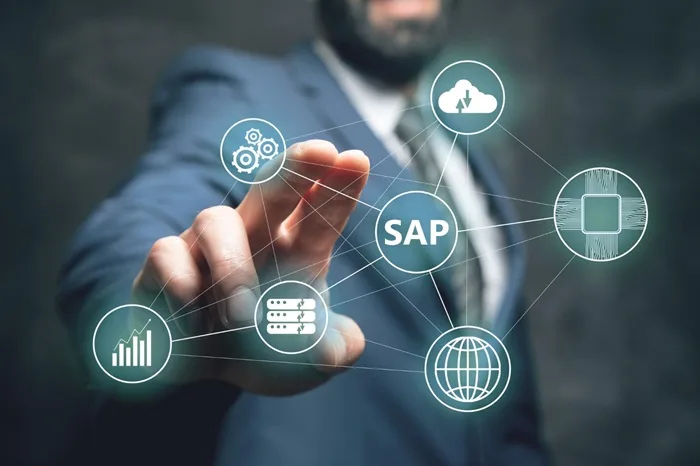
- Works with what you have: No new ERP system is required. No new software platform is required. Integrates with your existing SAP, Oracle, or Tally system. Your IT team can integrate this in 2-4 weeks.
The Future of Invoice Processing is Here
Manual invoice entry was never intended to be scalable. It’s an error-prone, time-consuming, and risk-filled process. But invoice automation with OCR + AI is the gamechanger. Your finance team shouldn’t be data-entry clerks. Your finance team should be strategic partners, analyzing cash flow, optimizing supplier relationships, and ensuring compliance.
Technology is available today. The cost savings have been proven. The question is, how much longer will you continue to struggle with manual invoice processing?
FAQs
An effective method is using OCR invoice processing along with AI-based data extraction, where invoice information is automatically extracted and fed into the ERP system without manual intervention.
An Optical Character Recognition (OCR) is used to read scanned or physical documents, turning them into digital documents. This helps in automated invoice data capture.
Yes, AI-based invoice processing helps improve accuracy and reduce errors in invoice data entry automation into the ERP system.
Businesses can migrate to automated invoice processing by going digital with invoices, using OCR invoice processing with AI, and using automated validation tools to integrate with the ERP system.
Benefits of using automated invoice processing systems are faster processing, accuracy, cost savings, real-time tracking, and tax compliance with GST.
Yes, invoice automation is relevant to small and mid-sized businesses, and invoice automation solutions are scalable.
Cygnet’s invoice automation ensures GST compliance by validating GSTINs, reconciling real-time GSTR-1/2B data, and mapping accurate HSN/SAC codes. It flags mismatches, tracks vendor compliance, and protects ITC claims keeping businesses audit-ready and penalty-free.
Popular ERP systems like SAP and Oracle support integration with invoice automation software, enabling seamless data flow.