










e-Invoicing in Malaysia:
A complete guide
Download the ebook for a detailed understanding
A complete guide
Download the ebook for a detailed understanding

e-Invoicing compliance Timeline

UAE e-Invoicing: The Complete Guide to Compliance and Future Readiness

Types of Vendor Verification and When to Use Them

Safeguard Your Business with Vendor Validation before Onboarding

Modernizing Dealer/Distributor & Customer Onboarding with BridgeFlow

Accelerate Vendor Onboarding with BridgeFlow
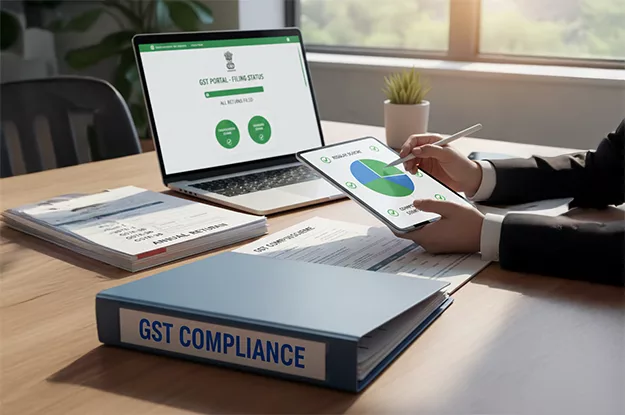
GST Filing 360°: GST, E-Invoicing, E-Way Bills & Annual Returns Made Simple
Why Manual Tax Determination Fails for High-Volume, Multi-Country Transactions
GST Filing 360°: GST, E-Invoicing, E-Way Bills & Annual Returns Made Simple
Key Features of an Invoice Management System Every Business Should Know

Automating the Shipping Bill & Bill of Entry Invoice Operations for a Leading Construction Company

From Manual to Massive: How Enterprises Are Automating Invoice Signing at Scale

AI-Powered Interviewing Helped an Education Group Reduce Hiring Time Significantly

AI-Powered Voice Assistant for Smarter Search Experiences

Cygnet.One’s GenAI Ideation Workshop

Our Journey to CMMI Level 5 Appraisal for Development and Service Model

Extend your team with vetted talent for cloud, data, and product work

Enterprise Application Testing Services: What to Expect

Future-Proof Your Enterprise with AI-First Quality Engineering

Cloud Modernization Enabled HDFC to Cut Storage Costs & Recovery Time

Cloud-Native Scalability & Release Agility for a Leading AMC

AWS workload optimization & cost management for sustainable growth

Cloud Cost Optimization Strategies for 2026: Best Practices to Follow
Cygnet.One’s GenAI Ideation Workshop

Practical Approaches to Migration with AWS: A Cygnet.One Guide
Tax Governance Frameworks for Enterprises
Cygnet Launches TaxAssurance: A Step Towards Certainty in Tax Management
Ensure seamless domestic B2B and B2G compliance without disrupting existing ERP workflows.
Enable cross-border PEPPOL e-Invoicing while maintaining consistency across EU operations.
Centralize invoice validation, tracking, and compliance across Belgium and other EU countries.
Invoice formats, ERP readiness, PEPPOL participation
Align master data, tax logic, and invoice structures
Connectivity, validations, and end-to-end testing
Live compliance, alerts, and regulatory updates






Electronic invoicing regulations are rapidly becoming the standard across the European Union (EU) and globally, driving procurement standardization. Countries such as France, Poland, Spain, and Ukraine are preparing to introduce their e-invoicing regulations starting in 2023 and continuing in the years to come.

The e-invoicing age is now here—and rapidly extending its reach. Read on to know about e-invoicing around the globe.
Belgium has adopted PEPPOL as the official network for exchanging electronic invoices between businesses and government entities.
The mandatory requirement applies to domestic B2B transactions within Belgium.
However, EU businesses trading with Belgian customers are encouraged to adopt PEPPOL to ensure interoperability and smoother invoice acceptance.
While not legally mandated, ERP integration is strongly recommended. Direct ERP-to-PEPPOL integration ensures accurate data, automated validation, real-time invoice status updates, and audit-ready compliance.
Yes. A PEPPOL-based e-invoicing architecture can support Belgium and other EU countries, allowing enterprises and shared service centers to scale compliance using a single, standards-based framework.
Businesses should:
Early preparation reduces last-minute risk and operational strain.