
































From fragmented financial data to explainable credit and risk decisions
Banks, NBFCs and digital lenders already operate across multiple systems and data sources. The challenge is connecting the evidence across them and turning that evidence into a decision that can be explained, verified and governed.

AI-powered credit underwriting for Banks and NBFCs
Move from document-by-document review to a more complete borrower intelligence journey that can analyse, verify, assess and recommend.

EVIDENCE
Bring together bank statements, financial statements, GST returns, ITR information, invoices, Account Aggregator data and other borrower evidence.
VERIFICATION
Cross-check income, turnover, cash flow and related signals to surface mismatches, anomalies and risk indicators.
REASONING
Apply credit, risk and institutional policies to the complete borrower picture, not one isolated document.
GOVERNED ACTION
Support the credit team with an explainable recommendation, human review and an audit trail of the evidence used.
Automate invoice management system's Actions with GSTR-2B Reconciliation Buckets
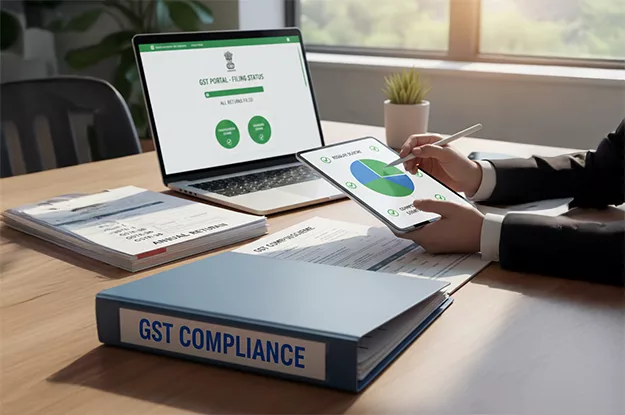
Cygnet Tax IMS lets you set default or custom actions for every reconciliation bucket - so your ITC position is always accurate, intentional, and compliant.

GST analysis for credit assessment
Support assessment of reported turnover, business activity, transaction behaviour, counterparty information, GST versus banking behaviour and other potential risk indicators.

Bank statement analysis and cash flow underwriting
Analyse cash inflows and outflows, income patterns, obligations, transaction concentration, seasonality, financial stress indicators and unusual banking behaviour.

Account Aggregator intelligence for lending
Use consented financial information as part of a wider lending and risk decisioning framework with analysis, cross-source verification, policy evaluation and governed workflows.
A governed agentic architecture for BFSI workflows
Specialised agents can be orchestrated around evidence, verification, reasoning and governed action. At GFF, live demonstration will focus on confirmed use cases; the additional agent areas below are illustrative roadmap capabilities available for architecture discussion, not live demonstration claims.
Onboarding Agent
Roadmap area. Illustrative agent responsibility for customer information, supporting documents and onboarding verification.
Credit Underwriting Agent
Validated lending focus: bring borrower financial information together to support evidence-backed credit assessment and loan underwriting.
Trade Verification Agent
Roadmap area. Illustrative agent responsibility for invoice and transaction verification in trade-finance workflows.
GST Intelligence Agent
Use GST information as financial evidence for credit assessment, cross-source verification and business analysis.
Fraud Detection Agent
Roadmap area. Illustrative agent responsibility for inconsistencies, anomalies and suspicious patterns across financial evidence.
Loan Intelligence Agent
Roadmap area. Illustrative agent responsibility for extending intelligence across the lending lifecycle.
Insurance Claims Agent
Roadmap area. Illustrative agent responsibility for claim information and supporting-evidence review.
Collections Agent
Roadmap area. Illustrative agent responsibility for collections prioritisation using financial and behavioural signals.
Early Warning Agent
Roadmap area. Illustrative agent responsibility for emerging risk indicators and review triggers.
One Agentic AI layer across your existing BFSI technology stack
Add intelligence without creating another isolated system.



Can your AI defend its credit or risk decision?

At Global Fintech Fest 2026, enter Cygnet.One’s conversation space for the next generation of AI-led financial decisioning.Request an Evidence Room Invite
Explainable Underwriting
Can AI-powered credit underwriting remain transparent enough for a regulated financial institution?
Connected Financial Evidence
How should Banks and NBFCs use GST, ITR, banking and Account Aggregator data together?
Governed Agentic AI
Where should human judgement remain when AI moves from recommendation to action?
Relevant across Banks, NBFCs, fintechs, insurance and BFSI technology teams
Banks
Credit underwriting, lending transformation and risk management, with roadmap discussions across trade finance, collections and fraud detection.
NBFCs
Loan underwriting, MSME credit assessment, GST-based credit analysis, bank statement analysis and cash-flow underwriting, with portfolio monitoring available as a roadmap discussion.
Fintech and Digital Lending
Financial intelligence APIs, embedded lending intelligence, credit decisioning, risk analytics and data verification.
Insurance and BFSI Technology
AI governance, LOS/LMS intelligence and financial data orchestration, with onboarding and claims intelligence available as roadmap discussions.
Across the Lending Lifecycle One intelligent layer before, at and after the credit decision
Before the Loan
Financial data analysis, GST analysis, bank statement analysis, credit underwriting and policy assessment, with fraud checks available as a roadmap discussion.
At the Decision
Cross-source verification, risk assessment, credit recommendation, human review and loan decisioning.
After Disbursement
Roadmap: portfolio monitoring, early warning, risk signals and collections intelligence are available for discussion at GFF.
RBI ULI-onboarded via Cygnet's RBIH partnership
Cygnet.One on ULI: GST intelligence first, with more data services planned.
Explore how Cygnet.One can help connect financial intelligence, data and decisioning capabilities into India's evolving digital lending ecosystem.
Financial data intelligence meets AI-powered financial decisioning
Glib brings intelligence for understanding complex financial information including bank statements, financial statements and invoices. Within the wider Cygnet.One ecosystem, that intelligence can connect with GST information, ITR information, Account Aggregator data, enterprise systems, risk policies and decision workflows. Broader fraud-related workflows are part of the roadmap discussion at GFF.

EVIDENCE
Bank statements, financial statements, invoices, GST, ITR, Account Aggregator data and other borrower information from connected systems.

VERIFICATION
Cross-source mismatches, anomalies and risk signals surfaced across the available financial evidence.

REASONING
Credit policy and risk applied to the complete borrower picture, not one isolated document or data feed.

GOVERNED ACTION
Explainable recommendation, human review and an audit trail linked back to the evidence considered.
Agentic AI, credit underwriting and lending intelligence FAQs
SEO-friendly answers for Banks, NBFCs and financial-services teams evaluating AI-led decisioning.
Agentic AI uses specialised AI agents to analyse information, perform defined tasks, collaborate across workflows and recommend or execute actions within established controls. Cygnet.One’s GFF focus is evidence-backed credit underwriting and financial data intelligence, while additional BFSI agent areas are roadmap capabilities available for discussion.
AI can help analyse bank statements, financial statements, GST information, ITR data, Account Aggregator data and other borrower information. Cygnet.One connects these signals to support cross-source verification, risk identification, policy evaluation and evidence-backed credit assessment.
GST information can provide insight into turnover, business activity, transaction behaviour and counterparty relationships. Analysing GST alongside banking, ITR and financial-statement information can provide lenders with a more complete view of the borrower.
Cygnet.One’s Agentic AI approach is designed as an intelligent layer across existing systems such as Loan Origination Systems, Loan Management Systems, Core Banking Systems, KYC platforms, bureau data and other financial systems.
Fraud detection is part of our roadmap, built on the same evidence-reconciliation approach we use for credit underwriting today. Our team can walk you through the architecture at GFF.
Cash-flow underwriting evaluates actual inflows, outflows, obligations and financial behaviour to help understand a borrower’s repayment capacity. It can complement traditional bureau and document-based credit assessment.
Collections and early warning are part of our roadmap, built on the same evidence-reconciliation approach we use for credit underwriting today. Our team can walk you through the architecture and intended workflow at GFF.
Account Aggregator data can provide a consent-led view of financial information. When connected with specialised analysis, verification and policy workflows, it can support a broader lending and risk assessment process rather than operate as an isolated data feed.
AI can help combine business, tax, banking and financial-statement signals to build a more complete view of an MSME borrower. This can support verification, cash-flow assessment, anomaly identification and policy-led credit evaluation.
The showcase is particularly relevant for Credit Heads, Chief Risk Officers, Lending Heads, CIOs, CTOs, Digital Transformation Heads, NBFC leaders, fintech product teams, trade-finance leaders, collections teams and BFSI technology leaders.