


































AWS account growth rarely looks risky at first. One account supports a product team. Another supports security logging. A third is created for a new region, business unit, acquisition, or production boundary. Each decision makes sense on its own. The complexity appears later, when leaders ask a harder question: can we still prove who owns what, which controls apply, and whether every account follows the same operating rules?
That is where AWS environment standardization in US enterprises becomes less about tidiness and more about operating control. US enterprises often run AWS estates across regulated data, acquisitions, product teams, shared platforms, and audit regimes that cannot wait for cleanup.
The goal is not to make every workload identical. The goal is to define what must stay consistent everywhere: account creation, identity, logging, tagging, network paths, guardrails, cost ownership, and exceptions.
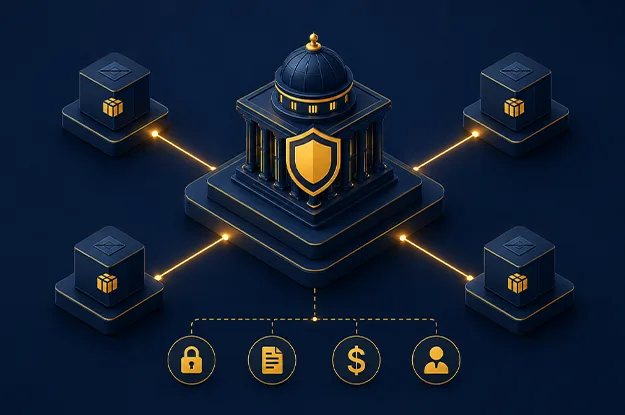
This is also where AWS multi account governance becomes practical, especially when enterprises are designing a resilient multi-account AWS architecture. It lets enterprises separate workloads, reduce blast radius, and still manage the environment as one operating system. Done well, an AWS organizations strategy gives each team room to build while keeping central controls firm enough for security, finance, audit, and platform operations.
Why AWS Accounts Multiply So Fast
Most account sprawl starts with reasonable decisions made under delivery pressure. A product team needs isolation. Security wants central logging. Finance wants chargeback. An acquired company brings its own AWS setup.
Over time, the estate can grow into dozens or hundreds of accounts, each carrying different assumptions about access, logging, tagging, and ownership. This is one of the harder enterprise AWS scaling challenges US teams face because the problem rarely appears in one dashboard. It shows up as small operational leaks.
| Where complexity appears | What it looks like in daily work |
| Account ownership | No clear product, business, or application owner |
| Identity | Different permission patterns across teams |
| Logging | Some accounts forward logs, others do not |
| Tagging | Cost allocation tags exist, but are incomplete |
| Security | Guardrails depend on manual review |
The first mistake is treating this as a cleanup. Cleanup suggests a temporary effort. Multi-account complexity needs an operating model. AWS environment standardization for US enterprises works only when the standard becomes the default path for new accounts, not a fix applied later.
Account Design Comes Before Tooling
The account is the boundary that shapes identity, cost, risk, and ownership.
A stronger AWS organizations strategy begins by deciding what an account represents. Is it an application boundary, business unit boundary, data sensitivity boundary, or delivery boundary? Many enterprises mix these models without naming the choice.
For most US enterprises, the better pattern is layered.
| Account type | Purpose | Typical owner |
| Management account | Organization administration only | Cloud platform leadership |
| Security tooling account | Security services and response workflows | Security operations |
| Log archive account | Restricted log storage | Security and audit |
| Shared services account | Network, directory, CI/CD, DNS, artifacts | Platform engineering |
| Workload accounts | Application environments split by lifecycle or sensitivity | Product teams |
This structure supports AWS organizations best practices US enterprises can apply without freezing delivery through AWS managed services. Shared accounts hold common services. Workload accounts separate production from non-production. Security and logging accounts stay insulated from application changes.
A mature AWS organizations strategy also defines when a new account is justified. A new account should have a named owner, business purpose, data classification, lifecycle, budget owner, and support path. Without those details, the enterprise is creating future ambiguity.
The Baseline Every AWS Account Should Inherit
Useful standardization is boring in the best way. It removes decisions that should not be remade by every team.
The baseline should answer a simple question: what must exist before a workload lands in the account?
At minimum, AWS environment standardization techniques should cover identity integration, AWS CloudTrail logging, central log delivery, GuardDuty, Security Hub, AWS Config, tag policies, network rules, encryption requirements, and account closure rules.
The point is not process for its own sake. It is to remove decisions that should not be remade by every team. Engineers should not have to ask whether CloudTrail is enabled, whether cost tags are mandatory, or whether production can run without approved logging.
This is where AWS environment standardization across US enterprises becomes a productivity issue. Security also gets cleaner evidence because the control set is consistent by account type. In older estates, AWS environment standardization across US enterprises also gives leaders a language for separating useful variation from unmanaged drift.
Governance Should Stop Drift Early
Governance fails when it behaves like a quarterly inspection. By then, account drift has already become remediation work.
Good AWS multi account governance uses preventive controls and detective controls, similar to how AWS Control Tower accelerates secure multi-account scaling. Service control policies can set hard limits on what actions are possible inside an organizational unit. AWS Config can identify configuration drift. Security Hub can centralize findings. Control Tower can help govern account setup through a landing zone and guardrails.
| Governance layer | Best use | Risk if missing |
| Preventive controls | Block high-risk actions such as disabling logging | Security gaps appear silently |
| Detective controls | Flag drift from approved configuration | Audit work becomes manual |
| Identity controls | Keep access aligned with account purpose | Excess permissions accumulate |
| Tag controls | Keep cost and ownership traceable | Finance loses accountability |
| Exception controls | Approve and expire deviations | Temporary fixes become permanent |
This is the heart of AWS multi account governance. The enterprise does not need control over every possible mistake. It needs firm controls for failures that create material risk. Mature AWS multi account governance also keeps exceptions visible, owned, and time- bound.
Policies should be attached at the right organizational unit, not sprayed across the whole estate. A sandbox account should not carry the same restrictions as a regulated production account. Exceptions also need expiry dates. Open-ended exceptions are unmanaged policy changes. This is why AWS multi account governance needs owners and expiry dates.
Choosing the Right Governance Model
There are several multi account AWS governance models, but the useful ones usually sit between central control and team autonomy.
A fully centralized model gives one platform team authority over almost every account-level decision. It can work in heavily regulated environments, but it may slow product teams. A fully federated model gives teams more control, but it depends on strong standards and clear consequences for drift. Most US enterprises land in a hybrid model, with central baseline ownership and distributed workload ownership.
| Model | Works best when | Watch point |
| Centralized | Compliance burden is high and workloads are similar | Platform team becomes a bottleneck |
| Federated | Product teams are mature and cloud-literate | Standards may fragment |
| Hybrid | Enterprise needs control without slowing delivery | Decision rights must be explicit |
The hybrid model separates platform decisions from workload decisions. The platform team owns account vending, guardrails, shared services, security baselines, and cost visibility. Product teams own application architecture, service selection within approved boundaries, workload resilience, and remediation of findings.
This makes AWS organizations strategy more than an org chart. It becomes a contract between central teams and application teams.
Tools That Keep the Standard Alive
Tools do not fix governance design, but they can keep a good design from becoming shelfware.
AWS Organizations provides the hierarchy. Organizational units group accounts so policies can be applied at the right level. Service control policies define maximum available permissions. AWS Control Tower supports landing zone setup, account provisioning, and guardrails. AWS Config, Security Hub, CloudTrail, Budgets, Cost Explorer, and Cost and Usage Reports keep configuration, findings, activity, and spend visible.
For many enterprises, the missing piece is the account vending workflow. A new account request should collect ownership, environment type, data class, network pattern, required services, budget code, and exception needs before the account exists.
That workflow should trigger baseline setup automatically. If the team receives a blank account, the standard has already failed.
This is where AWS environment standardization techniques need to meet engineering habits. Put the baseline into infrastructure as code. Keep policy changes versioned. Test service control policies before broad rollout. Publish the account request path in plain language.
What Changes in Daily Operations
The value of AWS environment standardization in US enterprises shows up in friction removed. Incident review is faster when logs are centralized. Cost review is clearer when tags are enforced. Team onboarding is easier when access patterns are consistent. Audit work is lighter when evidence is not rebuilt from scratch.
The outcomes are practical:
- Fewer orphaned accounts because ownership is required at creation
- Faster account readiness because baseline controls are automated
- Better cost accountability because tags and budgets are part of the account model
- Cleaner security response because findings roll into central tools
- Better audit posture because logging, configuration, and access controls are consistent
This is why AWS multi account governance should be measured through operational signals, not policy documents alone. Useful metrics include account provisioning time, tag completeness, open exceptions, remediation time for high-risk findings, central logging coverage, and unused account age.
For US enterprises, this also reduces one of the overlooked enterprise AWS scaling challenges US leaders face: cognitive load. Engineers can work inside a known pattern. Security can review exceptions instead of rediscovering the estate. Finance can connect spend to owners.
A Practical Roadmap for Existing AWS Estates
Most enterprises inherit accounts, policies, and exceptions created over years. Start with discovery. Build an account inventory with owner, purpose, environment, business unit, data sensitivity, monthly spend, network path, and logging status.
Then classify accounts into target OUs. Start with low-risk accounts, test policy inheritance, and document behavior. Next, define the minimum account baseline. Keep it small enough to enforce. Then create the account vending path and make it the approved route.
| Step | Decision to make |
| Inventory | Which accounts exist, who owns them, and why do they exist? |
| Classify | Which OU should each account belong to? |
| Baseline | Which controls must every account inherit? |
| Automate | How are new accounts created and configured? |
| Govern | How are exceptions approved, tracked, and retired? |
| Measure | Which indicators prove the model is working? |
This turns AWS organizations strategy into a managed change program rather than a diagram exercise. A practical AWS organizations strategy also gives platform teams a basis for saying no without sounding arbitrary.
Conclusion: Standardization Is the Control Plane for Growth
Multi-account AWS is the right direction for most enterprises, but it creates its own management burden. Without standards, the account model becomes a maze. With standards, it becomes a control plane.
The strongest AWS environment standardization US programs treat standardization as an operating discipline, not a one-time cloud cleanup effort. They do three things well. They define account patterns clearly. They make governance automatic where possible. They leave enough room for product teams to make workload decisions without weakening enterprise controls.
That balance is the reason AWS organizations best practices US enterprises follow should be treated as operating guidance, not documentation. The work is not finished when OUs are created or Control Tower is deployed. It is finished when new accounts arrive ready, old accounts are under policy, exceptions are visible, and teams trust the model.
For leaders comparing multi account AWS governance models, the better question is not which model looks cleanest on paper. The better question is which model your teams will follow under pressure.
A clear AWS organizations strategy gives US enterprises a way to grow without losing evidence, ownership, or control. That is the real test of AWS standardization.
Author


Yogita Jain
Content Lead
Yogita Jain leads with storytelling and Insightful content that connects with the audiences. She’s the voice behind the brand’s digital presence, translating complex tech like cloud modernization and enterprise AI into narratives that spark interest and drive action. With a diverse of experience across IT and digital transformation, Yogita blends strategic thinking with editorial craft, shaping content that’s sharp, relevant, and grounded in real business outcomes. At Cygnet, she’s not just building content pipelines; she’s building conversations that matter to clients, partners, and decision-makers alike.