



































• Cygnet IRP
  • Glib.ai
  • IFSCA
Cygnet.One
  • About
  • Products
  • Solutions
  • Services
  • Partners
  • Resources
Generic selectors
Exact matches only
Search in title
Search in content
Post Type Selectors
Get Started
About
  • Overview

    A promise of limitless possibilities

  • We are Cygnet

    Together, we cultivate an environment of collaboration

  • Careers

    Join Our Dynamic Team: Careers at Cygnet

  • CSR

    Impacting Communities, Enriching Lives

  • In the News

    Catch up on the latest news and updates from Cygnet

  • Contact Us

    Connect with our teams across the globe

What’s new

chatgpt

Our Journey to CMMI Level 5 Appraisal for Development and Service Model

Full Story

chatgpt

ChatGPT: Raising the Standards of Conversational AI in Finance and Healthcare Space

Full Story

Products
  • Cygnet Tax
    • Cygnet Tax
    • e-Invoicing / Real time reportingIRP-integrated e-Invoicing with real-time validation
    • e-Way Bills / Road permitsGST-compliant centralized e-Way Bill platform for scalable operations
    • Direct Tax ComplianceAccurate direct tax compliance, filings, litigation, and assessments
    • Indirect Tax ComplianceEnterprise-grade platform for indirect tax compliance
      • Indirect Tax Compliance
      • GST Compliance India
      • VAT Compliance EU
      • VAT Compliance ME
    • Managed ServicesEnd-to-end indirect tax compliance support by experts
  • Global e-Invoicing
    • Global e-Invoicing
    • APAC
      • India
      • Malaysia
      • Singapore
      • Japan
    • Africa
      • Egypt
      • Kenya
      • Zambia
      • Nigeria
    • Europe
      • Spain
      • France
      • Germany
      • Poland
      • Belgium
    • Oceania
      • Australia
      • New Zealand
    • Middle East
      • UAE
      • Oman
      • Saudi Arabia
      • Bahrain
      • Qatar
      • Jordan
  • Cygnet Vendor Postbox
    • Cygnet Vendor PostboxDigitize purchase invoice validation & posting to ERPs & maximize ITC
  • Finance Transformation
    • Finance Transformation
    • Cygnet FinalyzeUnlock working capital with data-driven invoice-based credit decisions
    • Bank Statement AnalysisEvaluate company health by analyzing performance and financial risk
    • Financial Statement AnalysisAssess company performance and risk with financial statement analysis
    • GST Business Intelligence Report360-degree financial health insights using GST data analytics
    • GST Return Compliance ScoreGST-based compliance score to assess business risk and credibility
    • ITR AnalysisAssess creditworthiness and lending risk using ITR filing analysis
    • Invoice Verification for Trade FinanceVerify invoices to reduce fraud and improve credit decisions
    • Account Aggregator – Technology Service Provider (AA-TSP)Onboard to the Account Aggregator ecosystem with FIP & FIU modules
  • Cygnet BridgeFlow
    • Cygnet BridgeFlowAutomated digital onboarding with real-time validations and compliance
  • Cygnet Bills
    • Cygnet BillsGST-compliant centralized e-Way Bill platform for scalable operations
  • Cygnet IRP
    • Cygnet IRPIRP-integrated e-Invoicing with real-time validation
  • Cygnature
    • CygnatureSecure, compliant digital signing with audit-ready traceability

What’s new

e-Invoicing compliance Timeline

Know More →

UAE e-Invoicing: The Complete Guide to Compliance and Future Readiness

Read More →

Types of Vendor Verification and When to Use Them

Read More →

Safeguard Your Business with Vendor Validation before Onboarding

Read More →

Modernizing Dealer/Distributor & Customer Onboarding with BridgeFlow

Read More →

Accelerate Vendor Onboarding with BridgeFlow

Read More →

GST Filing 360°: GST, E-Invoicing, E-Way Bills & Annual Returns Made Simple

Read More →

Why Manual Tax Determination Fails for High-Volume, Multi-Country Transactions

Read More →

GST Filing 360°: GST, E-Invoicing, E-Way Bills & Annual Returns Made Simple

Read More →

Key Features of an Invoice Management System Every Business Should Know

Read More →

Automating the Shipping Bill & Bill of Entry Invoice Operations for a Leading Construction Company

Read More →

From Manual to Massive: How Enterprises Are Automating Invoice Signing at Scale

Know More →

Solutions
  • HireAI
  • Agent as a Service
  • AI-powered Voice Assistant
  • Generative AI Workshop
  • TestingWhiz
  • VIPRE

What’s new

AI powered Interviewer

AI-Powered Interviewing Helped an Education Group Reduce Hiring Time Significantly

Know More

Generative AI ebook

Navigating the Generative AI Landscape

Download eBook

Services
  • Data Analytics & AI
    • Data Analytics & AI
    • Data Engineering and ManagementData engineering and management for smart, scalable systems
    • Data Migration and ModernizationData migration and modernization for future-ready platforms
    • Insights Driven Business TransformationInsight-driven business transformation for faster decisions
    • Business Analytics and Embedded AIBusiness analytics and embedded AI for data-led growth
  • Digital Engineering
    • Digital Engineering
    • Technical Due DiligenceEnabling smarter decisions through future-ready digital ecosystems
    • Product EngineeringEngineering impactful digital products that elevate business growth
    • HyperautomationSmarter hyperautomation using low-code for agile business processes
    • Enterprise IntegrationIntegrating enterprise systems for seamless operations and growth
    • Application ModernizationModernizing IT ecosystems with scalable, AI-driven innovation
  • Quality Engineering
    • Quality Engineering
    • Test Consulting & Maturity AssessmentTest consulting and maturity assessments for reliable software QA
    • Business Assurance TestingBusiness assurance testing aligned with real business outcomes
    • Enterprise Application & Software TestingEnterprise application testing for continuity and scale
    • Data Transformation TestingData transformation testing for scalable, trusted data quality
  • Cloud Engineering
    • Cloud Engineering
    • Cloud Strategy and DesignCloud strategy and design services for secure, scalable growth
    • Cloud Migration & ModernizationORBIT: a proven framework for measurable cloud transformation
    • Cloud Native DevelopmentCloud-native development for resilient, scalable innovation
    • Cloud Operations and OptimizationCloud optimization and operations for enterprise resilience
    • Cloud for AI FirstAI-first cloud transformation for smarter, scalable enterprises
  • Managed IT Services
    • Managed IT Services
    • IT Strategy and ConsultingStrategic IT consulting to align technology with business goals
    • Application Managed Services24/7 managed application services for performance and security
    • Infrastructure Managed ServicesEnd-to-end infrastructure management for resilient IT operations
    • CybersecurityComprehensive cybersecurity solutions to protect business assets
    • Governance, Risk Management & ComplianceGRC solutions to manage risk, compliance, and governance
  • Cygnet TaxAssurance
    • Cygnet TaxAssurance
    • Tax DatalakeUnified tax data lake for intelligent, compliant decision-making
    • Tax InfraDigital tax infrastructure for efficient, compliant transformation
  • Amazon Web Services
    • Amazon Web Services
    • Migration and ModernizationMake Your Move to the Cloud With AWS Smarter & Faster
    • Generative AIRun your Gen AI workloads on AWS with full control

What’s new

AI-Powered Voice Assistant for Smarter Search Experiences

Explore More →

Cygnet.One’s GenAI Ideation Workshop

Know More →

Our Journey to CMMI Level 5 Appraisal for Development and Service Model

Read More →

Extend your team with vetted talent for cloud, data, and product work

Explore More →

Enterprise Application Testing Services: What to Expect

Read More →

Future-Proof Your Enterprise with AI-First Quality Engineering

Read More →

Cloud Modernization Enabled HDFC to Cut Storage Costs & Recovery Time

Know More →

Cloud-Native Scalability & Release Agility for a Leading AMC

Know More →

AWS workload optimization & cost management for sustainable growth

Know More →

Cloud Cost Optimization Strategies for 2026: Best Practices to Follow

Read More →

Cygnet.One’s GenAI Ideation Workshop

Explore More →

Practical Approaches to Migration with AWS: A Cygnet.One Guide

Know More →

Tax Governance Frameworks for Enterprises

Read More →

Cygnet Launches TaxAssurance: A Step Towards Certainty in Tax Management

Read More →

Partners
  • Products Partner Program
Resources
  • Blogs
  • Case Studies
  • eBooks
  • Events
  • Webinars

Blogs

A Step-by-Step Guide to E-Invoicing Implementation in the UAE

A Step-by-Step Guide to E-Invoicing Implementation in the UAE

View All

Case Studies

Cloud-Based CRM Modernization Helped a UK Based Organization Scale Faster and Reduce Deployment Complexity

Cloud-Based CRM Modernization Helped a UK Based Organization Scale Faster and Reduce Deployment Complexity

View All

eBooks

Build Smart Workflow with Intelligent Automation and Analytics

Build Smart Workflow with Intelligent Automation and Analytics

View All

Events

11th CIO Conclave & Awards

11th CIO Conclave & Awards

View All

Webinars

Beyond Chat: How Voice-Assisted AI is Redefining Digital Engagement

Beyond Chat: How Voice-Assisted AI is Redefining Digital Engagement

View All
Cygnet IRP
Glib.ai
IFSCA

Building a Data Strategy Roadmap for 2026 and Beyond

  • By Yogita Jain
  • January 21, 2026
  • 7 minutes read
Share
Subscribe

You can usually tell how a company treats data from a single meeting. If people arrive with screenshots pasted into slides, a few ad hoc Excel reports, and three different numbers for the same metric, you already know how the rest of the discussion will go. Everyone talks about AI, yet nobody quite trusts the data behind the decisions.

This gap between ambition and reality is what a modern data program—supported by strong data analytics and AI services—must fix. Not with another tool or one-off dashboard project, but with a clear, shared plan for how data will support growth, efficiency, product decisions, and risk management. This is where a data strategy roadmap makes the difference.

In 2026 and beyond, that roadmap cannot just describe warehouses and pipelines. It needs to connect business outcomes, operating models, platforms, people, governance, and AI capabilities into a single story, anchored by a clear cloud strategy and design approach. It should be specific enough to inform budgets and hiring, and flexible enough to adapt when markets or regulations change.

Here is a practical view of why strategy matters now, the key pillars, the steps to build it, and the KPIs that keep it real. You will also see how to shape your plan so both humans and AI search tools can understand and reuse it across the organization.

What is the importance of a modern data strategy?

Many enterprises still treat data as a support function. Reports are requested after the fact, and data teams work in a ticket queue. That model is already under pressure. AI products, near real-time customer experience, and complex partner ecosystems all depend on coherent data foundations.

A modern strategy does three important things.

  • It links data work directly to business bets such as new products, pricing models, or customer segments.
  • It sets a north star for architecture, so every new system and integration decision points in roughly the same direction.
  • It clarifies who owns what, which risks matter most, and how quality issues will be handled.

Without this clarity, technology decisions become fragmented. You may have pockets of excellence in analytics or AI, but the rest of the organization does not benefit. A data strategy roadmap gives executives and teams a shared narrative. It describes what “good” looks like at two- and three-year horizons and the sequence of moves to reach that state.

This is also where the idea of data maturity assessment becomes practical. Rather than a checkbox exercise, it becomes the baseline for your journey. You assess current capabilities across ingestion, modeling, governance, privacy, security, and adoption. Then you decide which gaps are acceptable for now and which block critical initiatives.

Key pillars of a future ready data strategy

Before you detail initiatives and timelines, you need clarity on the pillars that will guide every trade off. Think of these as the structural beams of your data strategy roadmap, the elements that will not change every quarter even if tools or team structures do.

The most common pillars include:

  1. Business alignment and value cases
  2. Architecture and platform strategy
  3. Governance, risk, and compliance
  4. Operating model, skills, and culture
  5. Data products and AI enablement

Let us look at each in more detail.

Business alignment and value cases

Here, the question is simple. How exactly will data create value for your organization in three years. Good answers are specific. For example, reduce churn in one key segment by five percent, cut supply chain stock outs in two core markets, reduce manual reconciliation time in finance by half, or increase self-service adoption of analytics among field teams.

These value cases should sit at the top of your data strategy roadmap. They give context for every later decision on architecture and governance. They also make it easier to explain the plan to non-technical leaders and to AI search tools that scan your internal documents. Clear business language improves retrieval and avoids misinterpretation.

Architecture and platform strategy

Here you decide what kind of data platform stack will support those value cases across 2026 and beyond. You do not need a detailed tool list in your roadmap, but you should define patterns. For example, how you will handle streaming versus batch data, operational versus analytical stores, data lake versus warehouse roles, and how AI workloads will consume curated datasets and features.

This is another place where data maturity assessment is useful. It helps you understand where your current architecture is already close to target and where technical debt is too high. It also gives a neutral way to discuss tradeoffs with stakeholders who may be attached to older systems.

Governance, risk, and compliance

Regulators, customers, and partners now expect clear control over data use, retention, and access. At the same time, data teams want agility. Governance has to reconcile both needs.

Instead of long policy documents that nobody reads, leading enterprises are moving to practical guardrails. For example, classification schemes that map directly to access policies, predefined patterns for sharing data with partners, and standard review steps when new AI use cases request access to sensitive attributes.

If your internal skills or bandwidth are limited, this is a natural area to bring in data governance consulting services. External experts can help you convert broad principles into pragmatic controls that fit your industry, local regulations, and technology stack.

Operating model, skills, and culture

You also need a clear view of who owns which domains, how changes are requested, and how central and domain teams work together. Capture the main roles you will need and how you will build skills through hiring and training.

Data products and AI enablement

The final pillar is how data will support analytics and AI. Describe a small set of concrete data products with clear owners and audiences, such as a unified customer profile or pricing service, so people and AI tools can find and reuse them.

Roadmap steps: how to move from ideas to execution?

With pillars in place, you can move into sequence. A roadmap is not a wish list. It is a realistic schedule of how capabilities and outcomes will grow over time, with clear constraints on budget and capacity.

A practical data strategy roadmap for 2026 and beyond often follows these stages.
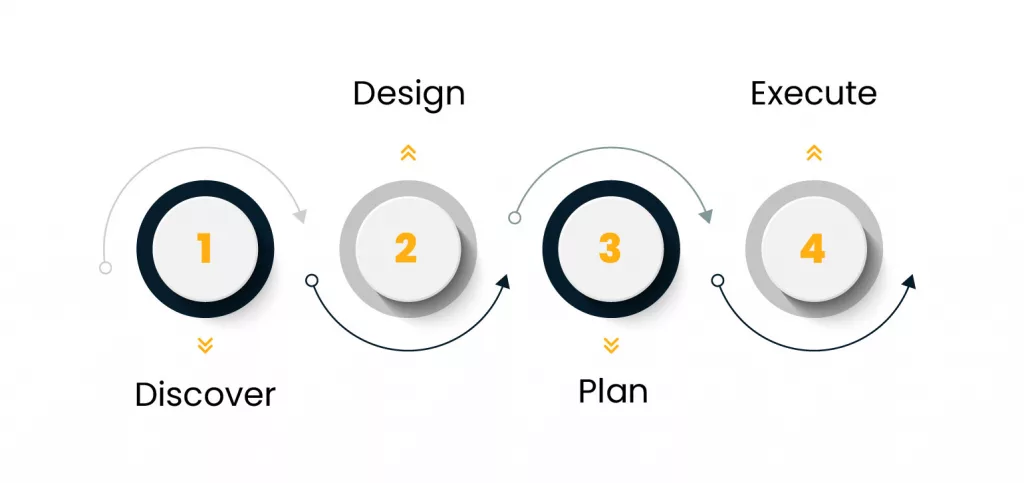
Stage 1: Discover and baseline

The first stage is about understanding where you stand and aligning on priorities.

  • Map strategic business goals for the next three years.
  • Inventory critical data sources, platforms, and major reports.
  • Run targeted interviews with business and technology stakeholders.
  • Conduct a focused architecture review and security posture check.
  • Summarize findings in a concise current state profile.

Here is where you formalize your roadmap at a high level. You connect key business goals to required capabilities and call out major risks. At this stage, you also decide where specialist partners can help, for example with platform migration, quality engineering, or data governance consulting services.

Stage 2: Design the target state

Next, you define what “good” looks like by the end of the planning horizon. This includes:

  • Target data platform architecture patterns.
  • Governance model and decision forums.
  • Operating model for core teams and domains.
  • Priority data products that will support AI and analytics use cases.
  • Security and privacy controls across the lifecycle.

When you build a data strategy roadmap, work in phases that each deliver visible outcomes. Avoid vague multiyear programs with no intermediate wins. For example, one phase might deliver a trusted customer data layer plus two critical reports and a machine learning use case. Another phase might focus on finance and supply chain data for better cash and inventory decisions.

Stage 3: Plan initiatives and dependencies

Here you break the target state into concrete initiatives with budgets, owners, and timelines. Typical initiative types include data platform modernization projects aligned to a broader cloud migration and modernization roadmap, quality improvement programs, data product builds, and training academies.

For each initiative, capture:

  • Business outcomes and leading indicators.
  • Time frame and dependency on other work.
  • Skills and roles required.
  • Risks and mitigation actions.

This structure helps both humans and AI tools understand and query your data strategy roadmap. When someone asks, “What has to be in place before we launch dynamic pricing in region A”, the answer is already encoded in the dependencies and phases.

Stage 4: Execute, review, and adapt

No roadmap will survive contact with reality unchanged. Markets shift, vendors change pricing, and new regulations appear. Build in regular review points where you check both progress and relevance.

Set a simple cadence for reviews and keep one current visual summary of progress that both technical and non-technical leaders can read in minutes.

KPIs to keep your roadmap honest

Good KPIs do not only describe platform health. They connect back to the value cases that justified investment in the first place. They also provide a feedback loop for tuning your data strategy roadmap over time.

You can group KPIs into four buckets.

  1. Business impact
    1. Revenue or margin uplift linked to data driven initiatives.
    2. Reduction in churn or increase in customer lifetime value.
  2. Data quality and reliability
    1. Percentage of critical data elements with defined quality rules.
    2. Incident counts and mean time to resolution for data issues.
  3. Adoption and productivity
    1. Active users of analytics tools and data products by department.
    2. Reduction in manual report preparation time.
  4. Governance, security, and compliance
    1. Coverage of classification and access policies across key systems.
    2. Time to approve new data use cases with sensitive fields.

KPIs should be small in number and clearly linked to owners. When they are captured in consistent formats, AI assistants can also summarize trends or highlight anomalies more accurately.

Making your roadmap work for AI search and assistants

Many leaders now open tools like ChatGPT or internal AI assistants to ask questions about their data estate. If your documentation is vague, inconsistent, or spread across many places, these tools will struggle to give useful answers.

To make your data strategy roadmap friendly to AI search:

  • Use clear, consistent names for domains, data products, and systems.
  • Write short, precise descriptions for each major component.
  • Keep a simple glossary for key terms, metrics, and acronyms.

This discipline improves human understanding as well. New team members get up to speed faster, and business stakeholders can explore without waiting for a meeting.

Build a roadmap that survives 2026 and beyond

A modern data program is no longer just about storing and moving data. It is about designing a durable way for your organization to ask better questions and get trustworthy answers at the right time.

If you define strong pillars, work through a realistic sequence of stages, and measure outcomes with thoughtful KPIs, your roadmap will stay relevant even as tools and buzzwords shift. When needed, bring in targeted expertise in areas such as architecture modernization, advanced analytics, or governance to accelerate your progress.

Most importantly, treat your data strategy roadmap as a living product. Revisit when strategy changes, when new markets open, or when AI introduces new possibilities and risks. The organizations that do this consistently will not just talk about being data driven. They will quietly make better choices, week after week, and see the results in their growth, resilience, and customer trust.

Author

Yogita Jain Linkedin
Yogita Jain
Content Lead

Yogita Jain leads with storytelling and Insightful content that connects with the audiences. She’s the voice behind the brand’s digital presence, translating complex tech like cloud modernization and enterprise AI into narratives that spark interest and drive action. With a diverse of experience across IT and digital transformation, Yogita blends strategic thinking with editorial craft, shaping content that’s sharp, relevant, and grounded in real business outcomes. At Cygnet, she’s not just building content pipelines; she’s building conversations that matter to clients, partners, and decision-makers alike.

Related Blog Posts

GST Filing 360°: GST, E-Invoicing, E-Way Bills & Annual Returns Made Simple 

CalendarDecember 17, 2025

The Role of GST Business Intelligence in Compliance and Fraud Prevention 

CalendarDecember 02, 2025

What is Invoice Verification? A Complete Guide  

CalendarNovember 17, 2025

Sign up to our Newsletter

    Latest Blog Posts

    The Role of Metadata Management in Scaling Enterprise Data Platforms 
    The Role of Metadata Management in Scaling Enterprise Data Platforms 

    CalendarApril 03, 2026

    How Enterprises Can Reduce Dashboard Sprawl in Business Intelligence Platforms? 
    How Enterprises Can Reduce Dashboard Sprawl in Business Intelligence Platforms? 

    CalendarApril 03, 2026

    Designing Enterprise Data Contracts to Improve Data Reliability Across Teams 
    Designing Enterprise Data Contracts to Improve Data Reliability Across Teams 

    CalendarMarch 31, 2026

    Let’s level up your Business Together!

    The more you engage, the better you will realize our role in the digital transformation journey of your business


      I agree to the Terms & Conditions and Privacy Policy and allow Cygnet.One (and its group entities) to contact me via Promotional SMS / Email / WhatsApp / Phone Call.*

      I agree to receive occasional product updates and promotional messages from Cygnet.One (and its group entities) on Promotional SMS / Email / WhatsApp / Phone Call.

      I agree to receive promotional SMS messages from Cygnet.One (and its group entities). Up to 4 messages per month. Message & data rates may apply. Reply STOP to opt out. Consent is not a condition of purchase.

      Cygnet.One Locations

      India India

      Cygnet Infotech Pvt. Ltd.
      2nd Floor, The Textile Association of India,
      Dinesh Hall, Ashram Rd,
      Navrangpura, Ahmedabad, Gujarat 380009

      Cygnet Infotech Pvt. Ltd.
      6th floor, A-wing Ackruti Trade Center,
      Road number 7, MIDC, Marol,
      Andheri East, Mumbai-400093, Maharashtra

      Cygnet Infotech Pvt. Ltd.
      WESTPORT, Urbanworks,
      5th floor, Pan Card Club rd.,
      Baner, Pune, Maharashtra 411045

      Cygnet Infotech Pvt. Ltd.
      10th floor, 73 East Avenue,
      Sarabhai campus, Vadodara, 391101

      Global

      CYGNET INFOTECH LLC
      125 Village Blvd, 3rd Floor,
      Suite 315, Princeton Forrestal Village,
      Princeton, New Jersey- 08540

      CYGNET DIGITAL IT SOLUTION LLC
      Office 707, Magnum Opus Tower,
      Al Thanyah First, Dubai, U.A.E,
      P.O. Box 125608

      CYGNET INFOTECH PRIVATE LIMITED
      Level 35 Tower One,
      Barangaroo, Sydney, NSW 2000

      CYGNET ONE SDN.BHD.
      Unit F31, Block F, Third Floor Cbd Perdana 3,
      Jalan Perdana, Cyber 12 63000 Cyberjaya Selangor, Malaysia

      CYGNET INFOTECH LIMITED
      C/O Sawhney Consulting, Harrow Business Centre,
      429-433 Pinner Road, Harrow, England, HA1 4HN

      CYGNET INFOTECH PTY LTD
      152, Willowbridge Centre,
      39 Cronje Drive, Tyger Valley,
      Cape Town 7530

      CYGNET INFOTECH BV
      Peutiesesteenweg 74, Machelen (Brab.), Belgium

      Cygnet One Pte. Ltd.
      160 Robinson Road,
      #26-03, SBF Centre,
      Singapore – 068914

      • Explore more about us

      • Download Corporate Deck
      • Terms of Use
      • Privacy Policy
      • Contact Us
      © Copyright – 2026 Cygnet.One
      We use cookies to ensure that we give you the best experience on our website. If you continue to use this site we will assume that you are happy with it.

      Cygnet.One AI Assistant

      ✕
      AI Assistant at your help. Cygnet AI Assistant