
































Most teams pour their governance energy into the launch and forget what comes next, which is why enterprises need a strong cloud governance framework for post-launch control . The application goes live and attention moves to the next project. Months later, costs start creeping up, and security configurations drift.
This is the gap that AWS workload governance is built to close, where aws cloud consulting services help define post-launch governance, ownership, and lifecycle controls. It manages your deployed applications across security, performance, and cost through continuous monitoring and regular review.
What Is AWS Workload Lifecycle Governance and Why Does It Matter After Launch?
Workload lifecycle management is the practice of governing an application across its entire life after deployment. The work does not end when the application reaches production. Real governance begins exactly at that moment.
After go-live, three things quietly degrade without active attention:
- Architecture drifts as teams make small, undocumented changes
- Costs climb as resources scale up and never scale back down
- Security configurations weaken as permissions accumulate over time
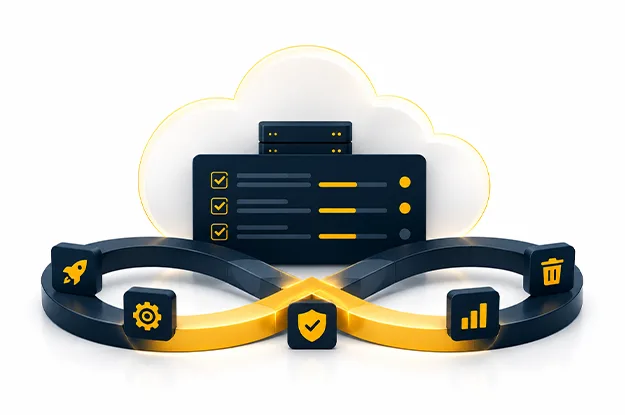
Strong post-launch AWS governance treats the live application as a resource that requires ongoing care. This view turns governance into a continuous discipline that keeps your workloads healthy. The following pillars show how to put that discipline into practice.
How Do You Keep Security and Compliance Intact After Go-Live?
A secure launch means very little if the perimeter erodes over the following months. Continuous controls keep your security posture strong long after the application ships. Effective AWS workload governance relies on automation to catch problems before they spread.
Three controls form the backbone of post-launch security:
- Continuous auditing
AWS Security Hub automates compliance checks against your established benchmarks
- Drift detection
AWS Config tracks configuration changes in real time and triggers automated remediation
- Access review
A regular AWS access review process removes permissions that are no longer needed
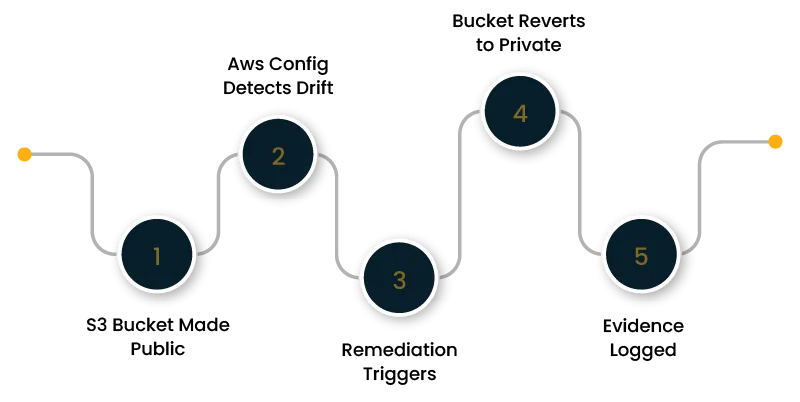
Drift detection deserves special attention because small changes cause big problems. Imagine an S3 bucket accidentally made public during a quick fix. AWS Config detects the change and automatically reverts the bucket to private. Strong post-launch AWS governance depends on automated corrections running quietly in the background.
How Do You Control Cost and Tagging After Workloads Scale?
Applications scale naturally, and idle resources pile up faster than anyone expects. Cost discipline keeps your cloud bill aligned with the value the workload delivers, making cloud cost optimization strategies important throughout the workload lifecycle. This is where workload lifecycle management protects your budget month after month.
Three practices keep costs under control after launch:
- Right-sizing: AWS Compute Optimizer reviews utilization and helps you scale EC2, RDS, and Lambda correctly
- Storage cleanup: S3 Lifecycle Policies move outdated data to cheaper tiers or delete it automatically
- Tagging enforcement: Service Control Policies in AWS Organizations require strict tags on every resource
Good workload tagging hygiene sits at the center of all cost work. Tags like Environment and Owner make accurate cost allocation possible across teams. Without clean tags, you cannot trace spending back to the workloads that created it. Strong AWS workload governance, therefore, starts with tagging discipline applied from the first day.
How Do You Maintain Operational Health and Ownership?
Keeping an application healthy requires proactive observability instead of reactive firefighting. You want to see problems forming before they turn into incidents. Sustained post go-live AWS operations depend on visibility and clear responsibility working together.
Two tools give you the visibility you need:
- Centralized observability: Amazon CloudWatch aggregates logs into dashboards with useful alert thresholds
- Proactive maintenance: The AWS Well-Architected Tool checks your live workloads against current best practices
Visibility alone does not keep a workload healthy over time. Every workload also needs a clear owner who is responsible for it. A defined cloud workload ownership model assigns each application to a named team or person. That owner runs a regular workload health review AWS teams use to catch issues early. Ownership turns governance from a shared hope into a specific responsibility.
What Does This Look Like in Practice? A Worked Example
A retail company launches a new checkout service on AWS ahead of its holiday season. The walkthrough below shows governance working across the whole lifecycle.
Day 1: Launch with tagging
The team applies strict tags to every resource before deployment. Each one carries Environment=Production, Owner=PaymentsTeam, and CostCenter=Retail-Checkout. These AWS workload lifecycle controls make every resource traceable from the very first day.
Month 2: Drift gets caught
An engineer widens a security group to debug a payment timeout. The change accidentally exposes port 5432 on the RDS database to the public internet. AWS Config detects drift within minutes and automatically reverts the rule. The checkout service remains secure with no manual intervention.
Month 3: Cost gets trimmed
Compute Optimizer flags the database running on a db.r5.2xlarge instance. The data shows that it averages only 18% CPU utilization over the month. The team right-sizes it to a db.r5.large and saves roughly $480 every month.
Month 4: Access gets cleaned
A quarterly access review runs against the workload’s IAM roles. It finds that a departed engineer still holds admin permissions on the checkout account. The review removes access before it becomes a security gap.
For the next several months, these controls run quietly and keep the service healthy. The workload stays tagged, right-sized, and secure without any major intervention.
Month 12: Clean decommissioning
The company replaces the service with a newer event-driven system. Disciplined workload lifecycle management ensures the old service shuts down cleanly. The team removes all tagged resources and confirms that no orphaned data remains.
How Do You Retire Workloads Without Leaving Orphans Behind?
Retiring an application is one of the governance team’s most often-forgotten responsibilities. A messy shutdown leaves orphan resources that cost money and create risk. A clear cloud decommissioning strategy prevents that mess every single time.
A repeatable shutdown checklist keeps decommissioning clean and auditable:
- Confirm that the workload owner has approved the retirement
- Remove compute, storage, and networking resources in a defined order
- Verify that no untracked data persists after the shutdown completes
Strong AWS workload governance treats decommissioning as a deliberate, documented process. Building this complete lifecycle takes coordination across security, finance, and engineering. Organizations that want structured help can connect with Cygnet.One’s services for expert guidance.
Governance Is a Lifecycle, Not a Launch
The work of governing a workload truly begins the moment it goes live. Security, cost, operations, and ownership all need continuous attention after deployment. Strong post-launch AWS governance keeps your applications healthy, secure, and cost-efficient over time. The teams that govern the full lifecycle avoid the slow decay that catches everyone else.
FAQs
What is AWS workload lifecycle governance?
It is the ongoing management of deployed applications across security, cost, and performance. It uses continuous monitoring and regular reviews to prevent drift after launch.
Why does governance matter after an application goes live?
Costs creep up, security drifts, and architecture decays without active attention. Post-launch governance keeps the workload healthy and aligned with your standards.
Which AWS services support workload governance?
AWS Security Hub, AWS Config, Compute Optimizer, and CloudWatch handle most governance work. AWS Organizations enforce tagging through Service Control Policies.
How does tagging help with cost control?
Tags like Environment and Owner allow accurate cost allocation across teams. Without clean tags, you cannot trace spending back to specific workloads.
What happens if you skip proper decommissioning?
Orphan resources keep running and generating cost after an application retires. Untracked data also lingers, creating unnecessary security risks.
Author


Yogita Jain
Content Lead
Yogita Jain leads with storytelling and Insightful content that connects with the audiences. She’s the voice behind the brand’s digital presence, translating complex tech like cloud modernization and enterprise AI into narratives that spark interest and drive action. With a diverse of experience across IT and digital transformation, Yogita blends strategic thinking with editorial craft, shaping content that’s sharp, relevant, and grounded in real business outcomes. At Cygnet, she’s not just building content pipelines; she’s building conversations that matter to clients, partners, and decision-makers alike.