




































DevOps has become a widely accepted approach; the new-age software development process involves real-time changes and updates, making testing an ongoing activity in the development cycle.
Current QA trends emphasizing the use of low-code/no-code testing tools, and CI/CD tools to cope with accelerated product releases. Testers are required to upgrade their technical skills and even be “code-savvy.”
Hence, advancing technical skills becomes inevitable for testers or software testing professionals to keep up with the changing development cycle.
The blog penned down six technical testing skills that every tester should master in 2023.
Software development lifecycle management skills
Quality testers should learn software lifecycle management skills to help them understand the application development tasks and plan testing cycles easily.
Having an in-depth knowledge of the SDLC cycle helps anticipate complexities in the application, which can guide the developers to take the right measures beforehand.
The tester in the SDLC is the voice of the customers. They facilitate early clarification of the expected outcome as they are aware of the end-user expectation from the software product, helping the product owner and the development team align their focus in the right direction.
Agile methodology
As the complexity of the software development process increases continuously, the software testing approach also needs to evolve.
When software product development gets divided into multiple deliverables, Agile testing becomes more effective, as it offers an iterative development methodology. During the software development itself, the team can loop in the end-user’s feedback, which enables continuous progress of the software product.
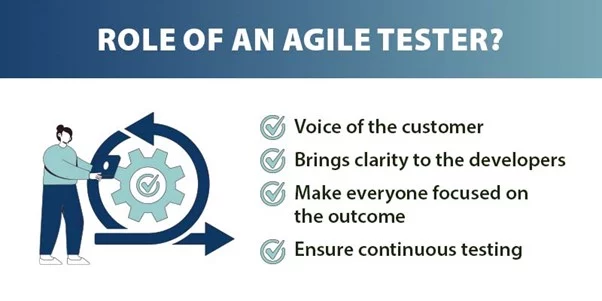
Some of the skill sets that a tester needs to have are:
- A practical understanding of the principles of Agile software development methodology
- Ability to generate new test cases whenever a code is updated
- Ability to work in a collaborative environment and respond quickly to the changing customer needs
- Ability to complete testing work in a shorter time slot, also called sprints, to meet the deliverables
- Ability to predict possible errors and bugs for new builds
- Ability to exercise regression testing throughout the software development lifecycle
Create a comprehensive test plan
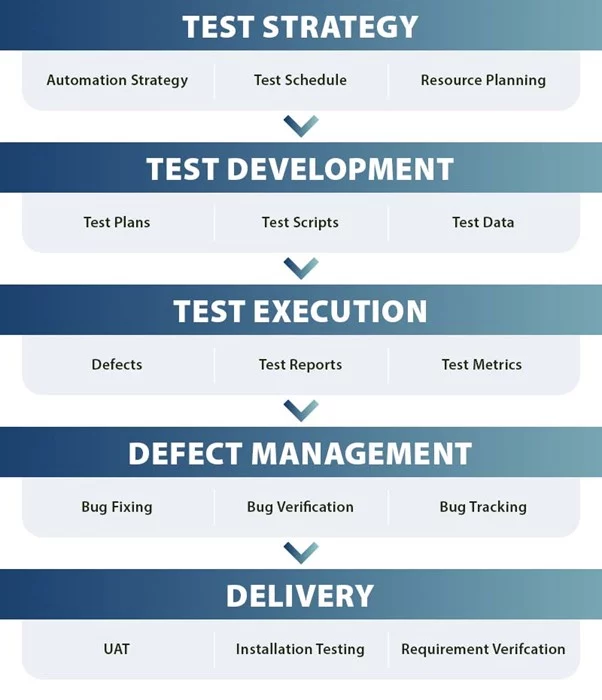
The test plan includes detailed documents describing the test strategy, schedule, deliverables, budget, and resources required to test a software product.
The test plan serves as a blueprint to conduct software testing activities as a defined process, and that is the reason test planning and documentation skills are essential for every tester since it helps in identifying the right requirements and taking appropriate steps.
This skill also helps track the changes in requirements, check test processes, trace deviations, and help in reporting and logging work.
A well-documented test process also can help both individual testers and enterprises allocate the right budget and resources to a project, which is why test planning and documentation skills are critical skills every tester must learn.
Understanding of the test automation tool
There are several reasons why testers should adopt automated testing. A few of them are listed below:
- Ensure continuous testing across SDLC
- Automate test cases that are repetitive
- Automate test cases that are highly critical and need keen observation
- Automate test runs on several different hardware or software platforms
With the development of no-code/low-code test automation tools, testers can fasten the execution of test cases, write code once and run it forever, which saves a lot of human effort.
“Automated testing is approx. 70% faster than manual testing, meaning that you can run more tests to ensure better code quality and achieve faster time to market.” Medium.com
In-sprint automation supports faster execution time and elevates the role of the tester by empowering him to complete testing for multiple builds in one sprint.
However, different automation tools have their capability and shortcomings; in contrast, tools like Selenium are open-source tools where the tester needs to have coding skills and a good understanding of Java, Python, and other scripting languages.
While with a no-code testing tool, like TestingWhiz, offers a drag-and-drop feature, where testers can create test cases without having the need for high-end coding skills.

Knowing what and when to automate
The knowledge of a test automation tool is not enough; the tester should know what to automate and when.
Automated testing can only be helpful when the test cases are repeatable; for instance, automating regression test cases can be beneficial.
Things like exploratory testing, which requires real-time and critical thinking, should be performed manually.
Also, test cases that need subjective validation should be left on manual testers.
Reporting
A good tester must possess good reporting skills as well. As different stakeholders are involved, the tester needs to provide the exact status of the test project and application. This practice of reporting gives the required transparency to the top management. Helping the team to trace bugs earlier in the development cycle.
The testers should have the skill sets to either generate test reports manually or leverage tools that have the in-built capability to generate comprehensive test reports.
For instance, with TestingWhiz a tester can generate real-time information on the status of desktop, mobile, or web functional, API test, and database tests from a single interface.
Conclusion
Regardless of the number of experience years, testers should strive to continuously learn and improve their software testing skills and knowledge. Be it self-learning or engaging in a training program, testers should continuously learn innovative approaches, methodologies, and processes to improve performance in testing and keep applying the new skills and helping them to stay ahead of the competition.
Get in touch with our experts and stay ahead of the competition with leading technology providers like Cygnet Digital.
Author


Cygnet.One
Living the trust
Cygnet.One is a technology consulting and development company, that co-creates business growth strategies and delivers partnership value through the Power of Digital. We specialize in leading technologies such as Cloud Computing, AI/ML, and Blockchain with a focus on innovation and agility.