




































Introduction
In today’s digital landscape, cybersecurity is more crucial than ever. With constant cyber threats targeting sensitive data and business operations, companies must adopt robust security measures. Vulnerability Assessment and Penetration Testing (VAPT) are essential components of any comprehensive cybersecurity strategy. They identify and rectify security vulnerabilities before they can be exploited by malicious actors. However, choosing a VAPT provider is a critical decision that requires careful consideration. This guide will walk you through the process of VAPT service selection, offering practical advice to help you make informed decisions and strengthen your cybersecurity posture.
Understanding VAPT and Its Importance
Vulnerability Assessment and Penetration Testing (VAPT) is instrumental in detecting and addressing security vulnerabilities within a company’s IT infrastructure.
Vulnerability Assessment: This process involves scanning systems, networks, and applications to identify known vulnerabilities, such as outdated software, misconfigurations, or missing patches. The goal is to provide a comprehensive view of the security posture and highlight areas that need improvement.
– Penetration Testing: Also known as ethical hacking, penetration testing simulates real-world attacks to exploit vulnerabilities in a controlled environment. This helps organizations understand the potential impact of an attack and assess the effectiveness of existing security measures.
Choosing the right VAPT provider is essential for ensuring that these processes are thorough and effective, providing actionable insights to enhance your organization’s security.
Key Criteria for Choosing a VAPT Provider
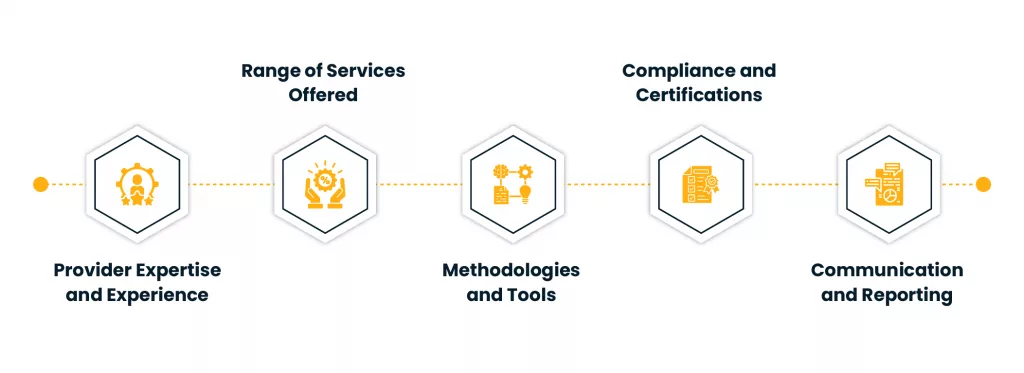
1. Provider Expertise and Experience
The expertise and experience of a VAPT provider significantly influence the effectiveness of security assessments. Consider the following when evaluating providers:
Industry Expertise: Look for providers with experience in your specific industry as they will understand the unique challenges and regulatory requirements you face. For example, a provider familiar with healthcare will be well-versed in HIPAA compliance and the specific security needs of healthcare organizations.
Track Record: Assess the provider’s experience by reviewing case studies and client testimonials. A proven track record of successful VAPT projects indicates that the provider can deliver reliable and actionable services. Request references and speak with past clients to gain insights into their experiences with the provider.
2. Range of Services Offered
A comprehensive VAPT provider should offer a broad spectrum of services to address various security needs. Consider the following:
Core Services: Ensure that the provider offers essential services such as network security assessments, web application testing, mobile application testing, and social engineering assessments. These services should cover all aspects of your organization’s IT infrastructure to provide a complete view of your security posture.
Customized Solutions: Determine whether the provider can tailor their services to meet your organization’s specific requirements. Customization is crucial for addressing unique security challenges and ensuring that critical vulnerabilities are identified and remediated.
3. Methodologies and Tools
The methodologies and tools used by a VAPT provider directly impact the quality and effectiveness of their security assessments. Consider the following:
Testing Methodologies: Evaluate the provider’s testing methodologies to ensure they adhere to industry standards. A robust approach should combine automated and manual testing techniques to uncover a wide range of vulnerabilities.
Tools and Technologies: Verify that the provider uses the latest and most comprehensive tools for vulnerability scanning and penetration testing. Leading tools like Nessus, Burp Suite, and Metasploit are commonly used to conduct thorough assessments.
4. Compliance and Certifications
Adherence to industry standards and certifications is critical when evaluating the reliability and trustworthiness of a VAPT provider. Consider the following:
Industry Standards: Verify that the provider complies with relevant industry standards such as ISO 27001, PCI DSS, and NIST. Adherence to these standards demonstrates the provider’s commitment to security best practices.
Certifications: Look for certifications such as CREST, OSCP, and CEH. These certifications indicate that the provider’s team possesses the necessary skills and knowledge to conduct thorough and effective security assessments.
5. Communication and Reporting
Effective communication and reporting are essential for ensuring that the results of a VAPT engagement are actionable and easy to understand. Consider the following:
Communication Skills: Assess the provider’s ability to communicate technical findings clearly to both technical and non-technical stakeholders. Effective communication facilitates collaboration and ensures that remediation efforts are well-coordinated.
Reporting Capabilities: Review the provider’s reporting capabilities. They should provide clear, concise, and actionable reports. These reports should include detailed findings, risk assessments, and prioritized recommendations for remediation.
Practical Tips for VAPT Service Selection :
Request Detailed Proposals:
When evaluating VAPT providers, ask for comprehensive proposals that outline their service offerings, methodologies, and deliverables. A well-structured proposal will help you understand what to expect and how the provider’s approach aligns with your needs.
Conduct Interviews and Observe Demos:
Take the time to interview potential providers and request demonstrations of their tools and methodologies. This will give you a clearer picture of their capabilities and how they approach VAPT engagements.
Check References and Reviews:
Don’t just take the provider’s word for it—ask for references from previous clients and read online reviews. This can provide valuable insights into the provider’s reliability, expertise, and customer service.
Common Mistakes to Avoid:
When selecting a VAPT provider, it’s important to avoid common pitfalls that can compromise the effectiveness of your security efforts:
Focusing Solely on Cost: Don’t choose a VAPT provider based solely on cost. While budget considerations are important, prioritize quality and expertise to ensure effective security assessments.
Overlooking Customization: Don’t overlook the importance of customization when evaluating providers. A one-size-fits-all approach may fail to address your organization’s specific security needs, so choose providers who can tailor their solutions to your requirements.
Ignoring Communication: Effective communication is critical to the success of VAPT engagements. Avoid providers who lack strong communication skills, as this can hinder collaboration and the implementation of remediation measures.
Wrap-Up and Next Steps
Choosing the right VAPT provider is essential for enhancing your organization’s cybersecurity posture. By considering factors such as the provider’s expertise, service offerings, methodologies, and communication capabilities, you can make informed decisions and ensure effective security assessments.
To protect your organization from evolving threats, conduct regular VAPT engagements and partner with providers you can trust to deliver reliable and actionable insights. By following best practices and avoiding common pitfalls, you can strengthen your cybersecurity defenses and safeguard your organization’s digital assets.