




























• Cygnet IRP
  • Glib.ai
  • IFSCA
Cygnet.One
  • About
  • Products
  • Solutions
  • Services
  • Partners
  • Resources
Generic selectors
Exact matches only
Search in title
Search in content
Post Type Selectors
Get Started
About
  • Overview

    A promise of limitless possibilities

  • We are Cygnet

    Together, we cultivate an environment of collaboration

  • Careers

    Join Our Dynamic Team: Careers at Cygnet

  • CSR

    Impacting Communities, Enriching Lives

  • In the News

    Catch up on the latest news and updates from Cygnet

  • Contact Us

    Connect with our teams across the globe

What’s new

chatgpt

Our Journey to CMMI Level 5 Appraisal for Development and Service Model

Full Story

chatgpt

ChatGPT: Raising the Standards of Conversational AI in Finance and Healthcare Space

Full Story

Products
  • Cygnet Tax
    • Cygnet Tax
    • e-Invoicing / Real time reportingIRP-integrated e-Invoicing with real-time validation
    • e-Way Bills / Road permitsGST-compliant centralized e-Way Bill platform for scalable operations
    • Direct Tax ComplianceAccurate direct tax compliance, filings, litigation, and assessments
    • Indirect Tax ComplianceEnterprise-grade platform for indirect tax compliance
      • Indirect Tax Compliance
      • GST Compliance India
      • VAT Compliance EU
      • VAT Compliance ME
    • Managed ServicesEnd-to-end indirect tax compliance support by experts
  • Global e-Invoicing
    • Global e-Invoicing
    • APAC
      • India
      • Malaysia
      • Singapore
      • Japan
    • Africa
      • Egypt
      • Kenya
      • Zambia
      • Nigeria
    • Europe
      • Spain
      • France
      • Germany
      • Poland
      • Belgium
    • Oceania
      • Australia
      • New Zealand
    • Middle East
      • UAE
      • Oman
      • Saudi Arabia
      • Bahrain
      • Qatar
      • Jordan
  • Cygnet Vendor Postbox
    • Cygnet Vendor PostboxDigitize purchase invoice validation & posting to ERPs & maximize ITC
  • Finance Transformation
    • Finance Transformation
    • Cygnet FinalyzeUnlock working capital with data-driven invoice-based credit decisions
    • Bank Statement AnalysisEvaluate company health by analyzing performance and financial risk
    • Financial Statement AnalysisAssess company performance and risk with financial statement analysis
    • GST Business Intelligence Report360-degree financial health insights using GST data analytics
    • GST Return Compliance ScoreGST-based compliance score to assess business risk and credibility
    • ITR AnalysisAssess creditworthiness and lending risk using ITR filing analysis
    • Invoice Verification for Trade FinanceVerify invoices to reduce fraud and improve credit decisions
    • Account Aggregator – Technology Service Provider (AA-TSP)Onboard to the Account Aggregator ecosystem with FIP & FIU modules
  • Cygnet BridgeFlow
    • Cygnet BridgeFlowAutomated digital onboarding with real-time validations and compliance
  • Cygnet Bills
    • Cygnet BillsGST-compliant centralized e-Way Bill platform for scalable operations
  • Cygnet IRP
    • Cygnet IRPIRP-integrated e-Invoicing with real-time validation
  • Cygnature
    • CygnatureSecure, compliant digital signing with audit-ready traceability

What’s new

e-Invoicing compliance Timeline

Know More →

UAE e-Invoicing: The Complete Guide to Compliance and Future Readiness

Read More →

Types of Vendor Verification and When to Use Them

Read More →

Safeguard Your Business with Vendor Validation before Onboarding

Read More →

Modernizing Dealer/Distributor & Customer Onboarding with BridgeFlow

Read More →

Accelerate Vendor Onboarding with BridgeFlow

Read More →

GST Filing 360°: GST, E-Invoicing, E-Way Bills & Annual Returns Made Simple

Read More →

Why Manual Tax Determination Fails for High-Volume, Multi-Country Transactions

Read More →

GST Filing 360°: GST, E-Invoicing, E-Way Bills & Annual Returns Made Simple

Read More →

Key Features of an Invoice Management System Every Business Should Know

Read More →

Automating the Shipping Bill & Bill of Entry Invoice Operations for a Leading Construction Company

Read More →

From Manual to Massive: How Enterprises Are Automating Invoice Signing at Scale

Know More →

Solutions
  • HireAI
  • AI-powered Voice Assistant
  • Generative AI Workshop
  • TestingWhiz
  • VIPRE

What’s new

AI powered Interviewer

AI-Powered Interviewing Helped an Education Group Reduce Hiring Time Significantly

Know More

Generative AI ebook

Navigating the Generative AI Landscape

Download eBook

Services
  • Data Analytics & AI
    • Data Analytics & AI
    • Data Engineering and ManagementData engineering and management for smart, scalable systems
    • Data Migration and ModernizationData migration and modernization for future-ready platforms
    • Insights Driven Business TransformationInsight-driven business transformation for faster decisions
    • Business Analytics and Embedded AIBusiness analytics and embedded AI for data-led growth
  • Digital Engineering
    • Digital Engineering
    • Technical Due DiligenceEnabling smarter decisions through future-ready digital ecosystems
    • Product EngineeringEngineering impactful digital products that elevate business growth
    • HyperautomationSmarter hyperautomation using low-code for agile business processes
    • Enterprise IntegrationIntegrating enterprise systems for seamless operations and growth
    • Application ModernizationModernizing IT ecosystems with scalable, AI-driven innovation
  • Quality Engineering
    • Quality Engineering
    • Test Consulting & Maturity AssessmentTest consulting and maturity assessments for reliable software QA
    • Business Assurance TestingBusiness assurance testing aligned with real business outcomes
    • Enterprise Application & Software TestingEnterprise application testing for continuity and scale
    • Data Transformation TestingData transformation testing for scalable, trusted data quality
  • Cloud Engineering
    • Cloud Engineering
    • Cloud Strategy and DesignCloud strategy and design services for secure, scalable growth
    • Cloud Migration & ModernizationORBIT: a proven framework for measurable cloud transformation
    • Cloud Native DevelopmentCloud-native development for resilient, scalable innovation
    • Cloud Operations and OptimizationCloud optimization and operations for enterprise resilience
    • Cloud for AI FirstAI-first cloud transformation for smarter, scalable enterprises
  • Managed IT Services
    • Managed IT Services
    • IT Strategy and ConsultingStrategic IT consulting to align technology with business goals
    • Application Managed Services24/7 managed application services for performance and security
    • Infrastructure Managed ServicesEnd-to-end infrastructure management for resilient IT operations
    • CybersecurityComprehensive cybersecurity solutions to protect business assets
    • Governance, Risk Management & ComplianceGRC solutions to manage risk, compliance, and governance
  • Cygnet TaxAssurance
    • Cygnet TaxAssurance
    • Tax DatalakeUnified tax data lake for intelligent, compliant decision-making
    • Tax InfraDigital tax infrastructure for efficient, compliant transformation
  • Amazon Web Services
    • Amazon Web Services
    • Migration and ModernizationMake Your Move to the Cloud With AWS Smarter & Faster
    • Generative AIRun your Gen AI workloads on AWS with full control

What’s new

Our Journey to CMMI Level 5 Appraisal for Development and Service Model

Read More →

Extend your team with vetted talent for cloud, data, and product work

Explore More →

Enterprise Application Testing Services: What to Expect

Read More →

Future-Proof Your Enterprise with AI-First Quality Engineering

Read More →

Cloud Modernization Enabled HDFC to Cut Storage Costs & Recovery Time

Know More →

Cloud-Native Scalability & Release Agility for a Leading AMC

Know More →

AI-Powered Voice Assistant for Smarter Search Experiences

Explore More →

Cygnet.One’s GenAI Ideation Workshop

Know More →

AWS workload optimization & cost management for sustainable growth

Know More →

Cloud Cost Optimization Strategies for 2026: Best Practices to Follow

Read More →

Cygnet.One’s GenAI Ideation Workshop

Explore More →

Practical Approaches to Migration with AWS: A Cygnet.One Guide

Know More →

Tax Governance Frameworks for Enterprises

Read More →

Cygnet Launches TaxAssurance: A Step Towards Certainty in Tax Management

Read More →

Partners
  • Products Partner Program
Resources
  • Blogs
  • Case Studies
  • eBooks
  • Events
  • Webinars

Blogs

A Step-by-Step Guide to E-Invoicing Implementation in the UAE

A Step-by-Step Guide to E-Invoicing Implementation in the UAE

View All

Case Studies

Cloud-Based CRM Modernization Helped a UK Based Organization Scale Faster and Reduce Deployment Complexity

Cloud-Based CRM Modernization Helped a UK Based Organization Scale Faster and Reduce Deployment Complexity

View All

eBooks

Build Smart Workflow with Intelligent Automation and Analytics

Build Smart Workflow with Intelligent Automation and Analytics

View All

Events

Global Fintech Fest (GFF) 2025

Global Fintech Fest (GFF) 2025

View All

Webinars

Rewiring Tax Infrastructure: Build Your Single Source of Truth

Rewiring Tax Infrastructure: Build Your Single Source of Truth

View All
Cygnet IRP
Glib.ai
IFSCA

Why is bank statement analysis important in credit management?

  • By Rahul Bohra
  • August 1, 2023
  • 7 minutes read
Share
Subscribe

What is Bank Statement Analysis?

Bank statement analysis is an essential tool for credit management. It allows you to track your income, expenses, and spending habits over a set period. A bank statement helps to identify top transactions, recurring transactions, month-wise transactions, returns transactions, EOD balances, running EMIs and categorization of transactions for easy underwriting & straight-through processing. By analyzing your bank statements regularly, you can identify areas where you are overspending or where you could be saving more money.  

One of the key benefits of bank statement analysis is that it helps you understand your personal and business financial health. You can see how much money is coming in each month and how much is going out on bills, groceries, entertainment, etc., from personal statements. Also, you can understand and segregate your inflow in business income, investment income, rent, dividend, interest etc., with Cygnet BSA. This understanding will give you the information needed to make informed decisions about your finances.  

By reviewing every line item on your bank statement carefully, you can detect any errors or fraudulent activity early on. Catching these issues quickly can help prevent them from negatively impacting your credit score or causing financial harm down the road.  

Furthermore, banks use this data for straight-through processing (STP) as well for banking surrogate programmes. If they see consistent patterns such as late payments, overutilization of assigned limits, amongst other red flags within their review process, then that adversely affects credit eligibility. Analyzing bank statements regularly should become a part of the routine for setting financial goals, budgeting effectively, monitoring spending, and detecting errors & frauds to eventually improve the chances for better credit options available. 
Why Is Bank Statement Analysis Important in Credit Management? 

Bank statement analysis is an essential aspect of credit management for financial institutions. It enables a comprehensive evaluation of a customer’s financial situation and creditworthiness. In today’s digital era, relying solely on traditional credit scoring methods is insufficient, making bank statement analysis even more crucial.  

Advancements in fintech have facilitated the efficient financial analysis of bank statements and interpretation of vast amounts of data contained within bank statements. By leveraging fintech solutions, banks and financial institutions can conduct more thorough analyses while minimizing manual labor and errors. This empowers them to make informed decisions when assessing bank statement for loan approvals and effectively manage credit risk.

Thorough analysis of bank statement offers numerous benefits. It provides insights into a borrower’s income and expense patterns and financial management history, reducing exposure to bad debt. Early identification of red flags allows lenders to mitigate risks promptly. As a result, creditworthiness assessment becomes more efficient, leading to faster approvals, reduced paperwork, and improved customer satisfaction.  

To stay ahead in the evolving financial landscape, it is imperative for banks and financial institutions to embrace fintech solutions that streamline the bank statement analysis process. By doing so, they can enhance their credit risk management strategies and make well-informed decisions that drive sustainable lending practices. 

How Bank Statement Analysis Works

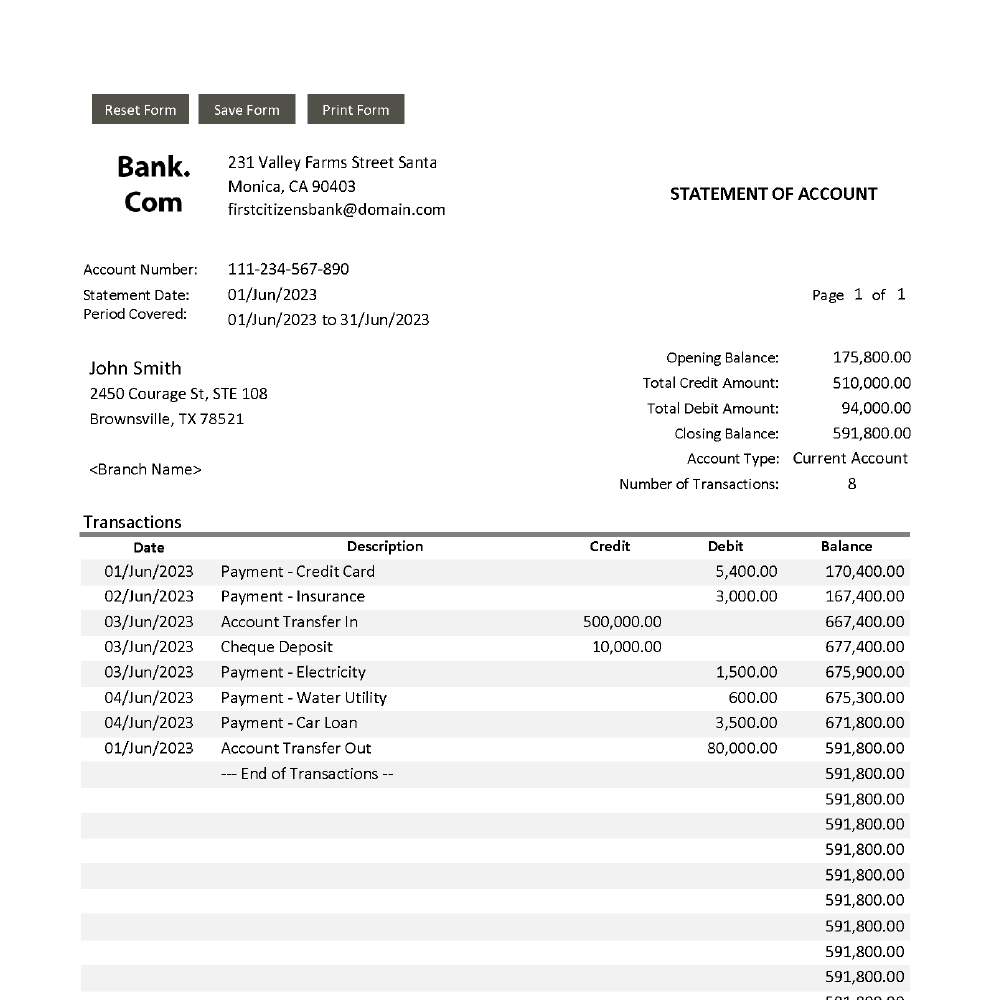
A bank statement is a document that summarizes all the transactions made by an account holder during a given period. It includes several features like the name and account number of the customer and details of each transaction made such as date, amount, description, and balance after each transaction.  

Bank statements are usually generated monthly or quarterly, depending on the bank’s policies. Some banks provide e-statements that are similar to paper ones but available online instead of in print format.  

Another feature of bank statements is that they include information about any fees charged by the bank such as overdraft fees or ATM fees. This helps customers keep track of their expenses and avoid unnecessary charges.  

Bank statements also show deposits made into an account including direct deposits from employers or other sources like Social Security payments. If there are any discrepancies between what you believe should be on your statement versus what appears, it’s important to contact your bank immediately for clarification.  

Understanding these features can help you make better use of this valuable financial document to manage your finances effectively and improve credit management processes. Cygnet’s BSA can process and provide enhanced analysis with the best latency, irrespective of the source, on a real-time basis. 

What are the features of bank statements? 

A bank statement is a document that summarizes all the transactions made by an account holder during a given period. It includes several features like the name and account number of the customer and details of each transaction made such as date, amount, description, and balance after each transaction. 

Bank statements are usually generated monthly or quarterly, depending on the bank’s policies. Some banks provide e-statements that are similar to paper ones but available online instead of in print format. 

Another feature of bank statements is that they include information about any fees charged by the bank such as overdraft fees or ATM fees. This helps customers keep track of their expenses and avoid unnecessary charges. 

Bank statements also show deposits made into an account including direct deposits from employers or other sources like Social Security payments. If there are any discrepancies between what you believe should be on your statement versus what appears, it’s important to contact your bank immediately for clarification. 

Understanding these features can help you make better use of this valuable financial document to manage your finances effectively and improve credit management processes. Cygnet’s BSA can process and provide enhanced analysis with the best latency, irrespective of the source, on a real-time basis.

What is the summary of a bank statement? 

A bank statement is a document that summarizes the financial transactions of an account holder. It typically covers a specific period, such as a month or a quarter, and shows all the inflows and outflows of funds during that time.  

The summary section of a bank statement provides an overview of the account activity for the period covered by the statement. This section usually includes information such as opening balance, closing balance, deposits received, withdrawals made, fees charged, and interest earned.  

The opening balance is the amount available in the account at the start of the period. The closing balance is what remains after all transactions have been posted to the account. Deposits are any funds credited to your account during this time frame while withdrawals refer to any payments made from your account.  

Fees on bank statements are charges levied by banks for providing services or maintaining accounts while interest earned refers to money paid into an account by banks annually based on monthly balances held in savings accounts with them.

Cygnet BSA computes the balance at the end of each transaction, and the same gets verified with extracted balance. This comparison will help in arresting tampering. Also, it identifies suspicious transactions, irregular transfers to parties, data duplicity, and equal debit- credits.

Understanding how to read and understand these summaries can help individuals better manage their finances by identifying areas where they may be overspending or underutilising their resources. 
How do you analyze a bank statement? 

Analyzing a bank statement is the process of reviewing and understanding all transactions that have taken place in an account over a certain period. The first step to analyze a bank statement is to check if there are any errors or discrepancies, such as duplicate charges or incorrect amounts.  

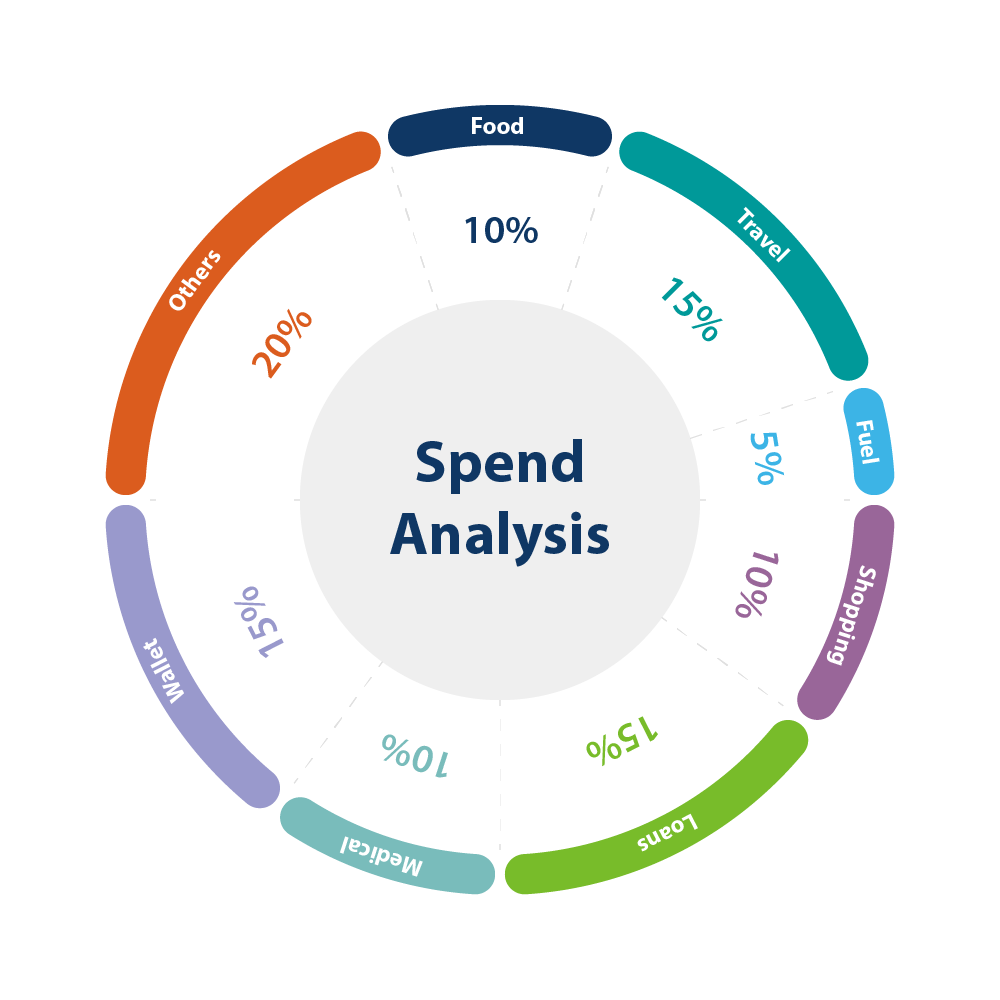
Next, it’s important to categorize transactions by types, such as income and expenses, and then further break down each category into subcategories for better analysis. This can help identify areas where spending could be reduced or increased.  

One should also look at the frequency of deposits and withdrawals from the account. If there are irregularities in these patterns, it could indicate potential fraud or financial instability.  

Another crucial aspect of analyzing a bank statement is identifying trends over time. By looking at multiple statements side-by-side, one can track changes in spending habits and identify areas where adjustments may need to be made.  

Cygnet Bank Statement Analyzer provides month-wise inflow bifurcated into various transaction categories, identification of return transactions, scoring sheet, top transactions, recurring transactions, running EMIs etc. Easy identification of net inflow and surplus will help in curating various banking surrogate credit programmes. Using software tools can make the entire process more efficient by automating data entry and categorization. 

What is a bank statement analysis for credit risk? 

A bank statement analysis for credit risk is a process of examining an individual or business’s financial statements to determine their creditworthiness. The analysis involves reviewing bank statements, income and expense reports, balance sheets, and other financial documents.  

The main objective of the analysis of bank statement is to identify any potential risks associated with granting credit to the person or business in question. This includes assessing their ability to repay loans on time and determining the probability of default.  

In addition, a bank statement analysis can help lenders understand how much debt a borrower has already taken on. This information can be used to calculate debt-to-income ratios which are important indicators of overall financial health.  

Conducting a thorough bank statement analysis for credit risk helps lenders make informed decisions when it comes to lending money. By understanding the borrower’s current financial situation and potential future risks, they can set appropriate interest rates and loan terms that protect both parties involved in the transaction. 

Author

Rahul Bohra Linkedin
Rahul Bohra
AVP - Products • Product Management

Rahul Bohra is a techno-functional expert and has accomplished multiple integration projects for enterprises in various sectors like BFSI, NBFC, Manufacturing, and FMCG. He holds profound knowledge of implementing data-driven solutions, enabling businesses to make informed decisions in the fintech and taxtech landscape. His technical & analytical expertise has assisted clients in leveraging the benefits of automation and analytics to streamline their business operations and boost productivity. With the evolving fintech ecosystem, he has developed a strong understanding of financial data points such as GST, Banking, ITR. He is the subject matter expert for the DEPA framework and Account Aggregator; he is working with Sahamati to onboard FIPs on AA ecosystem building IT data schemas required.

Related Blog Posts

Streamlining Finance by Leveraging AI for Bank Statement Analysis

CalendarNovember 12, 2024

Modernizing Dealer/Distributor & Customer Onboarding with BridgeFlow

CalendarOctober 03, 2025

Leveraging GST data for credit underwriting

CalendarApril 25, 2022

Sign up to our Newsletter

    Latest Blog Posts

    ROI of E-Invoicing UAE: Cost vs Compliance 
    ROI of E-Invoicing UAE: Cost vs Compliance 

    CalendarMarch 17, 2026

    How to Avoid Distributed Monoliths When Modernizing on AWS? 
    How to Avoid Distributed Monoliths When Modernizing on AWS? 

    CalendarMarch 17, 2026

    How to Sequence AWS Migration Waves for Large Enterprise Portfolios 
    How to Sequence AWS Migration Waves for Large Enterprise Portfolios 

    CalendarMarch 17, 2026

    Let’s level up your Business Together!

    The more you engage, the better you will realize our role in the digital transformation journey of your business


      I agree to the Terms & Conditions and Privacy Policy and allow Cygnet.One (and its group entities) to contact me via Promotional SMS / Email / WhatsApp / Phone Call.*

      I agree to receive occasional product updates and promotional messages from Cygnet.One (and its group entities) on Promotional SMS / Email / WhatsApp / Phone Call.

      Cygnet.One Locations

      India India

      Cygnet Infotech Pvt. Ltd.
      2nd Floor, The Textile Association of India,
      Dinesh Hall, Ashram Rd,
      Navrangpura, Ahmedabad, Gujarat 380009

      Cygnet Infotech Pvt. Ltd.
      6th floor, A-wing Ackruti Trade Center,
      Road number 7, MIDC, Marol,
      Andheri East, Mumbai-400093, Maharashtra

      Cygnet Infotech Pvt. Ltd.
      WESTPORT, Urbanworks,
      5th floor, Pan Card Club rd.,
      Baner, Pune, Maharashtra 411045

      Cygnet Infotech Pvt. Ltd.
      10th floor, 73 East Avenue,
      Sarabhai campus, Vadodara, 391101

      Global

      CYGNET INFOTECH LLC
      125 Village Blvd, 3rd Floor,
      Suite 315, Princeton Forrestal Village,
      Princeton, New Jersey- 08540

      CYGNET DIGITAL IT SOLUTION LLC
      Office 707, Magnum Opus Tower,
      Al Thanyah First, Dubai, U.A.E,
      P.O. Box 125608

      CYGNET INFOTECH PRIVATE LIMITED
      Level 35 Tower One,
      Barangaroo, Sydney, NSW 2000

      CYGNET ONE SDN.BHD.
      Unit F31, Block F, Third Floor Cbd Perdana 3,
      Jalan Perdana, Cyber 12 63000 Cyberjaya Selangor, Malaysia

      CYGNET INFOTECH LIMITED
      C/O Sawhney Consulting, Harrow Business Centre,
      429-433 Pinner Road, Harrow, England, HA1 4HN

      CYGNET INFOTECH PTY LTD
      152, Willowbridge Centre,
      39 Cronje Drive, Tyger Valley,
      Cape Town 7530

      CYGNET INFOTECH BV
      Peutiesesteenweg 74, Machelen (Brab.), Belgium

      Cygnet One Pte. Ltd.
      160 Robinson Road,
      #26-03, SBF Centre,
      Singapore – 068914

      • Explore more about us

      • Download Corporate Deck
      • Terms of Use
      • Privacy Policy
      • Contact Us
      © Copyright – 2026 Cygnet.One
      We use cookies to ensure that we give you the best experience on our website. If you continue to use this site we will assume that you are happy with it.

      Cygnet.One AI Assistant

      ✕
      AI Assistant at your help. Cygnet AI Assistant