

































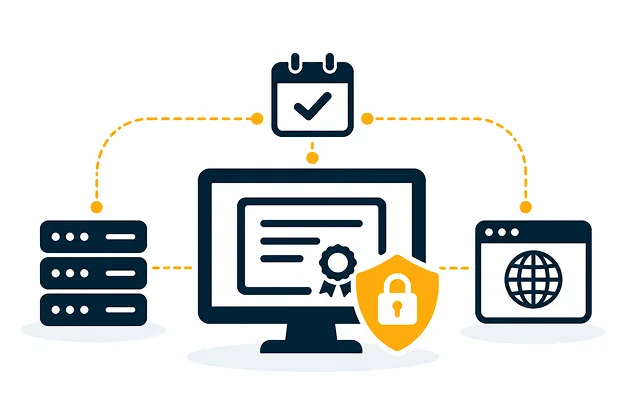
A certificate can be renewed on time and still cause an application outage. The replacement may exist in a certificate vault while a load balancer continues serving the previous version. An API gateway may have the correct certificate, but a downstream service may reject its issuing chain. The renewal record looks healthy while the connection fails.
This gap matters more in 2026. Under the CA/Browser Forum’s requirements, publicly trusted TLS server certificates issued from March 15, 2026, have a maximum validity of 200 days. Shorter lifetimes leave little room for calendar reminders or undocumented deployment steps.
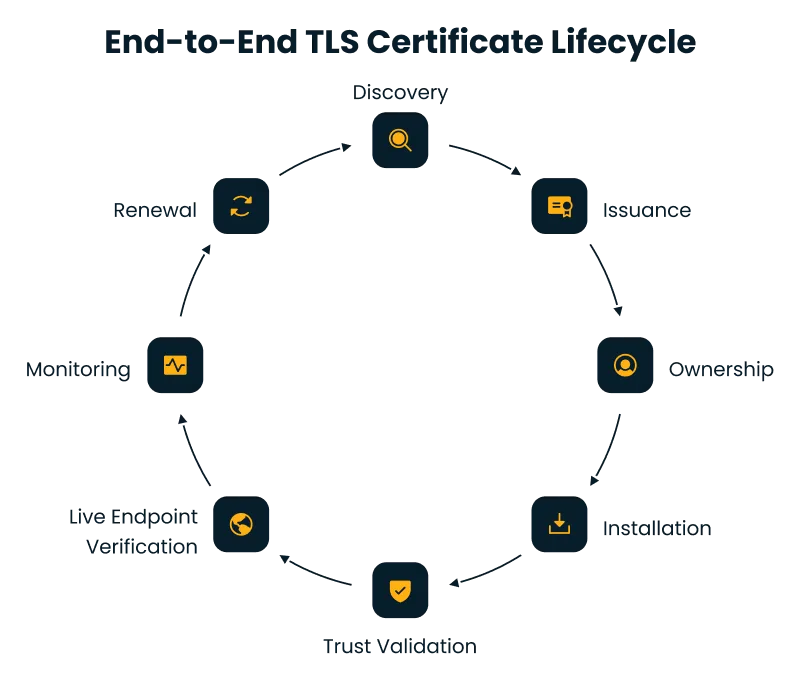
Effective TLS certificate management therefore starts with a question that expiry reports rarely answer: where must the replacement certificate become active for a business service to remain available? IT infrastructure management services can support visibility across the affected systems. A working certificate lifecycle management process connects issuance, ownership, installation, trust validation, and live-service checks. It treats renewal as a controlled operational change with a verifiable outcome.
Why TLS Certificate Expiration Still Causes Enterprise Outages
A browser warning is the visible version of a broader problem. Expired or incorrectly deployed certificates can interrupt machine-to-machine API calls, service mesh connections, partner integrations, remote access, and management interfaces. Some failures surface only on new connections or particular application nodes.
The operational blind spot is the difference between a certificate object and a certificate in use. A certificate authority can issue a replacement successfully without knowing whether an application has loaded it. A secrets platform may store the latest version while a container references an older one. An appliance may require a separate import or reload.
For that reason, certificate lifecycle management needs two linked records: the certificate’s administrative state and the certificate actually presented or trusted by each dependent system. When those records disagree, TLS certificate management should flag the mismatch well before expiry.
Build a Certificate Inventory Across Load Balancers, APIs, and Devices
Purchase records miss certificates issued by cloud platforms, internal PKI, and device administrators. A useful certificate inventory for enterprise networks begins with service discovery and then reconciles observed certificates against the records of issuing authorities and secrets stores, as part of ongoing IT operations health checks.
Map the places where TLS starts, ends, or is authenticated. These commonly include internet-facing load balancers, API gateways, reverse proxies, Kubernetes ingress controllers, internal services using mutual TLS, VPN concentrators, and network appliances. Include nonproduction services that affect release testing.
| Location | Frequently missed dependency | Inventory evidence |
| Load balancer or gateway | Different certificate bindings by hostname or listener | Served certificate, SNI name, listener and region |
| API or microservice | Mutual TLS clients with separate trust stores | Server and client identities, issuer chain, trust owners |
| Container platform | Workload still referencing an older secret | Secret version, deployment reference, observed endpoint |
| Network device | Certificate changed without a service reload | Device assignment, active fingerprint, maintenance owner |
| Partner connection | Remote system trusts a specific issuer or certificate | Contracted endpoint, validation behavior, change contact |
This makes TLS certificate management a dependency-mapping exercise as much as an inventory exercise, reinforcing the importance of service dependency mapping across enterprise systems. Record hostnames, issuer, expiration, fingerprint, deployment location, renewal method, and service criticality. Link duplicate copies to the same service.
A second use of a certificate inventory for enterprise networks is change impact. Before replacing a certificate, teams should be able to identify the services, clients, and device configurations that may need updating. An unknown consumer is a renewal risk, even when the current certificate has plenty of time remaining.
Assign Certificate Owners and Renewal Windows
Ownership becomes difficult when the PKI team issues certificates, the infrastructure team deploys them, and application teams discover failures. Assigning a single generic owner does little to resolve that split.
An enterprise PKI ownership model should name an accountable service owner alongside the teams responsible for issuance, deployment, and verification. The service owner confirms the change reached production. The PKI team governs issuance policy and key handling. Platform or network engineers execute changes at the termination point. Security reviews exceptions and access, with cybersecurity services supporting certificate-related security controls and risk assessments.
Renewal windows should reflect the slowest dependency, not an arbitrary reminder date. Partner notification, hardware access, and maintenance approvals require earlier renewal than a fully managed deployment.
A practical certificate lifecycle management policy distinguishes routine renewals from exceptions. Routine changes follow an approved path; unusual certificate types, trust-chain changes, and failed deployment checks receive additional review. The enterprise PKI ownership model also needs a backup owner, an escalation route, and a process for transferring responsibility when applications are retired or moved.
ACME Certificate Renewal Automation vs. Manual Approval
ACME standardizes certificate requests and domain-control validation. It reduces repetitive work where issuers and deployment platforms support it. Yet automated issuance addresses only part of the outage risk until installation and testing succeed.
The validation method matters. HTTP-01 relies on control of a reachable web path, while DNS-01 relies on publishing a DNS record. DNS-based automation can suit environments where HTTP validation is impractical, but DNS credentials must be narrowly scoped and protected. Keep issuance credentials separate from broader DNS administration.
ACME Renewal Information, defined in RFC 9773, lets supporting certificate authorities suggest renewal windows to compatible clients. This helps avoid rigid assumptions about renewal timing. Client support and failure alerts still require verification.
Manual approval remains appropriate for certain private PKI workflows, regulated changes, or devices without safe deployment automation. Approval alone cannot prove installation succeeded. Compare renewal methods against operational conditions rather than placing every certificate into the same process:
- Automated path: Approved issuer, restricted credentials, repeatable deployment, runtime handshake checks, and failure alerts.
- Approval-led path: Named approver, documented maintenance window, assigned installer, verified fallback, and completion evidence.
- Hybrid path: Automatic issuance with an approval checkpoint before deployment into a sensitive environment.
A sensible TLS certificate management program measures whether each path results in a working service, supported by cloud operations services for monitoring and deployment verification. It should also distinguish cloud-managed renewals from imported certificates. For example, AWS Certificate Manager does not manage renewal of imported certificates, leaving replacement and deployment with the customer. Platform renewal features have defined limits.
Test Certificate Renewal, Rollback, and Expiry Alerts
Testing only the certificate request proves too little. Rehearsals should exercise deployment permissions, reloads, traffic routing, and client trust checks.
A sound certificate lifecycle management test confirms that the certificate matches its private key, covers required hostnames, presents the expected chain, and is served from every relevant endpoint. For mutual TLS, verify both sides of the exchange. For clustered applications, inspect more than the first node that responds.
Rollback needs equal attention. Reverting to an expired certificate cannot restore a healthy connection. The fallback must remain valid, be authorized for the same service, and be compatible with client trust requirements. Without a safe fallback, halt the rollout and repair the failed deployment.
Determining how to prevent TLS certificate expiration outages requires deliberately testing failures: unavailable certificate authority, failed DNS challenge, rejected approval, missing secret update, unsuccessful reload, and a certificate that reaches only part of a cluster. Each test should identify an alert, a responder, and a recovery action.
For ACME certificate renewal automation, test the scheduler and retry behavior as well as the first successful run. A successful initial setup says little about future credential or DNS failures.
Monitor Live Certificates, Not Just Issuance Records
X.509 certificate monitoring usually begins with fields such as expiration time, issuer, subject alternative names, and serial number. Those fields matter, but metadata collected from a repository cannot confirm what a service currently presents to clients.
Add independent checks from the network path used by the application. Query the relevant hostname with Server Name Indication, inspect the presented chain, and compare the active certificate fingerprint with the approved replacement. Probe internal endpoints from authorized locations and inspect each regional termination point.
The monitoring side of certificate lifecycle management should distinguish approaching expiry, failed renewal, and successful issuance that never reached production. Each needs a different response: scheduling, validation troubleshooting, or deployment repair.
The most useful X.509 certificate monitoring signal is therefore not merely days remaining. It is whether the certificate currently in use is valid, expected, trusted by its clients, and aligned with the latest approved deployment. That turns monitoring into evidence of service readiness.
Add Managed Monitoring Checkpoints to Certificate Operations
Oversight becomes harder across cloud accounts, data centers, and supplier-managed devices, making managed IT services relevant for coordinating monitoring and renewal activities. Managed monitoring can provide a consistent operating rhythm, provided ownership and remediation authority remain clear.
TLS certificate management checkpoints should cover discovery gaps, upcoming renewals, failed jobs, deployment mismatches, and unresolved exceptions. Inventory reviews can be periodic; expiry and handshake failures need event-driven alerts.
A useful managed operations review asks:
- Which business-critical endpoints have no confirmed certificate owner?
- Which renewals succeeded at the issuer but failed deployment verification?
- Which approvals or vendor dependencies threaten the available renewal window?
- Which alerts repeat without a documented fix or a responsible responder?
For leaders assessing how to prevent TLS certificate expiration outages, these questions reveal more than a dashboard of expiry dates. They expose process failures early.
A mature certificate lifecycle management process retains completion evidence: renewal event, approved change, deployed fingerprint, successful handshake, exception record, and named owner. It also aids investigation when a routine change breaks a connection.
Make Certificate Renewal a Verified Operational Change
Certificate outages persist when issuance, deployment, and service validation are treated as separate tasks with separate definitions of completion. The renewal ticket closes while a device serves the old certificate, or an application passes its local check while a dependent client rejects the new chain.
A stronger TLS certificate management process uses one completion rule: the intended certificate is active at every required termination point and the affected connections work. Automation removes repetitive work; owners, fallback tests, and independent checks establish reliability.
As certificate validity periods shorten, certificate lifecycle management will depend increasingly on that operational discipline. That discipline keeps services working through certificate changes and provides evidence of what was installed, where it was tested, and who confirmed the result.
Author


Yogita Jain
Content Lead
Yogita Jain leads with storytelling and Insightful content that connects with the audiences. She’s the voice behind the brand’s digital presence, translating complex tech like cloud modernization and enterprise AI into narratives that spark interest and drive action. With a diverse of experience across IT and digital transformation, Yogita blends strategic thinking with editorial craft, shaping content that’s sharp, relevant, and grounded in real business outcomes. At Cygnet, she’s not just building content pipelines; she’s building conversations that matter to clients, partners, and decision-makers alike.