




























New Zealand e-Invoicing – Enterprise Enablement by Cygnet.One
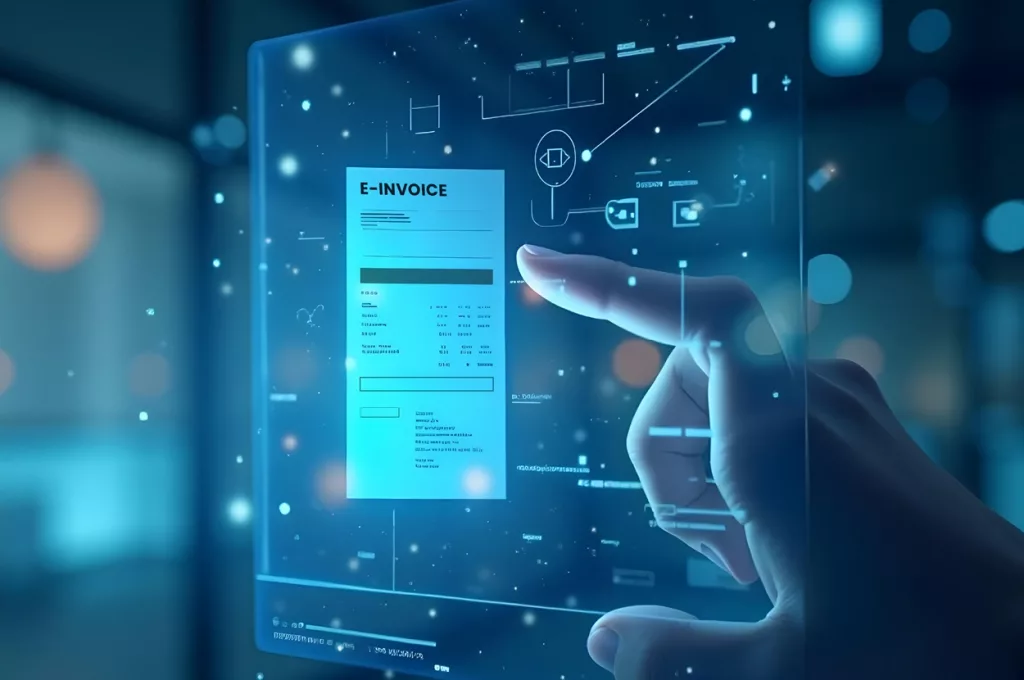
New Zealand e-Invoicing is a machine-to-machine exchange of invoice data between buyers’ and sellers’ systems through the PEPPOL network, designed to reduce manual entry, improve accuracy, and accelerate payments.
NZ’s e-Invoicing framework relies on access via accredited PEPPOL Access Points rather than a central clearing platform. The country’s Peppol Authority is the Ministry of Business, Innovation and Employment (MBIE), which governs and oversees the implementation and compliance of the Peppol framework in New Zealand.
Cygnet.One helps enterprises and software ecosystems adopt NZ e-Invoicing without disrupting ERP, AP/AR workflows, or audit readiness; by enabling PEPPOL A-NZ alignment, trading-partner onboarding, and end-to-end operational controls.
Australia and New Zealand also collaborate to maintain an interoperable Trans-Tasman approach for e-Invoicing adoption and governance. Visit Australia details here!

New Zealand snapshot at a Glance
Aspect
Requirement / Option
Notes
e-Invoicing Format
PINT A-NZ (Peppol BIS 3.0), transitioning to PINT A-NZ (Peppol International Invoice A-NZ)
NZ uses PEPPOL standards for structured XML-based e-Invoicing to ensure full interoperability.
PEPPOL Network
Mandatory for B2G; Voluntary for B2B
Government agencies must use PEPPOL; private businesses may adopt it voluntarily.
Sending e-Invoices
Via PEPPOL Access Point
Suppliers must connect through an accredited PEPPOL Access Point to send invoices.
Receiving e-Invoices
Via PEPPOL Access Point
Buyers must register their NZBN on the PEPPOL network to receive invoices.
Non-PEPPOL e-Invoicing
Optional (B2B only)
Alternative digital formats allowed if both trading partners agree.
Applicability – Government Agencies
PEPPOL required
Government agencies are expected to be Peppol-enabled under procurement policy direction.
Applicability – Large Suppliers
Proposed requirement from 2027 (subject to final regulatory confirmation).
Large suppliers (e.g., > NZ government threshold – such as revenue thresholds in Procurement Rules) must send e-Invoices to agencies via PEPPOL from Jan 1, 2027.
Applicability – Private B2B
Voluntary
No statutory mandate; early adoption is encouraged.
Business Size Expectations
Large & Government first
Phased adoption prioritizes government and large enterprises.
Identifier Required
NZ Business Number (NZBN)
NZBN is required for PEPPOL routing and participant identification.
Archiving & Record Keeping
GST & audit compliant storage
Invoices must be retained per New Zealand tax record-keeping rules.
How Cygnet.One enables New Zealand e-Invoicing
without breaking ERP or finance ops
Connect e-Invoicing to your existing landscape (ERP, finance systems, AP automation, AR billing, vendor portals) with minimal disruption, built for high volume and multi-entity operations.
Use a PEPPOL-accredited service provider capability to send/receive e-Invoices and publish/resolve participant capabilities through SMP, so trading partner discovery and routing works reliably.
Structured invoice validations, schema conformance, identifier rules, and audit-friendly logs—supporting finance, tax, and IT controls in one flow. (Also aligns well with enterprise audit cycles.)
Design for NZ today, keep the architecture ready for AU interoperability and evolving AU/NZ specifications.
If you’re running multi-jurisdiction invoicing, standardise the core integration and switch country rule packs as mandates evolve.
Resources

How an MSME enabled invoice generation after government mandate?
How an MSME enabled invoice generation after government mandate

A leading IT services giant saved ERP switching cost automating…
A leading IT services giant saved ERP switching cost automating e-Invoicing and digital signing with us.

A guide to KSA e-Invoicing Phase 2
Ensure compliance for ZATCA’s latest e-invoicing mandate in Saudi Arabia, effective January 2023.
Our Accreditations
With tax authorities across the globe

PEPPOL
certified solution provider
FTA
Recognized VAT platform in UAE
Muwafaq
FTA recognized
ZATCA
recognized e-Invoicing platform
IRP
GSTN Approved
GSP
GSTN Approved
MDEC
accredited service provider in Malaysia
HMRC
Recognized VAT platform in UK
BOSA
Registered e-Invoice Compliant Software in Belgium
FAQs
No—NZ e-Invoicing exchanges structured invoice information through the PEPPOL network between systems, reducing manual entry and improving accuracy.
Not necessarily. NZ guidance explicitly supports working with a third-party accredited Access Point provider to connect your product or ERP to the network.
NZ software guidance calls out the NZBN as the identifier used for registration to receive e-Invoices.
IRD states e-Invoicing can operate with GST and references the move (from 1 April 2023) to taxable supply information record-keeping.
