





























Introduction
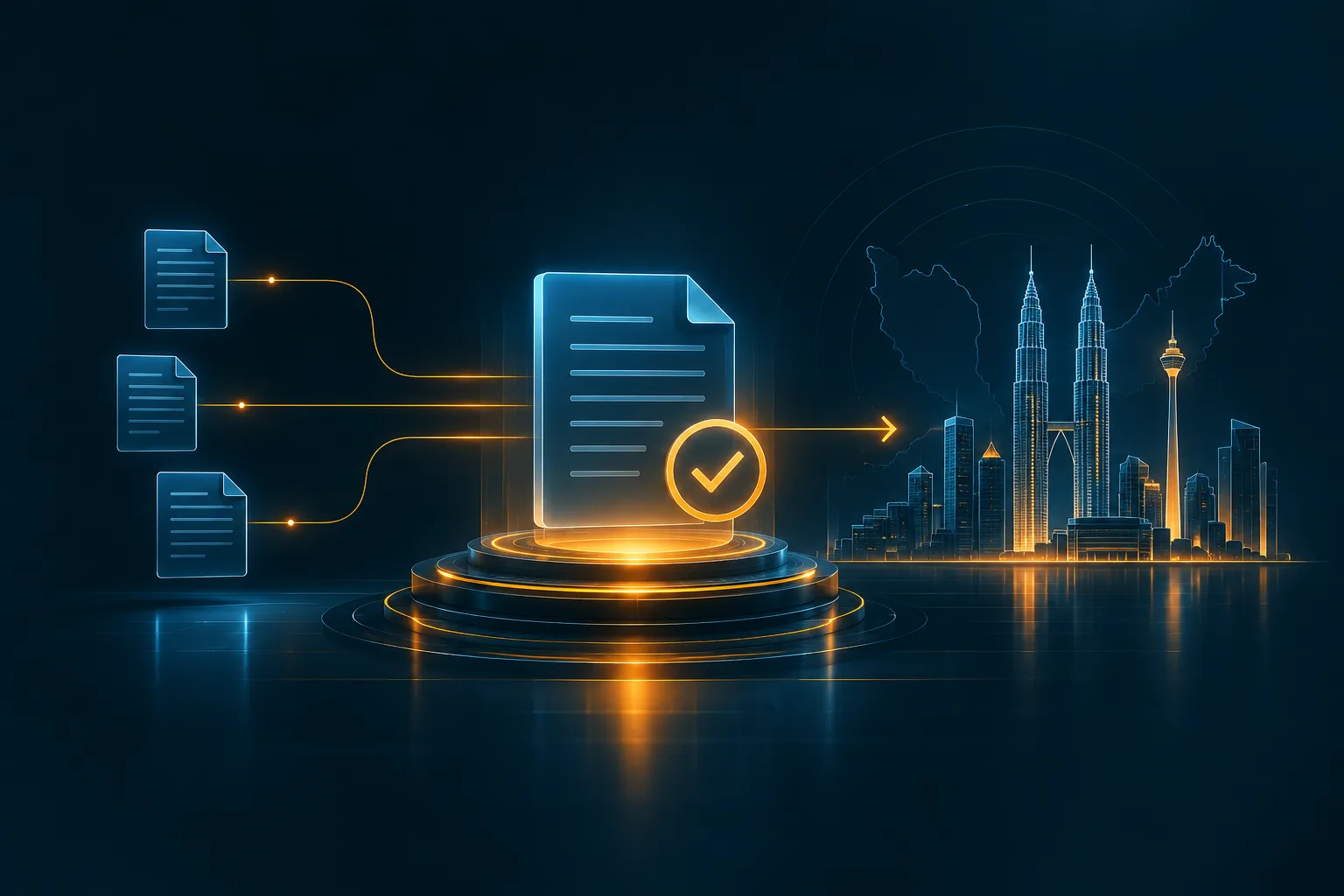
It would be impractical for a business that handles a thousand walk-in clients a day to generate an e-Invoice for each of their transactions. This problem is addressed by Malaysia’s e-Invoicing process with the use of the Malaysia consolidated e-Invoice. Through this solution, qualified businesses can collate their transactions for the reporting period and report these to the Inland Revenue Board (LHDN) via MyInvois.
The process may seem easy but there are many areas where people get confused like identifying which sales are included, the elements to include in the document, the deadline for filing, and how to respond in case the client asks for an invoice. This blog touches on all of these issues in the sequence.
Is Your Sale Eligible when Consolidation Applies?
Consolidation can be done when it is not practical to issue a single e-Invoice at the time of the transaction. Overall, it can be applied to those instances wherein there is no demand from the customer for an e-Invoice, usually purchases by individual customers. This will be the case with B2C e-Invoice Malaysia involving retail, food and beverage, parking, and other similar businesses.
It is generally advisable when:
- the purchaser is an individual not requesting for an e-Invoice
- there is a high volume and low value of sales, thus, adding no significant value to individual invoices
- the transactions are done during the same calendar month
- it is not an excluded activity
It is inappropriate when:
- the customer requests the use of the e-Invoice during the transaction
- the transaction involves a business-to-business purchase, whereby the purchaser requires the invoice for its internal purposes
- the transaction is excluded from the LHDN list of exclusions
It is important to consider the exclusions. Therefore, it is essential to understand the restrictions for consolidated e-Invoices with a view of better execution and minimal hiccups. As the LHDN has announced some relaxations and updates to the requirements, it is important to check the current situation.
Who and What: Parties, Data and Documents
Consolidated e-Invoice requires the same basic structure as other invoices do. It is just the representation of the buyer and the meaning of the line items that is different.
Parties. Supplier information remains the same as before. Since the name of the buyer is unknown, a generic buyer TIN provided by LHDN may be used. For example, generic TIN will be used for Malaysia buyers, and another value for foreign buyers. Verify your values according to the most recent SDK documentation.
Data. An invoice must include:
- details about the supplier: TIN and MSIC code
- generic buyer data
- classification code indicating the nature of the document (consolidated)
- line items that correspond to the transactions during the period, whether by receipt or by some other grouping key
- tax information, totals, currency
Supporting documents. Although the individual sales are not submitted as separate e-Invoices, the underlying documents are still important. All receipts, till tapes, or transaction records must be saved, as the consolidated amount needs to be verified.
Step by Step: The Transaction Flow
In practice, this becomes a monthly process instead of per-sale procedure. The normal transaction recording takes place daily while the sales receipts are issued like usual. For the whole month, this system tracks down the eligible transactions and after the month ends, the business files one combined document during the allowable period which LHDN has set as many days as possible from the month end. Note the deadline for filing in the latest guidelines since it is frequently missed due to wrong perception about it running up till the end of the following month.
This deadline becomes the answer to the question of the time when the monthly consolidated e-Invoice needs to be filed.
Behind the Scenes: System Actions and Status Changes
Once the consolidated e-Invoice is submitted, the process usually goes like this:
- The ERP or the integration layer gathers all the transactions that are eligible for consolidation and creates the document.
- The document is sent to MyInvois via the API.
- MyInvois validates its structure, codes, and calculation, and the status changes from submitted to either valid or invalid.
- The document gets the unique ID and timestamp if the validation was successful.
- Otherwise, the error message is provided and once fixed, the document is resubmitted.
It should be noted that all the consolidated e-Invoices go through the same validation procedure as any other document, therefore, the schema and codes errors are applicable to consolidated invoices as well. The only thing that makes them different is that the buyer verification procedure uses the general TIN.
Look Before You Send: Checks Before Submission or Dispatch
The following brief pre-flight checklist will cover most rejection issues:
- Eligibility Filter: ensure that ineligible transactions and any buyer-specified e-Invoices have been eliminated.
- Period Consistency Check: ensure that all lines belong to the same period.
- Totals Verification: ensure that line amounts, taxes, and totals reconcile with the sales register.
- Codes Validation: ensure proper classification, tax, and currency codes.
- Duplicates Check: ensure that there are no duplicates from prior documents.
When Things Go Sideways: Corrections, Cancellations and Edge Cases
There is no perfect monthly cycle that does not have any problems. There are some common problems which are usually considered as exceptions. Namely, those problems are the following:
- The customer requests later an individual e-Invoice. Process this request according to the guidelines of LHDN. In case the consolidated document has not been provided before, provide the individual e-Invoice, and exclude the sale from consolidation. If it was provided before, follow the current guidelines about how to correct or cancel the report to avoid double reporting.
- An error has been made after validation. The document can usually be cancelled during the allowed time frame. After that, credit or debit notes are used usually.
- Return and refund transactions. Those need to be reported by using correct documents of adjustment, not just silently reducing the transaction amount from sales.
- Customers are mixed. There are companies which have consumer clients as well as business clients. The system needs to automatically distinguish consumers and businesses and process their sales correspondingly.
- Branches or outlets. Depending on the registration and LHDN guidelines, every branch can make its own consolidated document or not. Choose the option and stick with it.
Building Guardrails: ERP and Workflow Controls
Manual consolidation may be suitable for a small shop, but it does not scale. Controls within the ERP system make the entire process reliable:
- Tagging rule. Each transaction is automatically tagged as individual or consolidated based on buyer category and status of request.
- Batch job process. The consolidation report is automatically created at the end of the month, followed by a review process before submission.
- Locked period. After the consolidation of one month is submitted, no late amendments to the transactions can take place except through adjustment entries.
- Queue management. Exceptions and rejected documents are placed into a queue managed by an individual.
- Approval process. Approval of the total value by a finance department takes place before releasing the documents.
Controls are particularly important for small companies that are trying to figure out how to get started. Guide to e-Invoicing in Malaysia will help evaluate Malaysia e-Invoice readiness before automation.
Proving It Later: Records for Reconciliation and Audit
Consolidation decreases the volume of the documents you submit but not your responsibility to retain evidence. In case LHDN queries regarding the consolidation of the total, you must have proof. Best practices would be:
- preserving the receipt or the log of transaction related to the consolidated document
- preserving the response from MyInvois, including the reference number and time stamp, related to the monthly document
- reconciling the consolidated total with the general ledger and the sales reports monthly
- preserving records about the transactions which were left out
The integration of these practices with other best Compliance practices for MyInvois will help you maintain your trail of audit efficiently with increased volumes. Businesses which want it taken care of end-to-end can use the Malaysia e-Invoicing solution.
Conclusion
When utilized in the right manner, the Malaysia Consolidated e-Invoice is a solution to problems arising from high volumes but low-value transactions. It reduces the number of invoices submitted without reducing their visibility. Discipline is essential when submitting only qualified transactions within the stipulated time frame with documentation and a process to correct any errors. Automated processes make the whole exercise less complicated.
FAQ's
The company can normally issue a consolidated e-Invoice for transactions that do not require the issue of an e-Invoice as requested by the buyer, i.e., most cases when sales are made to a private customer. Transactions should occur during one calendar month and not be included into LHDN exclusions list. Make sure to check the latest information about it before implementation
It should be submitted during the period LHDN provides after the end of the month. It consists of the certain number of days specified in official guidance, so you need to check it and plan your batch run ahead to have enough time for rectification of rejected items.
Then the business should issue an individual e-Invoice for that transaction and ensure its absence from the consolidated e-Invoice. In case when it was already submitted, consult the official guidance on its cancellation or other possible actions not to duplicate the transaction.
Those in which the purchaser asks for an e-Invoice, most B2B transactions, and those considered ineligible by LHDN must not be included. Be aware of the exclusion list as it could be revised from time to time.
It depends on how your business is registered and what the relevant guidance suggests. In some cases, location-wise documentation is allowed, while other businesses require one e-Invoice per taxpayer. Whatever the case, it must be consistent.
Author


Kesha Shah
General Manager - Products Marketing
Kesha Kumar leads the global products marketing team at Cygnet.One, where she turns the complexity of tax and finance transformation into stories that resonate with the people who matter most. She’s the strategic force behind the brand’s presence across India, the GCC, Southeast Asia, and Europe, translating dense subjects like e-Invoicing mandates, digital engineering, and enterprise AI into narratives that inform and drive action. With expertise spanning tax and finance transformation, quality, enterprise applications, and data and AI, Kesha blends sharp strategic thinking with a marketer’s instinct for what truly connects. At Cygnet.One, she does more than build campaigns and content; she shapes the conversations that help enterprises navigate compliance with clarity and confidence, propelling the brand to the forefront of the industry along the way.