
































France’s e-Invoicing reform changes invoice processing from a largely document-based activity into a structured data exchange process. This creates new control points across ERP systems, master data, invoice transformation, validation, routing, platform processing, reporting, and reconciliation.
As a result, France e-Invoicing errors are not limited to incorrect invoice amounts or missing information. An invoice can be correctly generated inside an ERP and still fail because of an incorrect customer identifier, invalid tax classification, mapping problem, routing issue, or mismatch between the invoice and its lifecycle status.
The France e-Invoicing readiness guide describes the reform as a controlled data-exchange model involving regulated private platforms, a public directory, structured invoice exchange, lifecycle and status processing, and e-reporting. Readiness therefore spans tax determination, master data, routing, platform selection, ERP integration, AP/AR workflows, and evidence retention.
Where Can France e-Invoicing Errors Occur?
A useful way to understand the potential for France invoicing errors is to follow the complete transaction flow:
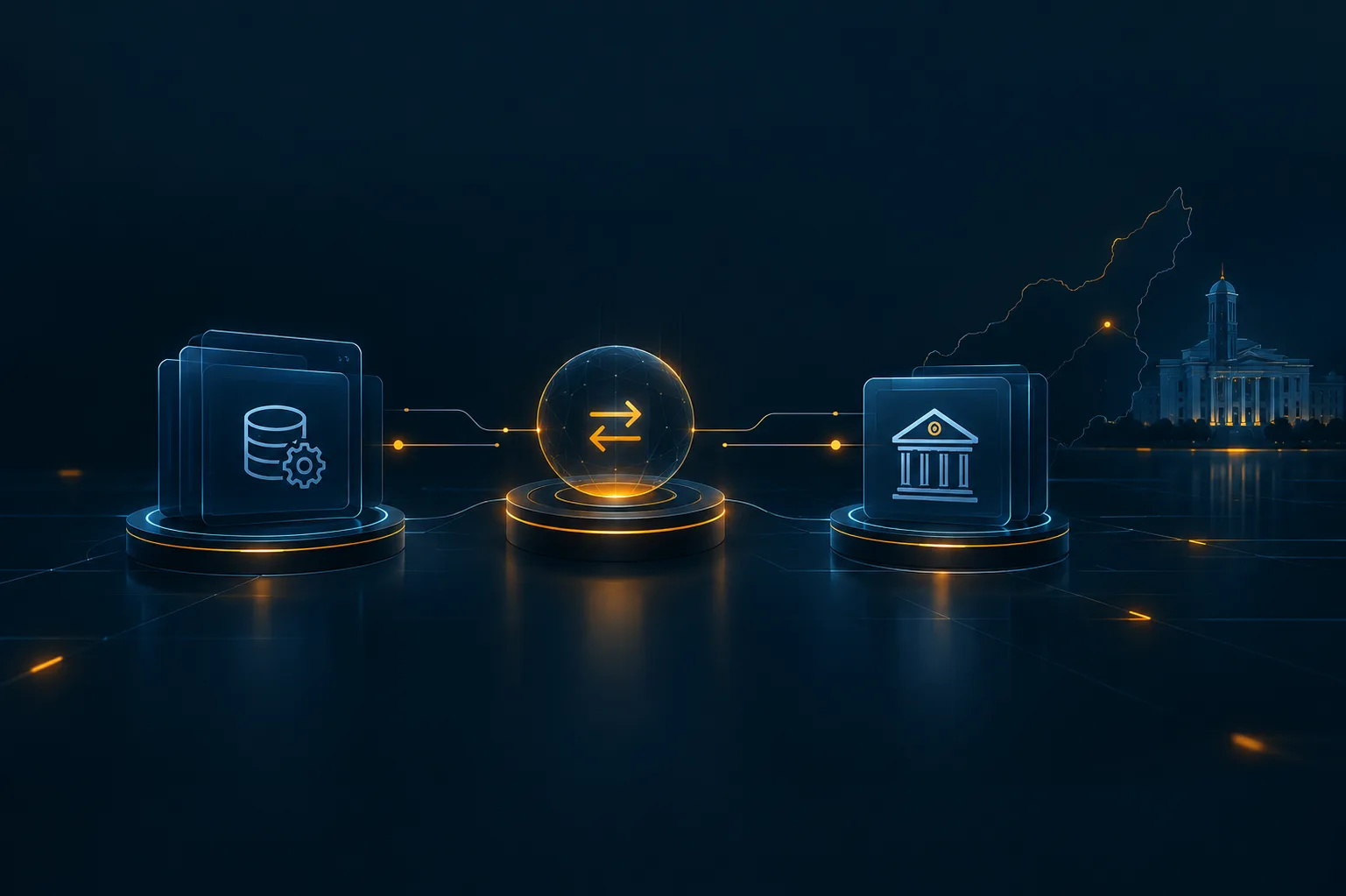
ERP → Data Mapping → Validation → Plateforme Agréée → Recipient / Administration → Status → ERP → Reconciliation
Errors can originate at almost every stage.
ERP and Master Data
Incorrect customer, supplier, SIREN, VAT, address, tax, or transaction information can create downstream problems before an invoice reaches the platform.
Data Mapping and Transformation
A source-system field may be missing, mapped incorrectly, or transformed in a way that changes its meaning in the structured invoice.
Validation
An invoice may fail structural, tax, business-rule, calculation, or routing checks.
Platform and Transmission
Connectivity, directory, recipient, or platform-processing issues can prevent successful delivery.
Post-Transmission Processing
Status synchronization, accounting posting, e-reporting, and reconciliation can introduce further discrepancies.
The guide recommends monitoring platform acknowledgments, directory and routing failures, schema or business-rule errors, and application posting failures separately. It also emphasizes that the ERP remains the system of commercial record while the compliance flow depends on external platforms and regulated statuses.
8 Common France Invoicing Errors and Their Fixes
The most practical way to approach invoice errors is to connect each problem with its likely source and an appropriate control.
| Error | Why it happens | How to fix it |
| Missing or incorrect SIREN | Incomplete customer master data | Validate and enrich master data before invoice generation |
| Incorrect VAT treatment | Inconsistent tax-code mapping | Map ERP tax codes to governed tax treatments |
| Invalid UOM or code | Free-text or incorrect values | Use controlled code lists |
| Invoice total mismatch | Different rounding rules | Standardize calculation rules and test line and document totals |
| Routing failure | Incorrect recipient or endpoint information | Validate directory and recipient data |
| Credit note not linked | Missing original invoice reference | Preserve original-document relationships |
| Duplicate invoice | Retry or integration issue | Implement idempotent processing and duplicate controls |
| Status not synchronized | Callback or integration failure | Monitor and reconcile lifecycle responses |
The France Readiness Guide identifies incorrect SIREN data, free-text VAT treatment, different ERP rounding rules, weak invoice and credit-note linkage, and duplicate customer records as common weaknesses requiring specific readiness controls.
France e-Invoice Validation: How to Catch Errors Before Transmission
France e-Invoice validation should not be treated as a single technical check performed after an invoice has already entered the exchange process. Validation should begin with source data and continue through structured-document generation and transmission.
1. Master Data Validation
Check:
- Customer SIREN
- VAT identification
- Supplier information
- Delivery address
- Electronic invoicing address
- Transaction classification
- Tax codes
- Units of measure
The guide notes that buyer SIREN, VAT identifiers, delivery addresses, tax codes, units of measure, payment terms, reference numbers, and transaction classifications need governed source values.
2. Invoice Data Validation
Check invoice number, date, line items, tax values, totals, references, and required information before creating the final structured representation.
3. Tax and Business-Rule Validation
A France e-Invoicing solution should also determine whether tax treatment and transaction classification are appropriate. A document can be technically well-formed but still contain an incorrect tax category or reporting treatment.
4. Routing Validation
Recipient and electronic invoicing endpoint information should be checked before transmission so that an otherwise valid invoice does not fail because it cannot be routed correctly.
The guide recommends combining structural checks, tax and business rules, and counterparty or routing checks rather than depending on a single validation layer.
France e-Invoicing Validation Errors: Common Causes
France e-Invoicing validation errors often originate upstream rather than inside the final validation engine.
Incorrect Customer or SIREN Information
A missing or incorrect SIREN can prevent correct routing or result in incorrect statutory information.
Fix: Validate customer master data before invoice generation and establish clear ownership for remediation.
Incorrect VAT Classification
Free-text or inconsistent tax information can result in incorrect tax categories or e-reporting classifications.
Fix: Map ERP tax codes to governed tax treatments and restrict uncontrolled manual tax descriptions.
Calculation and Rounding Differences
Different systems may calculate line and document totals differently.
Fix: Standardize rounding rules and test calculations at both line and document level.
Invalid Codes or Structured Data
Incorrect identifiers, free-text UOM values, or invalid classification values can cause structured payload failures.
Fix: Use governed code values and apply pre-transmission validation.
These controls align with the guide’s master-data and validation recommendations, including the need to remediate SIREN, VAT, tax-code, UOM, and rounding issues at source.
e-Invoice Rejection France: What Should Businesses Do?
An e-Invoice rejection France scenario should be treated as an operational exception rather than simply a technical message.
A practical workflow is:
Detect → Identify → Correct → Revalidate → Resubmit → Synchronize
1. Detect the Rejection
Capture the rejection response and associate it with the relevant invoice.
2. Identify the Root Cause
Determine whether the problem originated in ERP data, master data, tax configuration, transformation, validation, routing, or platform connectivity.
3. Correct the Source
Where possible, correct the underlying ERP or master-data problem instead of manually changing individual invoice outputs.
4. Revalidate and Resubmit
Run the corrected invoice through the applicable validation controls before resubmission.
5. Synchronize the Result
Return the final processing information to the ERP and relevant finance workflow.
The France Readiness Guide describes controlled reprocessing, status visibility, and exception handling as important parts of the operating model.
France Invoice Lifecycle Status: Why Status Synchronization Matters
France invoice lifecycle status provides visibility into what happened after an invoice was created or transmitted. Monitoring should cover the complete lifecycle rather than stopping at the ERP’s “sent” status.
A simplified lifecycle can be represented as:
Created → Validated → Submitted → Processing → Accepted / Rejected → Corrected / Resubmitted → Completed
The exact status vocabulary and significance should be mapped against applicable French technical specifications and the selected platform.
Teams should monitor:
- Submission status
- Platform acknowledgments
- Validation failures
- Routing failures
- Rejection status
- Correction status
- ERP synchronization
- Final reconciliation
The guide makes an important operational point: an ERP “sent” status should never be treated as proof of successful regulated delivery.
This is particularly important when an enterprise has separate ERP, integration, platform, and finance systems. A transaction can leave the ERP successfully while encountering a downstream problem that requires investigation.
How to Troubleshoot France e-Invoicing Errors Step by Step
A structured troubleshooting process helps teams identify the root cause instead of repeatedly fixing individual invoices.
Step 1: Identify the Failed Stage
Determine whether the problem occurred in the ERP, mapping, validation, transmission, platform processing, routing, status synchronization, or reconciliation stage.
Step 2: Trace the Source Data
Return to the originating ERP field or master-data record and identify the original value.
Step 3: Compare Source and Structured Data
Check whether the value changed during transformation or mapping.
Step 4: Review the Error Response
Determine whether the failure concern’s structure, identifiers, tax treatment, calculations, business rules, routing, or connectivity.
Step 5: Correct the Root Cause
Fix the source or mapping problem wherever possible. Correcting only the final invoice output can allow the same problem to affect future transactions.
Step 6: Revalidate
Run the corrected transaction through the applicable controls.
Step 7: Resubmit and Reconcile
Confirm the outcome and synchronize it with the ERP, accounting records, and reporting process.
The guide recommends separating monitoring for platform acknowledgments, routing failures, schema and business-rule errors, and application posting failures.
How Can Enterprises Prevent France e-Invoicing Errors?
Prevention should be built into the process rather than added after rejection occurs. A useful approach is to establish controls at three stages.
Before Invoice Generation
Validate:
- Customer and supplier master data
- SIREN and VAT identifiers
- Tax codes
- Transaction classification
- Delivery information
- Invoice numbering
Before Transmission
Check:
- Mandatory fields
- Structured format
- Tax calculations
- Invoice totals
- Recipient information
- Routing data
- Duplicate risk
After Transmission
Monitor:
- Platform acknowledgments
- Processing status
- Rejections
- Routing failures
- Application posting failures
- E-reporting responses
- Reconciliation differences
The France Readiness Guide states that structured fields cannot be fixed by visually reviewing a PDF and recommends field-level source mapping and master-data remediation.
The same guide also recommends validating UBL, CII, and Factur-X transformations, including representative invoices, credit notes, mixed VAT rates, discounts and charges, foreign currencies, and rounding scenarios.
France e-Invoicing Errors Checklist
Before production, enterprises should verify that they have:
- Validated customer SIREN and VAT data
- Governed ERP tax-code mappings
- Standardized calculation and rounding rules
- Tested UBL, CII, and Factur-X transformations
- Validated recipient and routing information
- Tested rejected and corrected invoices
- Tested credit-note relationships
- Implemented duplicate prevention
- Defined rejection ownership
- Tested lifecycle status synchronization
- Preserved structured invoice originals and status evidence
The readiness checklist also calls for source-to-target mapping, SIREN and VAT remediation, UBL/CII/Factur-X transformation testing, inbound and outbound status handling, e-reporting controls, and retention of structured originals, acknowledgments, corrections, and audit logs.
How Cygnet.One Can Help Prevent and Resolve e-Invoicing Errors
Cygnet.One can be positioned as an integration, transformation, validation, and compliance layer around the French e-Invoicing environment.
The France Readiness Guide describes capabilities including ERP and source connectivity, data transformation, configurable schema and business-rule validation, inbound and outbound processing, status visibility, exception handling, controlled reprocessing, VAT reconciliation, and audit readiness.
For enterprises operating multiple ERP or accounting systems, this approach can centralize transformation and validation while allowing existing source systems to remain in place.
Importantly, regulated exchange and e-reporting functions in France remain reserved for a state-approved plateforme agréée. The guide does not claim that Cygnet.One itself is on the DGFiP list of plateformes agréées. Any implementation should therefore validate the approved-platform role and relevant partner or integration arrangement against the current official list.
Conclusion
France invoicing errors should not be treated as isolated invoice problems. They often indicate weaknesses in master data, tax configuration, mapping, validation, routing, or lifecycle management. Enterprises should therefore build preventive validation, controlled exception handling, status monitoring, and reconciliation into the e-Invoicing architecture. These controls can improve traceability across ERP systems, regulated platforms, tax reporting, and audit records.
FAQ's
Common issues include incorrect SIREN or VAT information, tax-code mismatches, rounding differences, incorrect routing data, invalid structured values, missing credit-note references, duplicate transmissions, and status synchronization failures.
Businesses can combine master-data validation, tax and business-rule checks, structured-format validation, routing checks, duplicate detection, and post-transmission monitoring. Validation should begin before the invoice reaches the regulated platform.
An invoice can be rejected because of incomplete or incorrect data, invalid identifiers, tax or calculation inconsistencies, format or business-rule problems, routing information, or platform validation requirements. The rejection reason should be traced to its source before correction and resubmission.
Accurate lifecycle information helps finance and IT teams understand what happened after invoice submission. It helps distinguish between invoices that were sent, processed, rejected, corrected, or awaiting further action.
Author


Kesha Shah
General Manager - Products Marketing
Kesha Kumar leads the global products marketing team at Cygnet.One, where she turns the complexity of tax and finance transformation into stories that resonate with the people who matter most. She’s the strategic force behind the brand’s presence across India, the GCC, Southeast Asia, and Europe, translating dense subjects like e-Invoicing mandates, digital engineering, and enterprise AI into narratives that inform and drive action. With expertise spanning tax and finance transformation, quality, enterprise applications, and data and AI, Kesha blends sharp strategic thinking with a marketer’s instinct for what truly connects. At Cygnet.One, she does more than build campaigns and content; she shapes the conversations that help enterprises navigate compliance with clarity and confidence, propelling the brand to the forefront of the industry along the way.