
































Introduction
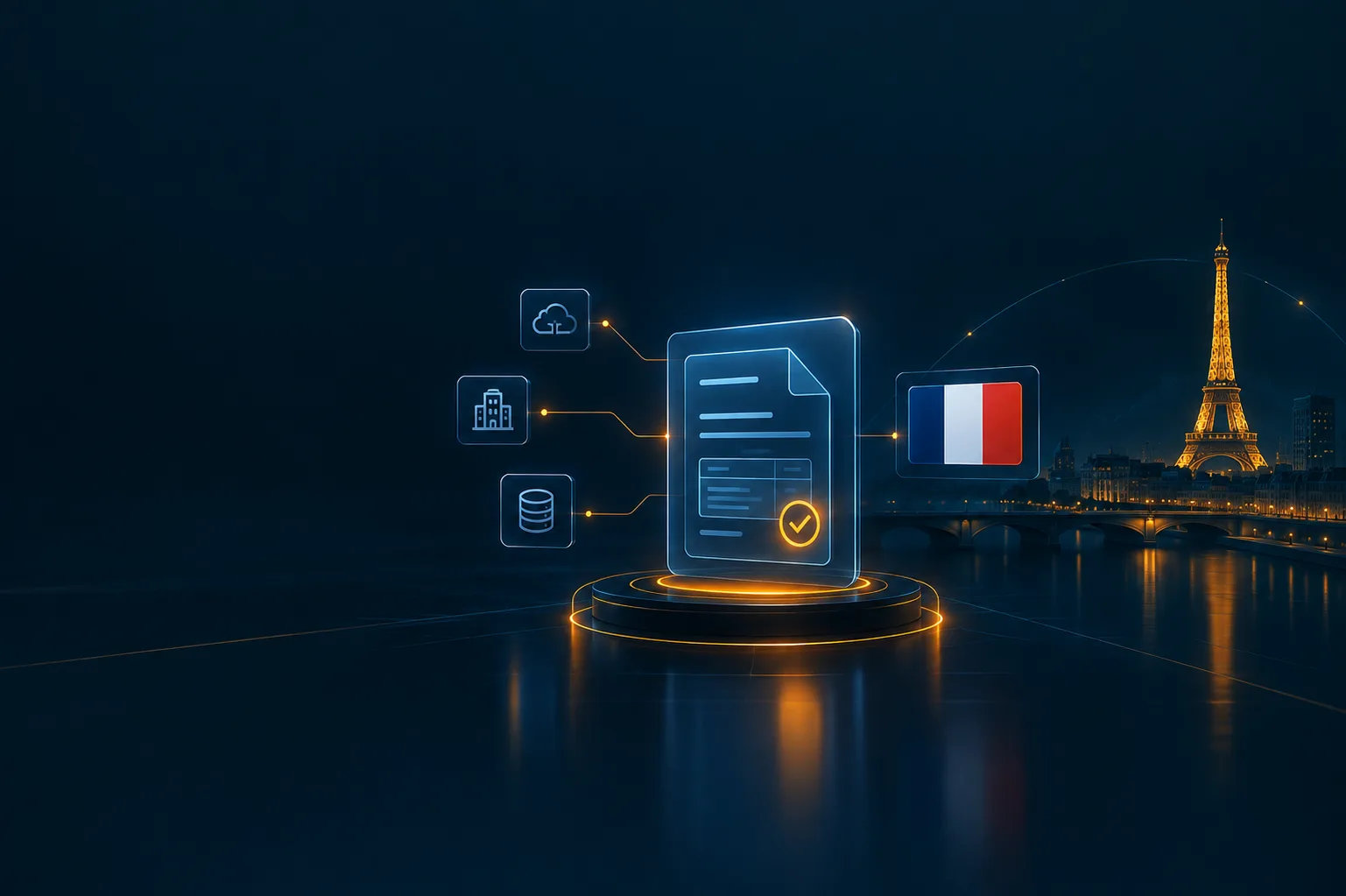
France is introducing a mandatory electronic invoicing and transaction reporting framework to modernise VAT administration, improve transaction visibility and reduce tax fraud. The reform affects how businesses exchange invoices, report certain transactions and maintain records for tax compliance.
For businesses established in France, preparation involves more than replacing PDF invoices with electronic files. Organisations must assess their transactions, select an appropriate plateforme agréée (registered platform), update ERP and accounting systems, improve invoice data quality and establish processes for receiving, validating and tracking invoices.
The reform is being implemented in phases. All businesses within scope must be able to receive electronic invoices from 1 September 2026. Large enterprises and intermediate-sized enterprises (ETIs) must also begin issuing in-scope electronic invoices and meet applicable reporting obligations from that date. Small and micro-enterprises follow from 1 September 2027.
This guide explains the France e-Invoicing mandate, its deadlines, technical requirements, e-reporting obligations and practical steps businesses can take to prepare.
France E-Invoicing Mandate at a Glance
France’s reform establishes two connected obligations: e-invoicing and e-reporting.
E-invoicing covers the electronic exchange of structured invoices for qualifying domestic business-to-business (B2B) transactions. E-reporting covers specified transaction and payment information that must be transmitted to the tax administration when the transactions fall outside the mandatory domestic B2B e-invoicing flow but remain within the applicable reporting rules.
The framework relies on registered platforms to exchange invoices and transmit required data. Businesses must therefore assess their operational processes, invoice formats, system integrations and reporting responsibilities together.
Key elements include:
- Receiving electronic invoices: All businesses within the reform’s scope must be able to receive e-invoices from 1 September 2026.
- Issuing electronic invoices: Large enterprises and ETIs must issue in-scope domestic B2B invoices from 1 September 2026. SMEs and micro-enterprises follow from 1 September 2027.
- Registered platforms: Businesses use a plateforme agréée to meet the applicable exchange and transmission requirements.
- Structured formats: Qualifying invoices must use accepted structured or hybrid formats rather than relying solely on ordinary PDF documents.
- E-reporting: Applicable B2C, cross-border transaction and payment information must be reported according to the relevant rules.
- ERP readiness: Invoice data, customer records, validation rules and reporting workflows must support the new requirements.
Businesses should confirm their specific obligations against the latest guidance from the French tax administration (DGFiP).
France E-Invoicing Timeline: 2026–2027
The implementation schedule distinguishes between the obligation to receive invoices and the obligation to issue them.
| Date | Requirement |
| 1 September 2026 | All businesses within scope must be ready to receive electronic invoices. |
| 1 September 2026 | Large enterprises and ETIs must begin issuing in-scope electronic invoices and comply with applicable e-reporting obligations. |
| 1 September 2027 | SMEs and micro-enterprises must begin issuing in-scope electronic invoices and comply with applicable e-reporting obligations. |
Receiving readiness is therefore not something smaller businesses can postpone until September 2027. They need to establish how invoices will reach their organisation, who will process them and how exceptions will be managed.
Issuing readiness also requires advance planning. ERP configuration, customer master-data corrections, platform onboarding, invoice validation and user acceptance testing can involve several departments and external providers.
Businesses should verify their classification and applicable deadlines using the DGFiP’s official implementation timeline.
Who Must Comply with France E-Invoicing?
The reform primarily affects businesses established in France that are subject to VAT. The precise obligation depends on the transaction, the business’s role and the applicable rules.
Domestic B2B transactions
Qualifying domestic B2B transactions fall within the mandatory e-invoicing framework. Businesses must be able to issue or receive the relevant structured invoices according to their implementation phase.
The first step is to map transactions by customer type, establishment, VAT treatment and invoice flow. This helps determine which invoices must pass through the e-invoicing process and which transactions require reporting instead.
B2C transactions
Transactions with consumers generally do not follow the same domestic B2B invoice-exchange process. However, specified information may need to be reported through e-reporting where the applicable rules require it.
Businesses serving both consumers and other businesses should separate these transaction flows in their compliance design.
Cross-border transactions
International transactions can create reporting obligations even when they are not covered by mandatory domestic B2B e-invoicing. Businesses should assess cross-border sales and purchases, the location of the parties, VAT treatment and the applicable reporting requirements.
Foreign businesses without a French establishment may also have e-reporting obligations in certain circumstances. These depend on factors such as French VAT registration, the transaction and which party is responsible for accounting for VAT.
Public-sector transactions
Business-to-government (B2G) invoicing follows the relevant public-sector process through Chorus Pro. Organisations handling both public-sector and private-sector customers should maintain the appropriate workflows rather than assuming that every invoice follows an identical route.
For transaction-specific guidance, consult the DGFiP’s explanation of invoicing and reporting obligations and its guidance for foreign businesses without a permanent establishment.
Understanding France’s Registered Platform Model
France uses a platform-based model for exchanging electronic invoices and transmitting required data. A plateforme agréée is a platform registered under the French framework to perform the relevant functions.
A business may also use compatible ERP software, accounting applications or an intermediary solution to prepare and manage invoice information. However, compatibility alone does not confer registered-platform status. Businesses must ensure that their chosen arrangement connects to a registered platform for the regulated functions that apply to them.
When selecting a France e-invoicing solution, assess:
- Compatibility with existing ERP and accounting systems.
- Support for issuing and receiving structured invoices.
- Data validation and mandatory-field checks.
- Invoice routing and recipient identification.
- E-reporting capabilities for applicable transactions.
- Invoice status visibility and exception management.
- Integration methods, security and access controls.
- Audit trails, record retention and support arrangements.
The platform decision should be made early enough to allow integration testing and operational preparation. Businesses should verify a provider’s status against the official DGFiP list of registered platforms.
France E-Invoicing Formats and Technical Requirements
France supports structured electronic invoice formats designed to make invoice information readable by systems as well as usable for automated processing.
The principal formats include:
- UBL: A structured invoice format based on Universal Business Language.
- UN/CEFACT CII: A structured format based on the Cross Industry Invoice standard.
- Factur-X: A hybrid format combining a human-readable PDF with embedded structured XML data.
An ordinary PDF sent by email should not automatically be treated as a compliant structured e-invoice. Businesses must use a format and exchange process accepted under the applicable French requirements.
Technical preparation should include mapping ERP fields to the target invoice structure, validating mandatory data and testing how invoices are generated, transmitted, received and processed.
Relevant French technical specifications cover invoice and lifecycle-status formats, interfaces between enterprise systems and platforms, and B2B use cases. Businesses should review the applicable specifications and the latest DGFiP documentation rather than relying on legacy invoice templates.
The DGFiP technical factsheet on e-invoicing formats provides a starting point for assessing format requirements.
Mandatory Invoice Data and Validation
Structured invoicing makes accurate master data essential. Missing or inconsistent information can cause validation failures, routing problems and downstream reconciliation issues.
Businesses should pay particular attention to the following fields:
- Customer SIREN: The relevant business identification number must be captured correctly where required.
- Delivery address: This should be included when the delivery address differs from the billing address and the field is applicable.
- Transaction type: The invoice must identify whether it concerns goods, services or both, as required by the specifications.
- VAT treatment: Tax rates, taxable amounts and relevant VAT information must reflect the transaction.
- VAT on debits option: The applicable information must be handled where relevant to the supplier’s VAT treatment.
These requirements should be built into the invoice creation process rather than addressed manually after an error occurs.
ERP and accounting teams should review customer and supplier records, remove duplicate accounts, standardise identifiers and define controls for mandatory fields. Automated validation should detect missing information before transmission and provide clear reasons when an invoice fails.
The French public-service guidance on scope and mandatory fields can help teams identify the relevant data requirements.
E-Reporting and Payment Reporting
E-reporting complements e-invoicing by covering specified transaction information that does not travel through the mandatory domestic B2B invoice-exchange process.
Depending on the business and transaction, this may include information relating to B2C sales, cross-border transactions and other transactions covered by the French reporting framework.
Payment reporting is a related but distinct requirement. It applies to relevant transactions where VAT becomes due upon collection, subject to applicable exclusions and conditions. For example, the treatment may differ where the reverse-charge mechanism applies or the supplier has opted for VAT on debits, where permitted.
Businesses should not assume that transmitting an invoice automatically fulfils every reporting obligation. The reporting process must be designed around the transaction type, VAT treatment, payment status and applicable deadlines.
A robust process should:
- Classify transactions before determining the applicable reporting route.
- Capture the information required for each reporting category.
- Connect invoice records with collections, allocations and credit notes.
- Reconcile reported information with accounting and VAT records.
- Track submission status and resolve rejected or incomplete transmissions.
- Retain evidence of reporting and subsequent corrections.
Finance and tax teams should work together to ensure that invoice reporting, payment reporting and VAT accounting remain consistent. The DGFiP’s e-invoicing and reporting guidance should be consulted when designing the process.
ERP Integration and Operational Readiness
France e-Invoicing affects the complete invoice lifecycle, from creating or receiving an invoice to validating it, exchanging it, processing exceptions and retaining evidence.
An ERP system may already store most of the required information, but that does not guarantee compliance. Data can be incomplete, fields may not map correctly to the required format, and reporting processes may operate separately from accounting workflows.
A readiness assessment should cover five areas.
- Data and master records: Review customer and supplier identifiers, addresses, VAT information, transaction classifications and duplicate records.
- Invoice generation: Map source-system fields to the selected structured format. Test calculations, rounding, tax treatment and credit-note relationships.
- Inbound processing: Confirm how incoming invoices will be received, validated, matched to purchase orders, approved and posted.
- Reporting and reconciliation: Establish how transaction and payment data will be extracted, transmitted, monitored and reconciled with accounting records.
- Monitoring and exception handling: Define who handles rejected invoices, incorrect recipient information, failed transmissions, duplicate messages and reprocessing.
Integration testing should use realistic scenarios, including corrections, credit notes, incomplete master data, rejected submissions, payment updates and temporary platform or system outages.
Businesses should also define ownership across finance, tax, IT, procurement, accounts payable and accounts receivable. Clear accountability reduces the risk of technical readiness being mistaken for operational readiness.
Record Retention, Audit Trails and Security
Businesses must preserve the evidence needed to demonstrate that their invoicing and reporting processes operated correctly.
For accounting invoices, a general retention period of ten years may apply. Tax documentation and supporting records can be subject to different retention rules, including a six-year period for specified tax-related records. These periods should not be applied indiscriminately: organisations must confirm the requirements for each record category with their legal and tax advisers.
A sound archive strategy should preserve, as applicable:
- The original structured invoice file.
- Related readable representations.
- Transmission and receipt evidence.
- Invoice lifecycle statuses.
- Validation errors and correction history.
- Links between original invoices and credit notes.
- E-reporting submissions and acknowledgements.
- Supporting payment and reconciliation evidence.
Keeping only a PDF copy may not preserve all the structured data and transaction evidence required for reliable audit support.
Access controls, secure transfer, backup, recovery and documented retention policies should form part of the overall compliance design.
Penalties and Common Compliance Risks
Failure to meet the relevant obligations can result in financial penalties. The amounts and application depend on the infringement and the legislation in force.
The penalties identified in the legal framework referenced for this guide include:
| Non-compliance | Penalty indicated in the referenced framework |
| Failure to issue a required e-invoice | €50 per invoice, capped at €15,000 per year |
| Failure to use a platform for receiving invoices | Formal notice, followed by €500 and then €1,000 after the next three-month period, with further €1,000 amounts for subsequent three-month periods |
| Failure to transmit required e-reporting information | €500 per missed transmission, capped at €15,000 per year |
| Platform-related omission or shortfall | €50 per invoice, capped at €45,000 per year |
These figures should be verified against the legislation applicable on the publication date and the facts of the particular infringement. Businesses should consult the relevant French tax legislation on Légifrance before relying on a penalty amount.
Common operational risks include incorrect SIREN data, incomplete VAT treatment, ERP mapping errors, rounding mismatches, disconnected payment reporting, weak invoice-to-credit-note links and late platform selection. Another significant risk is treating inbound accounts payable as an IT integration project without redesigning approval and exception-handling processes.
The most effective mitigation is to combine data-quality controls, end-to-end testing, assigned ownership and regular reconciliation.
France E-Invoicing Implementation Roadmap
A phased roadmap helps organisations identify gaps, allocate responsibilities and validate readiness before their applicable deadlines.
| Phase | Priority activities |
| Days 0–30 | Map entities and transactions, confirm obligations, assess systems, select the platform approach and assign owners. |
| Days 31–60 | Clean master data, map mandatory fields, define invoice formats and document integration requirements. |
| Days 61–90 | Configure outbound and inbound workflows, validation, routing, status monitoring and applicable reporting processes. |
| Days 91–120 | Conduct user acceptance testing for invoice exchanges, corrections, credit notes, reporting, payments, duplicates and outages. |
| Days 121–180 | Pilot with selected business units or counterparties, reconcile results, train users, prepare cutover and establish hypercare. |
The schedule is a planning framework, not a guaranteed implementation duration. Organisations with complex ERP landscapes, multiple legal entities or significant data-quality issues may need to adapt it.
Readiness can also be assessed through five maturity stages:
- Aware: The organisation understands the mandate but has not completed a full impact assessment.
- Defined: Obligations, transaction scope, platform approach and ownership are documented.
- Engineered: Integrations, data mappings, validations and reporting workflows are configured.
- Operational: End-to-end testing is complete and teams can manage routine transactions and exceptions.
- Optimised: Monitoring, reconciliation and continuous improvement are embedded in normal operations.
Progress should be measured through evidence, such as successful test scenarios, resolved master-data gaps, reconciled submissions and documented exception procedures.
How Cygnet.One Can Support France E-Invoicing Readiness
Cygnet.One can support organisations in preparing their systems and processes for evolving e-invoicing requirements. Its role should be assessed alongside the registered platform selected for the French framework.
The solution can connect ERP and accounting environments, including SAP, Oracle and Microsoft Dynamics, through APIs, SFTP, files and configurable connectors. It can help normalise source data into a common invoice model and map it to jurisdiction-specific requirements.
Configurable validation can support mandatory-field checks and business-rule controls before invoice data moves through downstream workflows. Accounts receivable and accounts payable processes can benefit from status visibility, exception handling and controlled reprocessing.
The platform can also support multi-entity and multi-country environments, helping organisations manage different compliance workflows across systems. Deployment options described for Cygnet.One include on-premises, private SaaS and cloud environments.
For France, businesses should validate the required integration design and confirm which functions are performed by Cygnet.One, their ERP and the chosen plateforme agréée. Cygnet.One’s ability to support integration and compliance workflows should not be interpreted as evidence that it is itself a registered French platform. Businesses should verify the provider’s registration status independently and ensure that the complete solution meets the applicable French requirements.
France E-Invoicing Readiness Checklist
Before implementation or go-live, confirm that the organisation has:
- Identified the legal entities and transactions within scope.
- Confirmed applicable receiving, issuing and reporting deadlines.
- Selected and verified the appropriate registered platform.
- Reviewed ERP, accounting and integration capabilities.
- Corrected customer and supplier master-data gaps.
- Mapped mandatory invoice fields and accepted formats.
- Designed inbound, outbound and exception-handling workflows.
- Established applicable e-reporting and payment-reporting processes.
- Tested corrections, credit notes, duplicate invoices and failed transmissions.
- Defined retention, access controls and audit-trail requirements.
- Assigned responsibility across finance, tax, IT, AP and AR.
- Documented cutover, reconciliation and ongoing monitoring procedures.
Conclusion
France e-Invoicing requires coordinated preparation across tax, finance, IT and operational teams. Meeting the relevant deadlines involves more than choosing an invoice format or connecting to a platform. Businesses need accurate master data, tested ERP integrations, reliable reporting workflows, clear ownership and appropriate records.
By assessing transaction scope early, validating platform arrangements and testing complete invoice lifecycles, organisations can reduce avoidable errors and establish a more reliable compliance process for the French reform.
FAQ's
The receiving obligation begins on 1 September 2026 for businesses within scope. Large enterprises and ETIs must also begin issuing qualifying electronic invoices and meeting applicable e-reporting obligations from that date. SMEs and micro-enterprises follow from 1 September 2027.
An ordinary PDF alone should not be assumed to meet the structured e-invoicing requirements. Accepted formats include UBL, UN/CEFACT CII and Factur-X, subject to the applicable technical specifications and exchange requirements.
It is a platform registered under the French framework to perform the relevant regulated invoicing and data-transmission functions. Businesses should verify their provider against the official DGFiP list.
E-invoicing covers qualifying domestic B2B invoice exchanges. E-reporting covers specified transaction and, where applicable, payment information that must be reported under the French framework.
Some foreign businesses without a French establishment may have reporting obligations, depending on their VAT registration, transaction type and responsibility for accounting for VAT in France. They should assess their circumstances against the DGFiP’s official guidance.
Author


Kesha Shah
General Manager - Products Marketing
Kesha Kumar leads the global products marketing team at Cygnet.One, where she turns the complexity of tax and finance transformation into stories that resonate with the people who matter most. She’s the strategic force behind the brand’s presence across India, the GCC, Southeast Asia, and Europe, translating dense subjects like e-Invoicing mandates, digital engineering, and enterprise AI into narratives that inform and drive action. With expertise spanning tax and finance transformation, quality, enterprise applications, and data and AI, Kesha blends sharp strategic thinking with a marketer’s instinct for what truly connects. At Cygnet.One, she does more than build campaigns and content; she shapes the conversations that help enterprises navigate compliance with clarity and confidence, propelling the brand to the forefront of the industry along the way.