

































Most e-Invoicing projects do not lag because the business does not understand the regulations. They lag on implementation because implementation takes a long time. Finance teams find invoice data as inconsistent, old ERP configurations, branch-level processes are fragmented, and integration gaps only after implementation has begun. Businesses need to treat the December 31, 2026 compliance deadline as an implementation milestone and not a reason to delay preparations.
Failure at the time of the deadline can leave little time to fix data, integrate systems, test the systems, get certification or have users trained. A successful e-Invoicing implementation will involve coordination of finance, tax, IT, ERP, billing and operations, and it is required to have sufficient time to do data remediation, systems integration, testing, certification where applicable, and training of users.
This readiness checklist lists the key business processes that can reduce implementation and go-live risks while preparing businesses for the BIR Electronic Invoicing System (EIS) compliance.
Why ‘Wait and See’ Is a Risky BIR e-Invoicing Strategy?
RR No. 26-2025 has already extended the compliance timeline, but businesses should plan against the currently published deadline rather than assume that further delays or transitional relief will be provided.
Here is what “wait and see” creates: compressed timelines, rushed vendor selection, insufficient testing, poorly trained teams, and a go-live that creates invoice output but leaves data, integration, validation, and exception-management gaps in place. EIS compliance is not simply a software replacement. It is a cross-functional implementation involving finance, tax, ERP, billing, IT, operations, suppliers, and customers.
RR No. 11-2025 establishes electronic invoice issuance requirements for covered taxpayers and addresses electronic sales-reporting obligations within the applicable regulatory framework. Businesses should assess invoice issuance, electronic sales reporting, and the technical requirements applicable to their specific business and taxpayer classification as separate implementation considerations.
Many organizations consistently underestimate the time required to build this capability across systems, processes, and teams. For covered taxpayers, RR No. 26-2025 extends the electronic invoice issuance compliance deadline to December 31, 2026. Businesses should confirm their classification and applicable responsibilities against the latest BIR regulations and guidance.
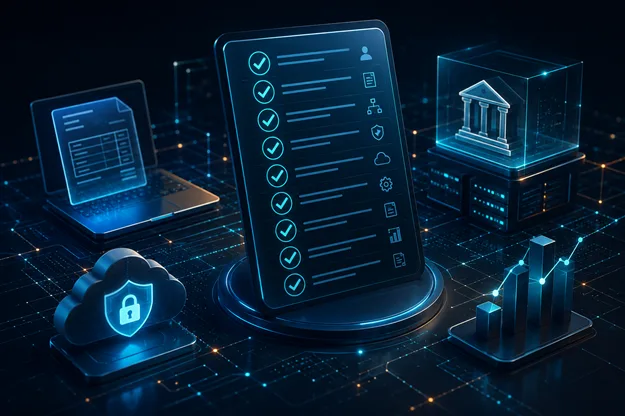
The following 10-step readiness checklist provides a structured implementation roadmap for covered businesses.
The 10-Step BIR e-Invoicing Readiness Checklist
1. Confirm Your Taxpayer Classification and Applicable Phase
Start by confirming whether your organisation falls within the categories of covered taxpayers under RR No. 11-2025 and the amended implementation timeline under RR No. 26-2025. Document taxpayer classification at the legal-entity level, particularly for groups operating multiple entities, branches, or business models.
The assessment should also distinguish electronic invoice issuance requirements from any applicable electronic sales-reporting obligations. Finance and tax teams should maintain a regulatory source register showing the BIR regulation or guidance supporting the scope and implementation date assigned to each entity
2. Audit Your Current Invoice Data Against Applicable BIR Requirements
Review the invoice information generated by your ERP, POS, billing, or accounting systems against the BIR invoice-data requirements applicable to your implementation.
Review the following invoice data elements:
- Taxpayer identification information
- Invoice numbers and dates
- Product or service descriptions
- Quantities and unit prices
- Discounts
- VAT classifications
- Tax amounts
- Invoice totals
3. Map All Branches and Entities That Must Comply
Map the invoicing footprint of the organisation to cover all legal entities, branches, satellite locations, shared-service operations, and outsourcing and external billing. Find out which system generates invoices for each business unit and how invoice data gets into accounting and tax processes. If branches or entities have different ERP, POS, or billing systems, assess the data, integration and compliance requirements of the different systems and verify each system separately. Do not think that a head office implementation will instantly fix branch-level system, data, or process gaps.
4. Evaluate ERP / POS / Accounting System Compatibility
Assess if your existing ERP, POS, billing or accounting environment can generate the structured invoice data required for your implementation and support any applicable BIR technical or electronic sales-reporting requirements. See if existing systems can be set up directly with Philippines e-invoicing solution or need middleware or connectors or need a broader integration change. The assessment should include:
- Validation rules.
- Tax mapping.
- Authentication.
- Submission workflows (where applicable).
- Exception handling.
- Integration architecture.
5. Choose an e-Invoicing Solution That Meets Applicable BIR Requirements
If your ERP does not natively support the applicable BIR e-Invoicing requirements, assess whether it can be configured directly or whether middleware, a connector, or a specialized compliance solution is required. The appropriate approach depends on your taxpayer classification, systems landscape, and the BIR requirements applicable to your implementation.
Where the applicable BIR process requires taxpayer certification, registration, or a Permit to Transmit (PTT), businesses should confirm and complete those requirements before go-live.
6. Plan Structured-Data and Technical Integration
Technical integration should begin by understanding the wider Philippines e-Invoicing framework and mapping ERP or billing data to the structured-data and submission requirements applicable to the organisation’s BIR implementation. For businesses with complex VAT or transaction structures, this exercise can expose inconsistent tax classifications, missing master data, and differences between billing systems.
The integration design should also document applicable authentication, signing, certification, and submission requirements based on current BIR technical specifications. Avoid hard-coding schema versions or security requirements into the compliance programme without a version-control process for BIR technical updates.
7. Confirm Whether EIS Certification and PTT Processes Apply
The BIR EIS Certification Portal provides processes related to certification of taxpayer-developed middleware and issuance of a Permit to Transmit (PTT) for applicable electronic sales-reporting requirements. Businesses should confirm whether these processes apply to their specific implementation before initiating registration, testing, certification, or PTT activities.
Certification and PTT processing should be factored into the implementation timeline where required. Businesses should confirm the current BIR process, documentation requirements, and expected processing timelines before finalizing the project schedule.
8. Train Accounts Payable and Accounts Receivable Teams on the New Workflow
e-Invoicing is not solely a systems project. Accounts receivable and accounts payable (AP and AR), finance, tax, and IT teams may each have responsibilities across invoice generation, validation, exception handling, reconciliation, and record management.
Training should cover:
- Structured invoice data
- Approval workflows
- Validation failures
- Submission failures
- Exception handling
- Corrections
- Reporting timelines
- Record-retention responsibilities
9. Run a Parallel Testing Period Before Go-Live
Complex enterprises may require several testing cycles before production rollout, including testing invoice rejection responses, system-downtime contingencies, and branch-level consistency.
Define the testing period based on transaction complexity, system architecture, branch coverage, and implementation risk. Testing should cover invoice rejection responses, system-downtime contingencies, and consistency across branches and systems.
10. Build Your Audit Trail and Retention Process
Define how electronic invoice records, structured invoice data, submission or system responses, corrections, and processing histories will be retained and linked to the relevant transaction in line with applicable BIR record-keeping requirements and internal retention policies.
Records should remain accessible and searchable throughout the required retention period. Businesses using third-party technology providers should also clarify data ownership, retrieval rights, retention responsibilities, and exit arrangements if the provider relationship changes.
Illustrative Enterprise Implementation Timeline
The following timeline is an illustrative project-planning framework. Actual implementation duration depends on system complexity, data quality, branch coverage, testing requirements, and external processing dependencies.
| Phase | Illustrative duration | Key activities |
| Assessment and scoping | Weeks 1–3 | Taxpayer scope, system mapping, branch review, gap assessment |
| Solution and architecture planning | Weeks 3–6 | Solution evaluation, integration design, project planning |
| Technical integration | Weeks 5–12 | Data mapping, ERP configuration, middleware or connector work |
| Certification and technical testing, where applicable | Project dependent | Portal activities, technical testing, certification or PTT processes where required |
| Business testing | Weeks 12–18 | Transaction scenarios, exception handling, user training |
| Go-live and stabilization | Weeks 18–24 | Production rollout, monitoring, and issue resolution |
Businesses beginning late in the compliance cycle may face reduced time for data remediation, integration testing, and operational stabilization. Early assessment provides more flexibility to resolve complex system and process gaps
EIS Readiness Checklist: Quick Reference
Before declaring EIS readiness, confirm each of the following:
Regulatory & Scoping
- Taxpayer classification and applicable phase confirmed with the appropriate tax/compliance team
- Full branch and entity register mapped and assessed
- All applicable entities, branches, and invoicing locations identified
- Current invoice data fields audited against applicable BIR invoice-data and technical requirements
- ERP/POS/accounting system compatibility assessed
- e-Invoicing or integration solution evaluated and selected
- Structured invoice-data mapping completed and validated
- Authentication and technical security controls configured and tested
- Applicable electronic sales-reporting workflow and connectivity method confirmed
Process & People
- AR, AP, and finance teams trained on new invoice workflows
- System downtime contingency process documented
- Credit note, cancellation, and rejection resubmission processes defined
Certification & Compliance
- EIS Certification Portal registration initiated, where applicable
- Applicable test transmissions or certification activities completed and validated
- Applicable certification and PTT requirements confirmed and completed, where required
- Parallel testing period completed with no unresolved failures
- Record-retention and retrieval process implemented in line with applicable BIR requirements
Conclusion
The December 31, 2026 extended compliance date under RR No. 26-2025 offers covered taxpayers a set of defined timeframes for electronic invoice issuance. If an organisation has a complex ERP system, multiple branches, and data-quality issues are still in place, it could take time to get the system to go live before the final time. EIS compliance also allows for invoice-data quality to be improved, billing errors to be reduced, VAT reporting to be better organized, and audit readiness to be better prepared to be successful. For enterprises that manage complex ERP environments, multiple entities, or distributed invoicing processes, Cygnet.One is useful to assess invoice data, ERP readiness, integration requirements, validation controls and operation.
FAQ's
Implementation duration varies based on ERP complexity, number of branches and entities, invoice-data quality, integration requirements, and applicable certification or testing activities. Enterprises with multiple systems may require several months of assessment, integration, testing, and stabilization. Businesses should build their timeline from a documented readiness assessment rather than rely on a universal implementation duration.
A common readiness gap is incomplete visibility across invoice data, systems, and exception workflows. Businesses may focus on invoice generation while overlooking inconsistent master data, branch-level system differences, failed submissions, or unclear ownership of corrections and follow-up actions.
No. Applicability depends on the taxpayer categories and requirements established under current BIR regulations. RR No. 26-2025 extends the compliance period under RR No. 11-2025 for covered taxpayers. Businesses should confirm their classification and applicable obligations using the latest BIR regulations and guidance.
The EIS Certification Portal describes certification of taxpayer-developed middleware and issuance of a Permit to Transmit for required sales data. Businesses should assess whether these certification and PTT processes apply to their technical implementation and electronic sales-reporting obligations.”
Potential consequences depend on the specific invoicing or reporting obligation affected and the applicable NIRC or BIR provision. Businesses should assess invoice-issuance failures, electronic sales-reporting gaps, and technical exceptions separately and obtain tax or legal review before estimating specific penalty exposure.
Author


Kesha Shah
General Manager - Products Marketing
Kesha Kumar leads the global products marketing team at Cygnet.One, where she turns the complexity of tax and finance transformation into stories that resonate with the people who matter most. She’s the strategic force behind the brand’s presence across India, the GCC, Southeast Asia, and Europe, translating dense subjects like e-Invoicing mandates, digital engineering, and enterprise AI into narratives that inform and drive action. With expertise spanning tax and finance transformation, quality, enterprise applications, and data and AI, Kesha blends sharp strategic thinking with a marketer’s instinct for what truly connects. At Cygnet.One, she does more than build campaigns and content; she shapes the conversations that help enterprises navigate compliance with clarity and confidence, propelling the brand to the forefront of the industry along the way.