























Introduction
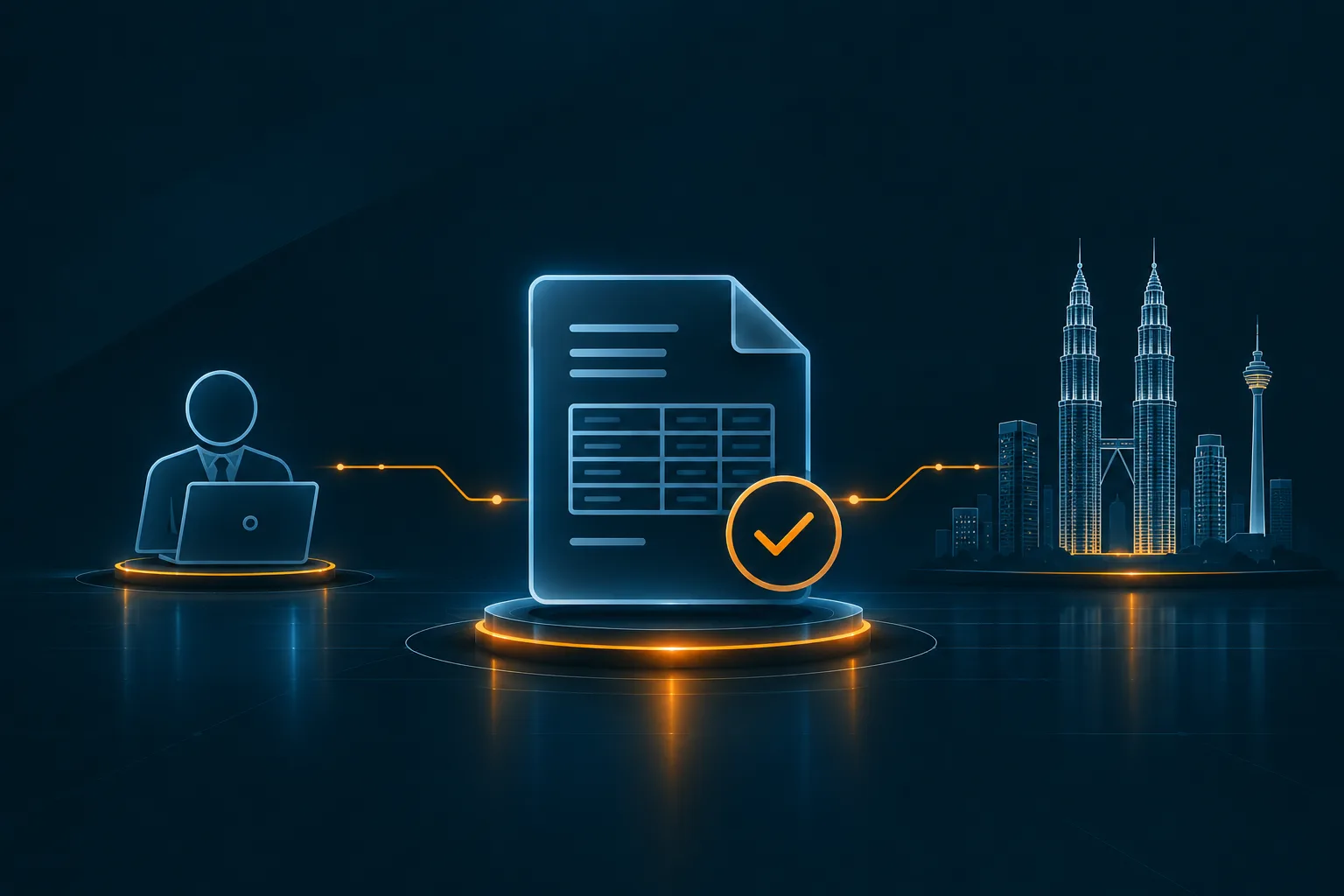
Most e-Invoicing discussions start with the seller creating the invoice. However, what if the company must pay a foreign contractor, commission agent, or one-person trader who will not be creating any e-Invoice themselves? The buyer still requires an invoice to support the expense, and here is where self-billing is useful. In self-billed e-Invoice in Malaysia, the buyer prepares the invoice on behalf of the supplier and sends it to LHDN via MyInvois.
Although self-billing is a less familiar aspect of the mandate, it can present challenges for finance teams. In this blog, we will have a look at common self-billing scenarios, required document details, how the process works within business systems, and the accounting practices needed to maintain accurate records. Understanding Malaysia e-Invoicing requirements in detail can also help businesses ensure their self-billing processes align with regulatory expectations.
Flipping the Script: When Self-Billing Applies
Self-billing is supposed to come into play when it’s impossible or when the supplier is unwilling to give you an e-Invoice, but the buyer needs an invoice for tax/ accounting purposes. Some situations where self-billing applies include:
- payment for goods or services to foreign suppliers
- payment to an individual who is not conducting any business (agents, dealers, or collectors)
- commissions or incentives paid to an individual who doesn’t issue invoices
- other circumstances where LHDN’s guidelines state that the buyer should self-bill
It shouldn’t be done when there is a normal domestic transaction where the business is able to issue its own e-Invoice. The invoice Malaysia buyer receives in these cases should just be the supplier’s own validated e-Invoice, and self-billing will result in double invoicing.
As LHDN continues to update the circumstances under which self-billing is permitted, businesses should review the latest guidelines before defining their internal policies. Having a strong at interpreting Malaysia e-Invoicing scenarios can also help ensure the correct invoicing approach is followed for each transaction.
Who Is Who: Parties, Data and Documents
In a self-billing case, it is hard to determine the roles involved in the process. Therefore, one needs to be clearer about it.
The issuer. The buyer prepares and issues the document. The buyer logs into MyInvois with its own credentials and owns the document’s contents.
The supplier. The seller is listed as the supplier in the document, even though the supplier has not issued the document. In case the supplier does not have Malaysian TIN, for example, when the supplier is an overseas company or an individual that does not have a registered number, LHDN generates some generic TIN numbers. See the most current SDK documentation for exact TIN numbers.
The data. The document must contain:
- issuer’s information including TIN and other registration information
- supplier’s name, address, and identification, or generic identification information
- description of the product or service, quantities, and unit prices
- correct code for the product classification, tax, and currency
- totals, along with the exchange rate when payments are made in foreign currencies
The documents. Self-billing invoices rely on unique self-billed document types, which differ from those that are normal. Self-billed documents include the invoice, credit note, debit note, and refund note. In addition, the ERP system has to generate and differentiate between them. Additional supporting documents like agreements, purchase orders, and payment proofs can be stored.
How the Process Runs: Transaction Flow
The process works as follows:
- A transaction or payment is recorded as self-billing case.
- ERP creates the self-billing document based on the information about the supplier.
- The document is sent to MyInvois via the API.
- It gets validated and a status is returned.
- If the validation is positive, the document together with an identification number is saved against the payment.
- Sometimes, the copy of the document or other relevant information is sent to the supplier.
Timing is important. LHDN determines a period during which the self-billing document should be created and sent, and sometimes it permits to merge qualifying self-billed transactions into one during a month. Check current deadlines and conditions, since these are the details that companies usually make mistakes with.
What Happens Behind the Screen: System Actions and Status Changes
The document goes through the same statuses as any e-Invoice. This means that it first gets to the status of submitted, then becomes valid if all validations were successfully passed or invalid otherwise. If the document is valid, it receives an ID and a timestamp. In case the document is not valid, it gives back error information so that the error could be fixed and the document resubmitted.
In case of self-billed invoices that MyInvois recognizes, the document is considered submitted by the buyer, which means that the errors in supplier data or classification are buyer’s errors. Therefore, the error handling procedure is the same as for any other document, however, the corrections must be done from the buyer’s side of the ERP system because there is no supplier’s participation.
Pre-Flight Checks: Before Submission or Dispatch
Below is a short list to prevent rejections:
- Scenario check: Verify that the transaction indeed fits into self-billing scheme and there is no e-Invoice issued by the vendor.
- Supplier details: Check names, addresses, and identifiers; use generic TINs in case it is permitted by the rules.
- Type of document: Check that the document is really a self-billing one, not the ordinary invoice.
- Line amounts, taxes, and currency conversion: Reconcile line amounts, taxes, and currency conversion.
- Duplicate: Check that the payment was not already self-billed.
When Things Go Wrong: Corrections, Cancellations and Edge Cases
Errors happen, so plan ahead how you will react to them.
- An error detected shortly after validation. The document may normally be canceled in the allowed timeframe and re-issued in a proper manner.
- An error detected late. After that time frame has passed, correct using a self-bill credit note, debit note, or refund note depending on the case.
- Change of price or quantity. Instead of changing the original document, use the corresponding correction document.
- Returns or refunds. These must be entered using the corresponding self-bills.
- The supplier becomes a registered taxpayer. If the supplier then creates their own e-Invoice for the same transaction, ensure that the sales are not double counted.
- Differences due to foreign currencies. The source of the exchange rate and date must be saved as this is often questioned in audits.
When correcting errors, remember the general rule that you should follow everywhere else: solve the issue at the source in your master data and not just in the specific document.
Keeping It Under Control: ERP and Workflow Controls
Self-billed invoices are easy to forget when designing an accounting system since they are the exception rather than the norm. Control measures are as follows:
- Supplier master flags. Flag suppliers who require self-billing so that the document type can be automatically populated.
- Rule-based triggers. Create self-billed documents using certain payment types or certain supplier categories instead of remembering it manually.
- Different numbering. Use a different document number series for easily identifying and reconciling self-billed documents.
- Approvals. Finance should approve the amount and supplier before submitting.
- Exception queue. Send rejected documents to a specified person to own within a given period.
- Prevention of duplicates. Prevent the same payment from being self-billed more than once.
For small businesses, understanding the key requirements outlined in the Malaysia MSME e-Invoicing guide can help establish a clear foundation before implementing these control measures.
Proving It: Records for Reconciliation and Audit
As the buyer is the author of the invoice, the buyer should be able to prove the reason for issuance of the invoice and its accuracy. Remember to keep the following related to each transaction:
- the self-billed document and its response from MyInvois, including identifier and date stamp
- the underlying contract, order, or agreement supporting the payment
- proof of payment and exchange rates applicable for foreign payments
- comments explaining the reason for self-billing
- related documents for cancellations or adjustments to the initial document
Reconcile self-billing totals with the general ledger each month and review a sample of invoices to identify discrepancies. This practice supports accurate financial reporting and reinforces the broader importance of e-Invoicing in Malaysia in maintaining compliance and transparency.
Conclusion
Self-billing is a specialized requirement that carries weight when not done well. Those organizations that manage it most effectively see it as a set process with specific triggers, right documents, clean vendor data, and solid proof. Anyone who needs the process built into their systems can look at an LHDN-ready e-Invoicing software like Cygnet’s Malaysia e-invoicing platform, which supports the self-billed document types and handles validation and submission automatically. A proper design once and a Malaysia self-billed e-Invoice is an annual chore will become a normal process.
FAQ's
A self-billed e-Invoice is needed when the supplier is unable to raise an e-Invoice, whether it is because of payments to foreign suppliers or payments to certain individuals who are not operating as a business. It is best to refer to the official rules of LHDN on this matter.
The buyer raises and files the invoice on behalf of the supplier through their own MyInvois access. The buyer raises the invoice, even though the supplier details will be filled in, and they remain liable for the accuracy of the information as well as submission.
The foreign supplier does not usually have a Malaysian TIN number. In that case, the self-billed e-Invoice is raised by the buyer using the generic code provided by LHDN for this situation. Include the foreign currency and exchange rate.
There are dedicated types of documents in MyInvois to create invoices, credit notes, debit notes, and refund notes for self-billing. It is important to choose the right document type, as using a regular invoice for self-billing purposes may result in rejection.
If the mistake was spotted within the allowed time period, the document should be canceled and issued again. In case this time period has passed, the amendment should be made via self-billed credit, debit, or refund notes. Additionally, the problem with the supplier or mapping should be fixed.
Author


Kesha Shah
General Manager - Products Marketing
Kesha Kumar leads the global products marketing team at Cygnet.One, where she turns the complexity of tax and finance transformation into stories that resonate with the people who matter most. She’s the strategic force behind the brand’s presence across India, the GCC, Southeast Asia, and Europe, translating dense subjects like e-Invoicing mandates, digital engineering, and enterprise AI into narratives that inform and drive action. With expertise spanning tax and finance transformation, quality, enterprise applications, and data and AI, Kesha blends sharp strategic thinking with a marketer’s instinct for what truly connects. At Cygnet.One, she does more than build campaigns and content; she shapes the conversations that help enterprises navigate compliance with clarity and confidence, propelling the brand to the forefront of the industry along the way.