






















Germany’s e-Invoicing transition makes the ERP system more than a place where invoices are created. It becomes the starting point for how invoice data is extracted, transformed, validated, transmitted, received and archived.
Since 1 January 2025, domestic businesses have been required to be able to receive structured e-Invoices under Germany e-Invoicing mandate. Issuance is being phased in, with transitional rules continuing through 2026 and, for businesses within the relevant turnover threshold, 2027. A simple PDF is not an e-Rechnung under the new rules.
For enterprises, Germany e-Invoicing integration therefore needs to connect existing finance processes with structured invoice requirements without creating disconnected workflows. The core process can be viewed as:
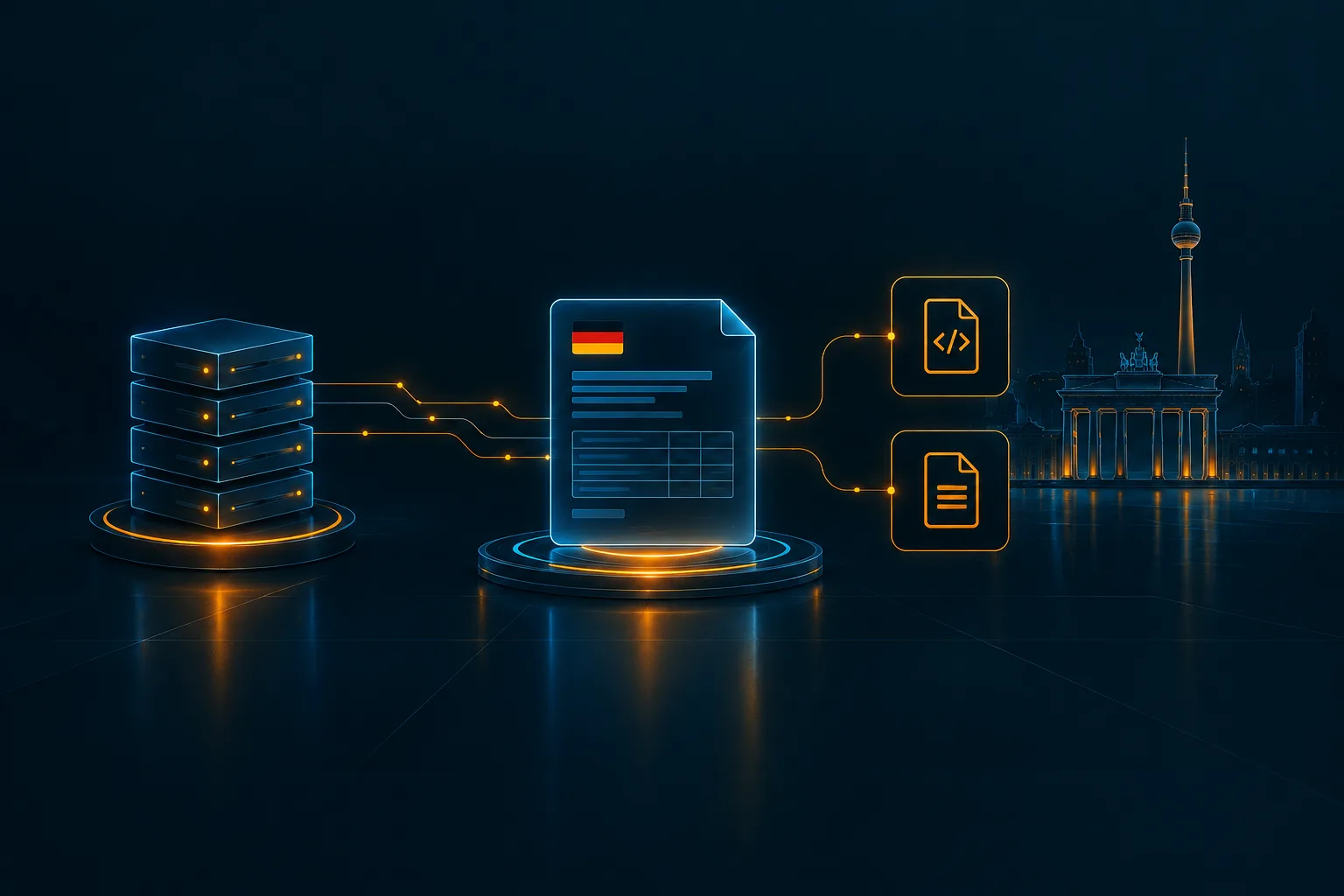
ERP → Invoice Data → Validation → Structured E-Invoice → Transmission → Response → ERP Update
The challenge is making every step work as one controlled process.
What Changes in Your ERP When Germany e-Invoicing Goes Live?
The ERP can remain the system of record, but the information it produces must support structured invoicing. Integration affects more than invoice output.
Customer and supplier master data, tax codes, legal entities, invoice numbering, line items, payment terms, purchase-order references and relationships between original invoices and credit or correction documents may all need to be reviewed.
The integration also needs to support structured invoice generation, validation, status handling and archival. On the inbound side, AP teams need a controlled route from receipt through rendering, validation, matching, approval, posting and retention. On the outbound side, AR processes need reliable transformation and transmission.
Germany does not prescribe a single domestic B2B exchange network or tax-authority clearance step. Businesses can use channels such as email, portals, APIs, EDI or Peppol, depending on the transaction and agreed arrangements. This flexibility makes integration architecture particularly important because channel ownership, acknowledgments, duplicate handling and fallback processes need to be defined.
The Germany e-Invoice Integration Architecture
A practical architecture can be organized as:
ERP / SAP / Billing System
↓
Data Extraction & Mapping Layer
↓
Tax / Validation Layer
↓
e-Invoice Generation
↓
XRechnung / ZUGFeRD Output
↓
Transmission / Access Point / Recipient Channel
↓
Acceptance / Rejection Response
↓
ERP Status Update
↓
Archive & Audit Trail
The ERP or billing system supplies the source transaction. A mapping layer prepares the data for structured invoice generation. The validation layer checks mandatory fields, tax information, calculations and applicable business rules. The generation layer then creates the required structured output.
A Germany e-Invoicing integration architecture should be treated as a reference pattern rather than a mandatory design. The right approach depends on ERP capabilities, existing middleware, invoice volumes, recipient requirements, the internal IT landscape and the selected e-Invoicing solution.
For multi-ERP enterprises, a canonical invoice model can reduce point-to-point connections. The Germany readiness guide recommends decoupling source ERP logic from invoice-format generation and channel delivery, allowing SAP, Oracle, Dynamics and local billing outputs to be normalized before generating XRechnung, ZUGFeRD or another suitable EN 16931-compatible format.
What ERP Data Must Be Mapped for German e-Invoicing?
Data mapping is where many integration projects become practical rather than theoretical. The ERP may contain the information needed to create an invoice, but the integration must place that information correctly into the structured format.
| ERP data | e-Invoicing integration requirement |
| Seller information | Legal entity and required identifiers |
| Buyer information | Recipient and master-data information |
| Invoice number | Unique invoice identification |
| Invoice date | Correct invoice-date mapping |
| Line items | Product or service, quantity and price |
| Tax data | Tax category, rate and tax amount |
| Invoice totals | Net, tax and gross amounts |
| Payment information | Payment terms and relevant payment data |
| References | PO, contract or other applicable references |
| Credit/debit notes | Relationship with the original invoice |
| Attachments | Supporting documents where applicable |
The central principle is simple: bad source data cannot be fixed reliably by the e-invoicing layer.
Master-data quality, tax-code mapping and ERP field completeness should therefore be addressed before go-live. The readiness guide highlights supplier data, invoice numbers, dates, line items, tax, payment information and references as important data points for AP extraction and processing.
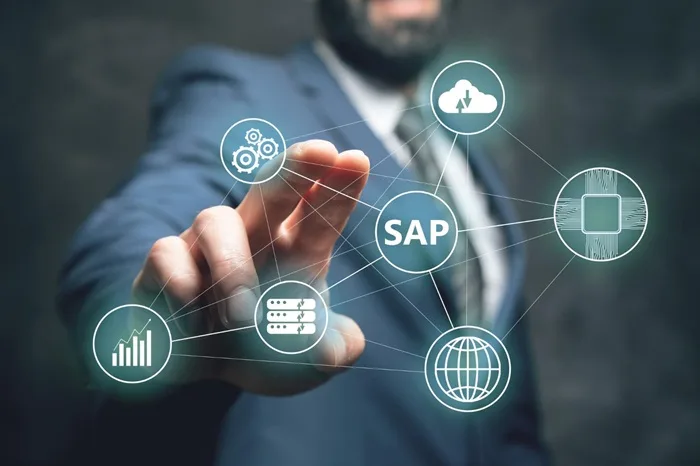
Germany e-Invoice SAP Integration: What Should SAP Teams Assess?
For organizations using SAP, Germany e-Invoice SAP integration should begin with understanding where invoice data is generated and which SAP processes feed billing. Different legal entities may use different configurations, so a single mapping assumption can create exceptions later.
SAP Invoice Data
Teams should identify the source of billing data, relevant processes, invoice types and entity-specific variations. The objective is to establish a reliable source-to-target map rather than redesigning the ERP unnecessarily.
Tax and Master Data
Review customer master records, tax codes, legal entities, invoice numbering and country-specific configurations. Tax determination needs to flow correctly into the structured invoice because downstream validation depends on the quality of source values.
Output and Transformation
Assess how structured invoice data will be generated and whether existing output mechanisms can support the required format. Where transformation or connectivity sits outside SAP, define the integration boundary clearly.
Response Handling
The integration must also define how acceptance, rejection or error information reaches SAP and how invoice status is updated. Exceptions should reach the appropriate finance or operations owner rather than remaining in a technical queue.
A well-designed Germany e-Invoice ERP integration approach should therefore treat SAP as part of a connected invoice lifecycle rather than as an isolated output system.
XRechnung ERP Integration: From ERP Data to Structured Invoice
XRechnung ERP integration connects the invoice generated in the ERP with the structured XRechnung output. The flow is:
ERP invoice → Data mapping → XRechnung generation → Validation → Transmission
The ERP needs to provide the data required by the selected XRechnung syntax and profile. The integration layer should validate mandatory fields, identifiers, tax information and calculations before generating the XML. The resulting file should then undergo schema and business-rule validation before transmission.
XRechnung is a German implementation of EN 16931 maintained by KoSIT. The team briefing identifies it as a pure XML CIUS using UBL 2.1 or UN/CEFACT CII syntax.
The readiness guide also recommends controlled handling of XML namespace, version and profile changes, together with versioned transformation rules.
An ERP’s ability to generate an invoice does not automatically mean it can generate a valid XRechnung. Successful XRechnung ERP integration requires both:
Data availability + correct transformation
ZUGFeRD ERP Integration: What Is Different?
ZUGFeRD ERP integration has an additional consideration because ZUGFeRD combines a human-readable PDF/A-3 representation with embedded structured CII XML.
The ERP data must feed the structured invoice correctly while the visible representation remains synchronized with the structured content.
This distinction matters during validation and posting. The Germany readiness guide states that when the structured and visual layers conflict, the structured data is the leading part. Downstream processes should therefore validate and post from the structured content, while the PDF serves as the presentation layer.
Recipient compatibility also needs to be considered. The integration should generate a supported profile and preserve the relationship between the structured component and the human-readable invoice.
How Should an ERP Handle e-Invoice Validation?
Validation should be built into the integration flow rather than treated as a final technical check.
Pre-generation checks
Validate customer and supplier data, tax information, invoice fields and required references before creating the structured document.
Structured-document validation
Check the selected format or profile, required fields, codes, calculations and applicable business rules. The Germany readiness guide identifies schema/profile, VAT, commercial and duplicate or idempotency checks as important controls.
Pre-transmission checks
Confirm recipient information, required references, duplicate status and transmission readiness. Recipient capabilities and channel preferences should be maintained in the customer master or routing layer.
Post-transmission checks
Track acceptance or rejection information, error responses and status synchronization.
The resulting control flow is:
ERP Data → Pre-Validation → E-Invoice Generation → Format Validation → Transmission
Germany’s domestic B2B model does not use tax-authority clearance. This means internal evidence of transmission, receipt and processing becomes particularly important for operational control.
What Happens When the e-Invoice Integration Fails?
Integration failures can occur at different points, and each requires a different recovery action.
ERP data failure: Source data is missing or incorrect.
Mapping failure: An ERP field does not map correctly to the structured invoice.
Validation failure: The generated document fails technical or business validation.
Transmission failure: The invoice cannot be delivered through the selected channel.
Response synchronization failure: The invoice is processed externally, but the ERP does not receive or update the correct status.
A controlled recovery loop should be:
Detect → Identify source → Correct → Regenerate → Revalidate → Resubmit → Update ERP
This prevents teams from treating every failed transaction as a new invoice. Duplicate detection and idempotency controls are particularly important when retries or multiple channels are involved. The readiness guide specifically identifies duplicate handling, channel evidence and controlled exception management as important controls.
How to Integrate e-Invoicing Without Disrupting Existing ERP Processes
Enterprises generally have three architectural approaches.
Native ERP Integration
This can work where existing ERP capabilities can support the required structured formats, validation and connectivity without introducing excessive complexity.
Middleware / Integration Layer
A middleware layer can sit between ERP systems and the e-Invoicing ecosystem when businesses need centralized transformation, validation, routing or channel management.
External e-Invoicing Platform
A Germany e-Invoicing solution can provide a common integration layer where several ERP or billing systems need to connect to different formats and channels.
The decision should consider:
- Number of ERP systems
- Number of legal entities
- Invoice volume
- Existing middleware
- SAP and non-SAP landscape
- Country expansion
- Internal IT resources
- Validation requirements
- Monitoring needs
For large groups, centralized integration can reduce point-to-point connections. The readiness guide notes that this is particularly valuable in Germany’s open-channel environment, where businesses may otherwise end up managing multiple individual integrations.
How an e-Invoicing Integration Platform Can Support German ERP Environments
An integration platform can address specific ERP challenges rather than simply adding another transmission endpoint.
| ERP challenge | Platform capability |
| Multiple source systems | Multi-system integration |
| Inconsistent data | Data validation |
| Format transformation | Structured invoice generation |
| XRechnung requirements | Format-specific validation |
| ZUGFeRD requirements | Structured and human-readable output handling |
| Failed transactions | Exception management |
| Poor visibility | Status tracking and dashboards |
| Difficult reconciliation | ERP-to-invoice reconciliation |
| Audit requirements | Audit trail and archiving |
The Germany readiness guide states that Cygnet.One’s documented capabilities include ERP integration, multi-format conversion, secure exchange, dashboards and multi-country support. It describes connectivity through APIs, SFTP, files and configurable connectors, including SAP, Oracle, Microsoft Dynamics and other ERP or accounting environments. It also identifies configurable schema, mandatory-field and business-rule validation, inbound and outbound processing, status visibility, exception handling and controlled reprocessing.
For an enterprise managing multiple systems, this can make the integration layer a central point for transforming, validating and monitoring invoice flows while keeping the underlying ERP systems governed.
Conclusion
Successful germany e-Invoicing integration starts with the quality and flow of ERP data. Enterprises need to assess data mapping, validation, format generation, transmission, response handling and archival as one connected architecture.
The Germany readiness guide also emphasizes that inbound receipt and processing are already operational requirements, while outbound readiness needs to be aligned with each issuer’s applicable transition deadline.
A scalable integration approach can support current German requirements while reducing the effort required to adapt the same ERP landscape to future multi-country e-invoicing requirements. The first step is to assess existing ERP data and processes and identify where an integration layer can close the gaps.
FAQ's
It is the connection of ERP and billing systems with the processes required to generate, validate, transmit, receive, process and archive structured e-Invoices.
It maps invoice, master-data and tax information from SAP into the structured invoice process, validates the output and manages transmission or processing status.
An ERP may generate invoice data or structured output, but appropriate mapping and technical and business-rule validation are still needed to ensure the resulting XRechnung is valid.
It requires reliable ERP data, field mapping, XRechnung generation, validation, transmission and appropriate handling of errors and responses.
Author


Kesha Shah
General Manager - Products Marketing
Kesha Kumar leads the global products marketing team at Cygnet.One, where she turns the complexity of tax and finance transformation into stories that resonate with the people who matter most. She’s the strategic force behind the brand’s presence across India, the GCC, Southeast Asia, and Europe, translating dense subjects like e-Invoicing mandates, digital engineering, and enterprise AI into narratives that inform and drive action. With expertise spanning tax and finance transformation, quality, enterprise applications, and data and AI, Kesha blends sharp strategic thinking with a marketer’s instinct for what truly connects. At Cygnet.One, she does more than build campaigns and content; she shapes the conversations that help enterprises navigate compliance with clarity and confidence, propelling the brand to the forefront of the industry along the way.