





























Supported through a unified ITSM-aligned service model
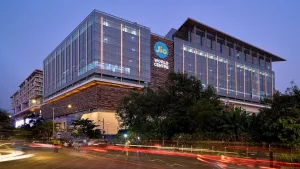
Providing IT support from locations across India
Backed by server and network specialists
Supported through agentic automation
Company Overview
The client is an IT services provider headquartered across the UK and the US, managing IT operations for approximately 20 organizations. Its customers operate Microsoft-centric IT environments and require consistent technical support, infrastructure management, and service delivery.
The provider maintains on-ground teams across the UK and the US to manage physical interventions, customer relationships, and local escalations. To strengthen these capabilities, the organization required a standardized IT support operation with extended service coverage, advanced technical support, and automated administrative processes.
Story Snapshot
At a Glance
|
Solutions Implemented |
Outcomes Achieved |
|
ITSM-aligned L1–L3 support across seven Indian delivery centers |
Consistent service standards and extended coverage across UK and US working hours |
|
Shared server and network specialist support |
Advanced technical expertise available across 20 client organizations |
|
Microsoft Foundry agents for Entra ID, Intune, Defender, and remote support |
Reduced repetitive administration and automated eligible service requests |
|
Standardized incident, request, problem, change, and knowledge management |
Structured escalation, consistent ticket handling, and root-cause resolution |
|
Integrated remote support and client-owned on-ground teams |
Greater focus on local interventions and customer relationships |
Establishing a Unified Support Model Across 20 Organizations
Managing IT services for 20 organizations required consistent service standards across different customer environments, technical requirements, and operating expectations. The client had established on-ground teams in the UK and the US, but needed a dedicated support operation to handle service volumes, technical escalations, and infrastructure issues.
A major concern was the volume of repetitive Microsoft administration. Routine identity management, device configuration, compliance checks, and security activities occupied engineers who were also responsible for resolving complex technical issues. Differences in service processes across accounts further complicated support management.
Cygnet.One addressed these requirements through an ITSM-aligned support model delivered from seven centers in India. The engagement combined L1–L3 technical support, server and network specialists, and standardized service management processes to establish consistent operations across the client portfolio.
Agentic automation became another important part of the engagement. Cygnet.One developed Microsoft Foundry agents to handle eligible administrative requests across Entra ID, Intune, Defender, and remote support tools. Requests requiring engineering judgment were classified and enriched with relevant information before escalation.
The resulting model brought remote support, server and network capabilities, and automation together under common service standards. It also maintained clear responsibilities between Cygnet.One’s delivery operation and the client’s existing on-ground teams.
Problem
The client faced operational challenges in delivering consistent IT support across approximately 20 organizations. Each customer had different technical environments, priorities, and escalation expectations, making standardized service delivery difficult.
Microsoft administration created an additional workload. Engineers spent considerable time handling repetitive identity, device, and security tasks, leaving less capacity for complex incidents and infrastructure-related activities.
The major challenges included:
- Inconsistent Service Processes: Differences in customer requirements created variations in ticket classification, prioritization, escalation, and resolution.
- High Administrative Workload: Routine Entra ID, Intune, Defender, and remote support activities consumed skilled engineering resources.
- Extended Coverage Requirements: Customers across the UK and the US required support beyond the availability of local on-ground teams.
- Limited Access to Advanced Technical Support: Complex server and network incidents required advanced technical capabilities beyond first-line support.
- Recurring Technical Issues: Repeated incidents increased support workloads and required systematic root-cause investigation.
The organization needed a structured operating model that could standardize support, provide technical expertise across accounts, and reduce manual administration without disrupting its existing customer-facing teams.
Solution
Cygnet.One established an end-to-end managed IT support operation across seven delivery centers in India. The solution combined ITSM-aligned service management, multilevel technical support, and Microsoft Foundry-based agentic automation.
The engagement focused on four areas:
1. ITSM-Aligned Multilevel Support
Cygnet.One implemented a standardized support structure covering L1 service desk activities, L2 technical troubleshooting, L3 advanced engineering, and server and network operations.
Common processes for incident management, request fulfillment, problem management, change management, and knowledge management established consistent workflows across all 20 organizations.
2. Agentic Microsoft Administration
Cygnet.One designed, deployed, and maintained Microsoft Foundry agents to automate routine administration across the Microsoft environment.
The automation covered:
- Microsoft Entra ID: Identity lifecycle management, access requests, group membership, license assignments, and sign-in issue triage.
- Microsoft Intune: Device enrollment, compliance checks, policy assignments, application deployment, and routine remediation.
- Microsoft Defender: Security alert enrichment, triage, posture checks, and routine containment activities.
- Remote Support: Diagnostic collection, session initiation, and remediation of common endpoint issues.
Eligible requests were resolved through automation. Other requests were classified and enriched before being routed to engineers, reducing the need for manual information gathering.
3. Integrated Remote and On-Ground Operations
Cygnet.One coordinated its remote delivery operation with the client’s UK and US teams. Remote engineers handled service requests, troubleshooting, and specialist escalations, while on-ground personnel retained responsibility for physical intervention, local coordination, and customer relationships.
4. Continuous Service Improvement
The engagement applied structured problem management to identify recurring incidents and address their underlying causes. Cygnet.One also maintained the automation agents and extended their capabilities based on service patterns.
Aligned with the STRATA framework, the model connected Microsoft and infrastructure monitoring, intelligent ticket processing, automated resolution, security operations, and ITSM-based service governance.