




























A brief introduction to HSN code and E-way Bill
What are HSN codes?
The Harmonized System of Nomenclature (HSN) codes are a globally recognized system for classifying and identifying products in international trade. It was developed by the World Customs Organization (WCO) to facilitate the uniform classification of goods.
HSN codes consist of a series of numbers and are used to categorize products based on their characteristics, composition, and intended use. The HSN codes are hierarchical, with the code becoming more specific as we go deeper into the classification. This code contains a total of 8 digits HSN in respect of goods along with the description. The first 2 digits in the HSN code are called the chapter, the next 2 digits are called headings, the next 2 are called sub-headings and the last 2 digits are called tariff items.
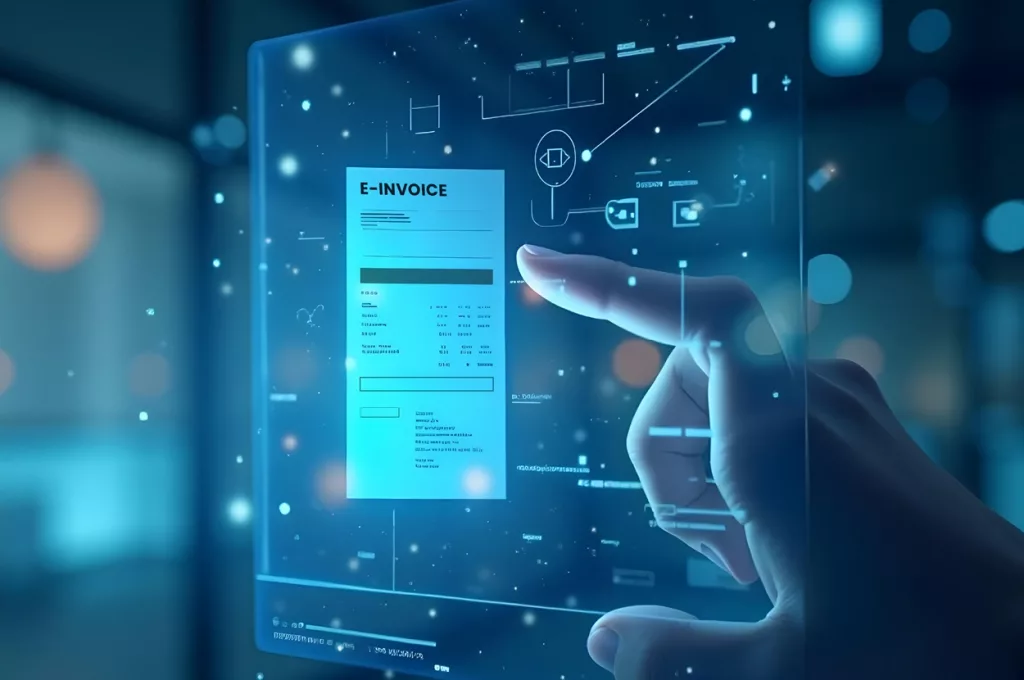
In India, the HSN code is crucial for businesses for both GST and customs compliance. For e-invoices in GST, businesses must accurately determine the applicable tax rate based on HSN codes and ensure that the correct HSN code is mentioned on their invoices, e-way bills, and other relevant documents.
What are E-way Bills?
An Electronic Way Bill, also known as an E-way bill, is a digital document that must be carried by the person in charge of the conveyance during the commencement and movement of goods. It is a mandatory GST compliance requirement for businesses transporting goods valued at ₹50,000 or more. The E-way bill is generated before the movement of goods, and its details should align with those mentioned in e-invoices in GST, ensuring consistency and compliance across all transport and invoicing documents.
Details Required in E-way Bill
E-way bill has two parts, A and B. Part- A contains various details about the goods being transported such as the HSN code, the value of goods, and other details such as the place of dispatch, place of delivery, GSTN of both the parties, document number, document date, etc. and Part B contains details of vehicle used for transportation of goods.
As per sub-rule 3 of Rule 138A of CGST Rules, 2017, when a registered person uploads an E-invoice in FORM GST INV-01, Part -A of the E-way bill shall be auto-populated based on information provided in the invoice.
Apart from various other details as provided in Rule- 46 of CGST Rules, 2017, the registered person is also required to mention the HSN code in the Tax invoice. Further, the board on the recommendation of the council may notify the number of digits of the HSN code required to be mentioned on the invoice.
Notifications issued by the board on the recommendation of the council.
Notification 12/2017 CT dated 28thJune, 2017 made effective from 1st July, 2017
Based on aggregate annual turnover (AATO) in the preceding financial year, a certain minimum number of digits of the HSN code were required to be specified in the invoice, The table below mentions the minimum required number of digits-
| Serial Number | Annual Turnover in the preceding Financial Year | Number of Digits of HSN code |
| 1 | Upto ₹1.5 crores | Nil |
| 2 | More than ₹1.5 crores and up to ₹5 crores | 2 |
| 3 | More than ₹5 crores | 4 |
The minimum number of digits of HSN codes required were further revised by Notification- 78/2020- CT dated 15th October 2020 as follows and made effective from 1st April 2021
| Serial Number | Aggregate Turnover in the preceding financial year | Number of digits of HSN code |
| 1 | Upto ₹5 crores | 4 |
| 2 | More than ₹5 crore | 6 |
Aggregate Annual Turnover (AATO)?
The same is defined under section 2(6) of CGST Act, 2017. It is simplified as under:
It includes:
- Value of all taxable supplies
- Exempt supplies
- Export of goods or services or both
- Interstate supplies of a person having the same PAN.
It excludes:
- Value of inward supply on which RCM is paid.
- Value of CGST, SGST, ISGST, UTGST and cess.
6 digit HSN codes will be required for generating e-way bills with effect from 1st October 2023
As mandated by Notification 78/2020-CT, taxpayers having an annual turnover exceeding ₹5 crores are required to mention a 6-digit HSN code on the invoices, however, the same was not enforced for e-way bills till now.
On 5th September 2023, an update was posted on the E-way bill portal stating the following:
“As per notification 78/2020 dated 15th Oct, 2020, the tax payers, having aggregate annual Turnover (AATO) above Rs 5 crore, shall use 6-digit HSN code in the E-invoices and E-way bills and other tax payers shall use 4-digit HSN code in E-invoices and E-way bills.
Most of the taxpayers are already following this, other taxpayers are requested to adapt to the change and comply by the due date. This will be made mandatory from 1st October 2023 in E-invoice and E-way bill system.”
Therefore, it will be mandatory for all taxpayers having AATO above ₹5 crores to mention 6-digit of the HSN code in the e-way bill as well from 1-10-2023. Considering this, necessary changes or updates will be required to be made in the system of businesses to comply with the notification.
Author


Komal Vithalani
Content Writer
Komal Vithalani, a Chartered Accountant and Commerce graduate, is a dedicated professional committed to delivering value with years of expertise in navigating the complexities of indirect tax laws. Her practical excellence includes managing perplexed litigations, dispensing tactical tax advice, conducting thorough compliance checks, supervising audits, and crafting articulate and insightful content. At Cygnet, Komal seamlessly blends her profound understanding of tax regulations with cutting-edge tax technology. Leveraging her competence, she adeptly transforms complex tax tech jargon into concise, impactful, and engaging content. This not only aids readers in comprehending tax-related topics with enlightening clarity but also ensures the delivery of narratives that resonate broadly.
