





























Since the inception of the GST, the tax structure has changed, ushering in a new era of credit lending for small and medium-sized businesses. SMEs and MSMEs frequently ask for sizable business loans with no prior credit history; lenders are hesitant to approve a loan unless the borrower offers a sizable mortgage or other collateral in exchange for the funding amount.
GSTN is now onboarded as one of the FIPs (Financial Information Providers) on the Account Aggregator platform. The GSTN shall provide the details related to sales, outward Invoices, and tax payments.
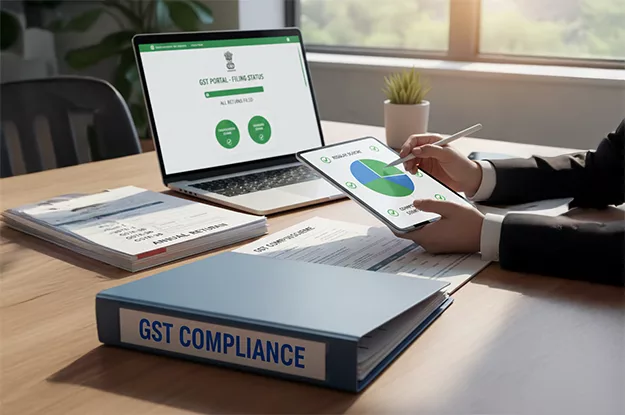
With e-Invoices, e-Way Bills, and GST returns, the indirect tax framework in India has given lenders access to real-time transactional data of their customers. The borrower’s GST data is a reservoir of information that offers profound insights such as filing their GST returns on time, month-on-month sales and purchases, geographical distributions, borrower’s hero product, top 10 customers and suppliers, and revenue contribution, turnover, gross profit, among other things.
The three pillars of the GST framework—e-Invoices, e-Way Bills, and GST returns—ensure that a lawful business transaction has been closed with an exchange of value and has been recorded on the government portal. All the e-Invoices raised for financing can be verified across these three pillars and authenticated. For trade financing, e-Invoicing helps establish the debtor’s credibility and gives the lender an additional sense of security. The correlation of GST data with Bank statements adds a cherry on the cake for credit risk managers as it showcases actual payment analysis of sales and purchases between buyers and sellers to reconcile money inflow/outflow. It helps to identify the risk involved with the cash flow cycle and rolling period analysis.
This move, and with the volumes of GST data available now, will lead to secured cash flow-based lending, especially for MSMEs. Credit evaluation, credit monitoring, and Invoice discounting are key areas where we soon will see a transformation that directs the industry towards wholistic, smart and reliable decision making.
With the understanding of business operations & e-Invoicing mandate applicable to SMEs over 10 crore turnover and 5 crores starting soon, the government has now selected private Invoice Registration Portals (IRPs) to facilitate e-Invoice generation for all taxpayers. It has enabled access to sales data which will significantly impact credit distribution and act as substantial security against financing. Borrowers can directly generate any e-Invoice from IRPs and use it as legally binding collateral when applying for funding from various lenders, providing them with a competitive advantage to choose the most viable option.
An algorithm for comprehensive analysis of various data points to generate credit risk scores can be generated to enable B2B credit lending with technology-driven multi-dimensional risk analysis. Any tax and financial data viz., GST data, bank statements, IT returns, GST data with bank statement, GST data with IT return, bank statement with bureau reports, etc., helps financial institutions analyze financial risks and improvise credit decisions.
Article first appeared on the Times of India.